Theatre and Culture from Scotland, starring The List's Theatre Editor, his performance persona and occasional guest stars. Experimental writings, cod-academic critiques and all his opinions, stolen or original.
Showing posts with label minimal festival. Show all posts
Monday, 16 March 2015
Minimal
Labels:
alex smoke
,
glass
,
james holden
,
minimal festival
,
reich
,
steve martland
,
terry riley
Sunday, 27 January 2013
Festival Fever
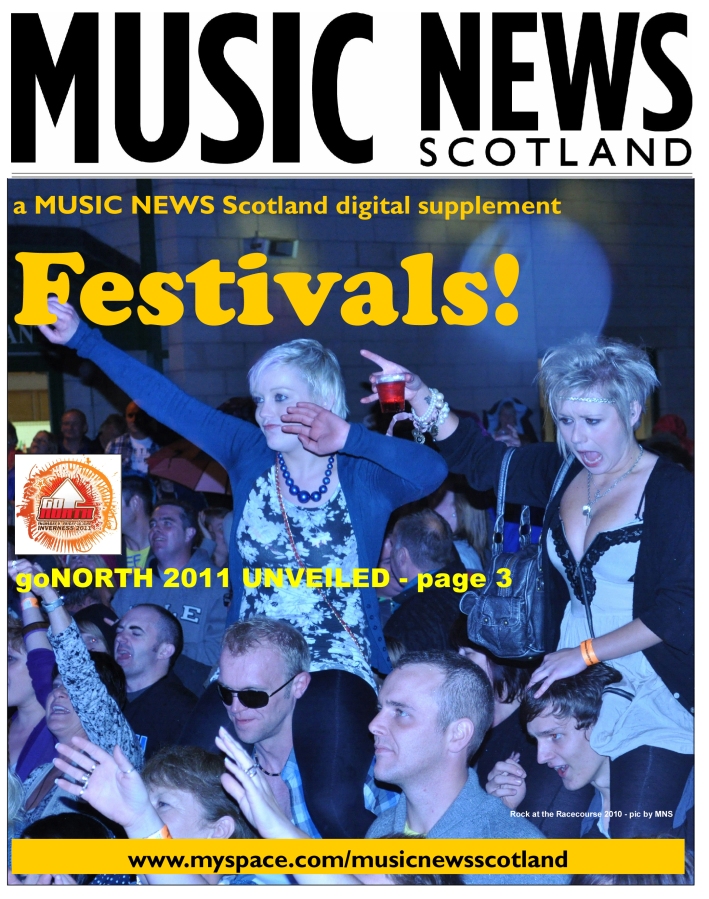
Creative Scotland's latest advert proudly boasts that Alba is "a festival nation, every day of the year." Certainly, the festival has become the model for performance programming over the past few years: New Territories might have done, but even the mundane season programming of venues like Tramway has the characteristics of festival booking. Themes, related artists, clear connections between different strands and, inevitably, the overall branding. Glasgow has been the festival city for a decade, and Edinburgh even has festivals outside of August.
The festival model makes a considerable amount of economic sense. The support of Glasgow Film Festival by Glasgow City Council's marketing branch is explicitly intended to attract more tourists into the city: the superb Minimal festival allows Svend Brown to attract major composers and orchestras into the city for a weekend of fun for the same sort of cost as a single concert. The Edinburgh International Festival is an established name across the world, and the Fringe is in a symbiotic relationship with its curated parent. A bunch of events sharing an identity is more marketable - it saves on the advertising when only one poster is needed to sell several events.
Then there is the aesthetic advantages. A festival offers the chance for audiences to see what other work matches their interests, or take risks on new art that they have not tried. From a critical point of view, the chance to consider performances not in isolation but as part of broader movements is exciting: the atmosphere around the GFF, the Fringe or manipulate can encourage a more rounded study of an art.
Manipulate, the annual festival of "visual theatre" which has expanded this year from its base in the Traverse to delve into Fife, nip up to Aberdeen, pop over to Glasgow and head south to Norwich, concentrates on a theatrical form which is often under-represented. Artistic director Simon Hart has become an articulate and popular advocate of drama that has roots in object manipulation but is more excited by breaking boundaries.
Apart from providing an introduction to the diversity of forms within the form, manipulate has transformed Puppet Animation Scotland into a dynamic force for change: not only supporting emerging artists but bringing the best of the world into Edinburgh. By having a fortnight of events, manipulate can cover the local (Vox Motus' Slick) alongside the international (Stuffed Puppet Theatre, Cloud Eye Control) and cover the trends and innovations in a context that even helps to define the difficult notion of "visual theatre."
The energy of Celtic Connections - originally instituted to combat the limited arts programme in January - follows a similar pattern, introducing the new wave of folk alongside veterans. The Glasgow Film Festival has retained an audience rather than industry focus, matching the popular (Jimmy Cagney retrospective) and the experimental (Crossing the Line strand).
The festival might represent a defensive response to the triple dip recession (or whatever it is calling itself at the moment), a circling of wagons to share responsibility between companies and venues and promotors for protecting the art. Equally, it may well be the battering ram to break through into the public consciousness.
The festival model makes a considerable amount of economic sense. The support of Glasgow Film Festival by Glasgow City Council's marketing branch is explicitly intended to attract more tourists into the city: the superb Minimal festival allows Svend Brown to attract major composers and orchestras into the city for a weekend of fun for the same sort of cost as a single concert. The Edinburgh International Festival is an established name across the world, and the Fringe is in a symbiotic relationship with its curated parent. A bunch of events sharing an identity is more marketable - it saves on the advertising when only one poster is needed to sell several events.
Then there is the aesthetic advantages. A festival offers the chance for audiences to see what other work matches their interests, or take risks on new art that they have not tried. From a critical point of view, the chance to consider performances not in isolation but as part of broader movements is exciting: the atmosphere around the GFF, the Fringe or manipulate can encourage a more rounded study of an art.
Manipulate, the annual festival of "visual theatre" which has expanded this year from its base in the Traverse to delve into Fife, nip up to Aberdeen, pop over to Glasgow and head south to Norwich, concentrates on a theatrical form which is often under-represented. Artistic director Simon Hart has become an articulate and popular advocate of drama that has roots in object manipulation but is more excited by breaking boundaries.
Apart from providing an introduction to the diversity of forms within the form, manipulate has transformed Puppet Animation Scotland into a dynamic force for change: not only supporting emerging artists but bringing the best of the world into Edinburgh. By having a fortnight of events, manipulate can cover the local (Vox Motus' Slick) alongside the international (Stuffed Puppet Theatre, Cloud Eye Control) and cover the trends and innovations in a context that even helps to define the difficult notion of "visual theatre."
The energy of Celtic Connections - originally instituted to combat the limited arts programme in January - follows a similar pattern, introducing the new wave of folk alongside veterans. The Glasgow Film Festival has retained an audience rather than industry focus, matching the popular (Jimmy Cagney retrospective) and the experimental (Crossing the Line strand).
The festival might represent a defensive response to the triple dip recession (or whatever it is calling itself at the moment), a circling of wagons to share responsibility between companies and venues and promotors for protecting the art. Equally, it may well be the battering ram to break through into the public consciousness.
Labels:
EIF
,
Glasgow Film Festival
,
manipulate 2013
,
minimal festival
Monday, 29 October 2012
In Part, Minimal
Kicking off the 2012/2013 Minimal Programme - a Glasgow Life innovation, programmed by the imaginative Sven Brown and now racing into its third year - a weekend of Arvo Part is a safe bet. Part fuses a post-modern fascination with the ancient - his stripped down arrangements evoke medieval sanctity - and a rare ear for a minimalist melody: while the Americans Reich and Glass took their cue from the driving grooves or urban anxiety, Estonian Part retreated into a pastoral religiosity.
Although his Stabat Mater is the headlining number in Saturday's performance, the first half presented the breadth of Part's interest. While some of his religious pieces struggle to emerge from a generic, gentle contemplation, his arrangement of St Patrick's The Deer's Cry uses the simple prayer to weave a complex web of sound, imitating the fervent desire of the song to be wrapped in God's protection. A version of Burn's My Heart's in The Highlands relocates Scotland to the northern border of heaven - despite the slightly ponderous rhyme - and Part's refusal of melodrama allows his choral compositions to reveal a compassionate, meditative Christianity.
Stabat Mater has the distinctive Christian mash-up of almost erotic brutality and kindness: the words follow the experience of the Blessed Virgin watching her son die, and the language more familiar from cheerful carols is twisted into a visceral vision of salvation through bloodshed.
The balance of three musicians - a trio of violin, viola and cello - against three voices echoes the words emphasis on juxtaposition: the musicians are more than accompaniment, conjuring the scene of the crucifixion through vivid interludes - although Part still avoids histrionics - as the singers long to share in Mary's almost ecstatic misery.
Part's connection to the minimalist movement is itself minimal: without the powerful pulse of the Americans, and avoiding even the romantic exultations familiar in much religious classical composition (even Scotland's James MacMillan will arrange his voices in rising harmonies of praise), Part returns to Bach's rigorous and precise depiction of the divine.
Although his Stabat Mater is the headlining number in Saturday's performance, the first half presented the breadth of Part's interest. While some of his religious pieces struggle to emerge from a generic, gentle contemplation, his arrangement of St Patrick's The Deer's Cry uses the simple prayer to weave a complex web of sound, imitating the fervent desire of the song to be wrapped in God's protection. A version of Burn's My Heart's in The Highlands relocates Scotland to the northern border of heaven - despite the slightly ponderous rhyme - and Part's refusal of melodrama allows his choral compositions to reveal a compassionate, meditative Christianity.
Stabat Mater has the distinctive Christian mash-up of almost erotic brutality and kindness: the words follow the experience of the Blessed Virgin watching her son die, and the language more familiar from cheerful carols is twisted into a visceral vision of salvation through bloodshed.
The balance of three musicians - a trio of violin, viola and cello - against three voices echoes the words emphasis on juxtaposition: the musicians are more than accompaniment, conjuring the scene of the crucifixion through vivid interludes - although Part still avoids histrionics - as the singers long to share in Mary's almost ecstatic misery.
Part's connection to the minimalist movement is itself minimal: without the powerful pulse of the Americans, and avoiding even the romantic exultations familiar in much religious classical composition (even Scotland's James MacMillan will arrange his voices in rising harmonies of praise), Part returns to Bach's rigorous and precise depiction of the divine.
Labels:
Arvo Part
,
minimal festival
,
minimalism
,
Stabat Mater
,
Vile ignorance
Subscribe to:
Posts
(
Atom
)
