As soon as director Fergus Linehan opened the floor to questions, a pompous critical smog began to circulate. So I ducked out to make a list, because I am on the Internet and people read lists.
New Comedy Section
Linehan's strategy has been to introduce new art forms to the EIF, to broaden audiences. He gets pop music, he does a few kids' shows, and this year he has a comedy section: the reimagining of Martyn Bennett's Grit as an orchestral performance. A brilliant satire on the imagination of musicians who think that electronic music can be converted into a more traditional ensemble, its an extended skit on the failure of classical music to recognise its strengths.
Grit was a good album - it's not as iconic as its record company claims, and is closer to Moby's Play than most fans would care to admit -with a few storming numbers. It certainly is not improved by a dozen violinists scratching away. The slapstick highlight is when a folk singer tries to imitate the glitch and snap of Bennett's sampling. I tried to get on the stage when I saw it at Celtic Connections and give him the Heimlich.
God Speed and Holy Bodies
There is no chance in hell that the collaboration between The Holy Body Tattoo and Godspeed You Black Emperor can live up to my expectations. In the 1990s and 2000s, the band and the choreographers made me wet myself in ecstasy (the band for their spiritual and layered grandeur, the company for their dark sexy tango piece). So I expect this to be better than Rusalka, that opera that made me weep last night, and I expect to be disappointed. Goodspeed were the most important band to me until they reformed a few years back, when it all felt a bit nostalgia, so I got off the train.
Barry Humphries and Miaow Miaow
I remember when MM was on the cabaret circuit. She offered me a blow job for a good review. Unfortunately, the blow job was off her pianist, not her.
Notwithstanding her tangential entry in my History of Sexual Disappointment, Miaow Miaow is one of the most witty, imaginative and subversive artists in the cabaret tradition - aside from Dusty Limits, who also deserves an EIF show. Teaming up with an orchestra and him who used to be Dame Edna to make a Weimar style cabaret... if Hitler would hate it, I have to love it....
Showing posts with label EIF. Show all posts
Showing posts with label EIF. Show all posts
Wednesday, 6 April 2016

Saturday, 28 March 2015


Friday, 20 March 2015

Sunday, 27 January 2013
Festival Fever
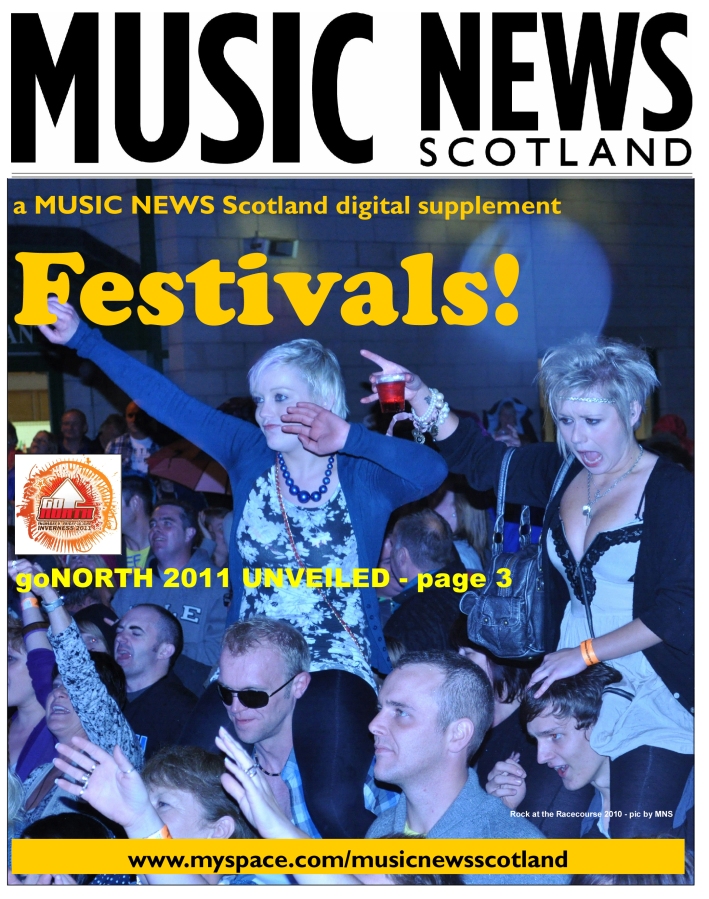
The festival model makes a considerable amount of economic sense. The support of Glasgow Film Festival by Glasgow City Council's marketing branch is explicitly intended to attract more tourists into the city: the superb Minimal festival allows Svend Brown to attract major composers and orchestras into the city for a weekend of fun for the same sort of cost as a single concert. The Edinburgh International Festival is an established name across the world, and the Fringe is in a symbiotic relationship with its curated parent. A bunch of events sharing an identity is more marketable - it saves on the advertising when only one poster is needed to sell several events.
Then there is the aesthetic advantages. A festival offers the chance for audiences to see what other work matches their interests, or take risks on new art that they have not tried. From a critical point of view, the chance to consider performances not in isolation but as part of broader movements is exciting: the atmosphere around the GFF, the Fringe or manipulate can encourage a more rounded study of an art.
Manipulate, the annual festival of "visual theatre" which has expanded this year from its base in the Traverse to delve into Fife, nip up to Aberdeen, pop over to Glasgow and head south to Norwich, concentrates on a theatrical form which is often under-represented. Artistic director Simon Hart has become an articulate and popular advocate of drama that has roots in object manipulation but is more excited by breaking boundaries.
Apart from providing an introduction to the diversity of forms within the form, manipulate has transformed Puppet Animation Scotland into a dynamic force for change: not only supporting emerging artists but bringing the best of the world into Edinburgh. By having a fortnight of events, manipulate can cover the local (Vox Motus' Slick) alongside the international (Stuffed Puppet Theatre, Cloud Eye Control) and cover the trends and innovations in a context that even helps to define the difficult notion of "visual theatre."
The energy of Celtic Connections - originally instituted to combat the limited arts programme in January - follows a similar pattern, introducing the new wave of folk alongside veterans. The Glasgow Film Festival has retained an audience rather than industry focus, matching the popular (Jimmy Cagney retrospective) and the experimental (Crossing the Line strand).
The festival might represent a defensive response to the triple dip recession (or whatever it is calling itself at the moment), a circling of wagons to share responsibility between companies and venues and promotors for protecting the art. Equally, it may well be the battering ram to break through into the public consciousness.
Tuesday, 28 August 2012
Encounters
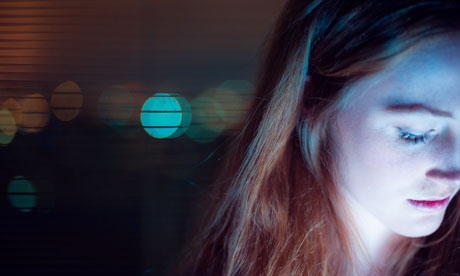
Friday's Encounters talk has Matthew Lenton, artistic director of Vanishing Point, team up with Professor Michael Lamb and Jean Kilbourne to scrutinise the representation of young women. Not only does this fit with the themes of Lenton's entry in the International Festival - a reworking of Alice in Wonderland - it homes in on a lively discussion that has been bothering feminists and commentators.
Kilbourne is listed on the programme as a feminist - in another article, I'd doubtless spend ages enjoying the irony that the woman is outnumbered on a panel that discusses representation of women - but is also a leading analyst of advertising. She takes seriously the social impact and context of advertising, identifying the distortions of human desires that are manipulated by those cheeky lads at the agency: she also has a book that has plenty to say about the sexualisation of young girls. After I realised that the Pussycat Dolls were being marketed for children, I decided this was probably a bit more serious.
Professor Michael Lamb was a witness in a trial that belies its seriousness with an amusing name: apparently, he was exposed as a committed liberal on the stand. While I am not sure I ought to be using Wikipedia to do my research, this article gives a run down on his activities. Given his support for the National Organisation of Women, he could equally be described as a feminist, but he is likely to be putting the conversation in the context of child development.
In the context of the Fringe, representation of women is intriguing. Inevitably, thanks to my taste for the avant-garde, I have seen a fair amount of nudity this August (entirely on-stage). I am Son, a brilliant Italian dance piece, had a topless lady - that she put on a vest for her bow only highlighted how nudity in performance is not the same thing as public nudity, and The Shit at Summerhall made evocative use of full nudity as a vivid symbol of vulnerability and insecurity. That I can't think of any male performers with their bits out suggests that the naked female is less taboo.
However, both of my examples are of adults, and this talk is about younger women: an expert on child psychology and the co-author of So Sexy So Soon suggest that this conversation will be less interested in experimental performance than the pervasive representation of girls as sexual beings. As a former teacher, I do object to this trend, and now that I have a niece, I am likely to become even more conservative about it.
Mind you, my reaction is mostly knee-jerk liberalism. I don't like the idea that young people are commodified, and share a sentimentality about the innocence of childhood that is Victorian and liable to be shattered by five minutes with a real child: I remember my pupils having far more control and agency than the school system allowed. A talk like this will put my thoughts into context, and raise the consciousness of my internal debate. Better yet, it uses Wonderland as a foundation for the conversation.
Subscribe to:
Posts
(
Atom
)