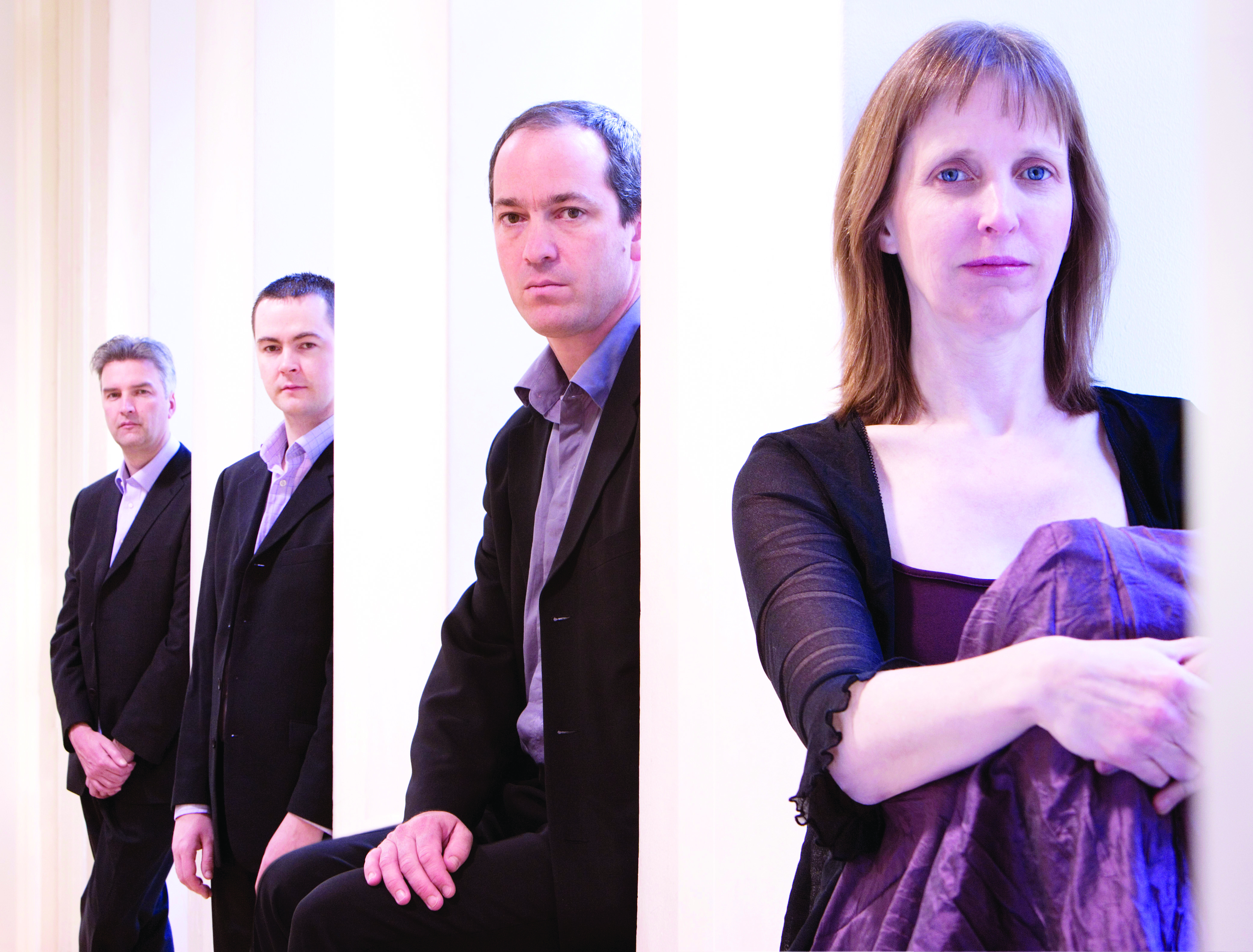
Kicking off the 2012/2013 Minimal Programme - a Glasgow Life innovation, programmed by the imaginative Sven Brown and now racing into its third year - a weekend of Arvo Part is a safe bet. Part fuses a post-modern fascination with the ancient - his stripped down arrangements evoke medieval sanctity - and a rare ear for a minimalist melody: while the Americans Reich and Glass took their cue from the driving grooves or urban anxiety, Estonian Part retreated into a pastoral religiosity.
Although his Stabat Mater is the headlining number in Saturday's performance, the first half presented the breadth of Part's interest. While some of his religious pieces struggle to emerge from a generic, gentle contemplation, his arrangement of St Patrick's The Deer's Cry uses the simple prayer to weave a complex web of sound, imitating the fervent desire of the song to be wrapped in God's protection. A version of Burn's My Heart's in The Highlands relocates Scotland to the northern border of heaven - despite the slightly ponderous rhyme - and Part's refusal of melodrama allows his choral compositions to reveal a compassionate, meditative Christianity.
Stabat Mater has the distinctive Christian mash-up of almost erotic brutality and kindness: the words follow the experience of the Blessed Virgin watching her son die, and the language more familiar from cheerful carols is twisted into a visceral vision of salvation through bloodshed.
The balance of three musicians - a trio of violin, viola and cello - against three voices echoes the words emphasis on juxtaposition: the musicians are more than accompaniment, conjuring the scene of the crucifixion through vivid interludes - although Part still avoids histrionics - as the singers long to share in Mary's almost ecstatic misery.
Part's connection to the minimalist movement is itself minimal: without the powerful pulse of the Americans, and avoiding even the romantic exultations familiar in much religious classical composition (even Scotland's James MacMillan will arrange his voices in rising harmonies of praise), Part returns to Bach's rigorous and precise depiction of the divine.
Theatre and Culture from Scotland, starring The List's Theatre Editor, his performance persona and occasional guest stars. Experimental writings, cod-academic critiques and all his opinions, stolen or original.
Showing posts with label minimalism. Show all posts
Monday, 29 October 2012
In Part, Minimal
Labels:
Arvo Part
,
minimal festival
,
minimalism
,
Stabat Mater
,
Vile ignorance
Wednesday, 21 March 2012
More Minimalism (Hippy hate and love for Riley)
“You have never done anything in your life but listen to this music as
if that is all there is or ever will be.”
Hang on, this was meant to be an article about In C by Terry Riley.Where was I?
Yes, so, before there was Pink Floyd or The Doors, there was Terry
Riley. The quotation at the top of the page was from The San Francisco
Chronicle. And while it might sound like a typical acid head explaining why The
Beatles’ White Album is so cool, it was written about In C, in 1964. Riley was
just early enough to avoid getting sucked into the whole mess of hippy culture,
but late enough to be part of the scene that was inspired by world music and
repetition.
In C was released in 1968, and was the first work that really made
minimalism a popular genre. Since Riley would later get more and more into
Indian music, it chimed with the general vibe of the time: since the score is
made up of a series of musical phrases, and performers are invited to play ‘em
how they feel ‘em, it can take on all sorts of different styles. The version I
played on the radio show is African in tone: this Sunday’s version is rumoured
to be more eastern.
Six Hours of Minimal Noise
Sunday 25th March is going to be a long day for fans ofcontemporary classical music. Last week, I tried to play the complete In C by
Terry Riley on my radio hour (I ended up talking over it and using it as
background). Coming in at well over an hour, it’s a mini-marathon that eludes
easy recording on vinyl and was one of the first minimalist pieces to dig an
African groove. But it’s a sharp pop rush compared to the afternoon’s show at
the City Halls: Morton Feldman’s Second String Quartet rocks in at around six
hours. Thankfully, the audience are invited to come and go – although hopefully
with the appropriate reverence due acoustic music and not with the noise and
fuss of people nipping out to the bar to get pissed.
Worried as I am by my bladder’s ability to last the full length, my
fears are nothing to The Smith Quartet: they have to play it.
Inevitably, The Smiths (ha!) get compared to the USA’s avant-garde string
section, The Kronos, but there is little overlap between the two gangs of
four’s repertoire. Where Kronos can’t stop travelling the world, and
collaborate with funky folk, The Smith are more – and this is a difficult
adjective, given that they have a fair whack of electronics knocking about in
their tunes, and have a John Zorn special on the books – traditional. They are particularly
known for interpreting Feldman: that is why this Sunday is special. In 2006,
The Huddersfield Festival made up for ignoring his catalogue by getting The
Smith Quartet in for a big session. The Guardian Arts Section is still going on
about it.
Apart from a general trepidation about the length, I am excited to hear
The Smiths get to grips with Number Two... I have not heard it yet, despite my
usual meticulous research, but what I have heard of Feldman excites me. That
is, he seems to have an affinity with the more relaxed strand of electronic
music I got into when techno got too loud for my aging ears. He hung out with
John Cage, claimed that his music’s “primary concern is to sustain a flat
surface with a minimum of contrast” and has had pieces released on Sub Rosa,
who also released Main, my Sunday morning favourites.
Labels:
Contemporary Classical
,
Feldman
,
minimalism
,
Smith Quartet
Subscribe to:
Posts
(
Atom
)