Monday, 21 May 2012

Revolving Pavlova

Scottish Dance Theatre's Drift (choreographed by James Wilton, starring a bruising track by Nine Inch Nails) is one of those pieces that gives "contemporary dance" a good name. It's a classic pas de deux format - sexy, bursts of technical brilliance, thumping yet emotive soundtrack - with a few added touches that separate it from ballet. Specifically, it is melancholic and the dancers play trust games - and the dancer's moves and gestures are spikier, more aggressive.

At only ten minutes, Drift can either stop the show or act as a juicy bonus. No wonder it has held its place alongside Kate Weare's Lay Me Down Safe on SDT's latest touring triple bill: and it acts as a comfort blanket before the finale of Rachel Lopez de la Nieta's experiment on Pavlova's Dogs.

At this point, I have a bad feeling I am about to shame myself by trying to use Big Theories. I am thinking post-modernism, contrasting popular ideas about what it is ("everything is relative, man"), a slightly more rigorous definition ("there is no central narrative, and everything is relative, human") and dance's specific movement (the Judson Memorial Church, buddy).

Because to call both Drift and Pavlova's Dogs "contemporary dance" seems absurd. I am not even sure if  PDs is even dance (not that that's a bad thing). It asks questions about the nature of dance - thankfully, it gets beyond "what is dance?" quickly and has a few pokes at ballet mythology. There's music and the two guys do a bit of "entertainment" (tops off, rocking out to Fleetwood Mac, or dressed as bunnies and camping it up to Flanagan and Allen). There are even four female dancers making shapes that would not disgrace the choreography of -well, Kate Weare or James Wilton.

Yet the main feature of PDs appears to be the chatter of two guys. It is their argument that creates the dramatic tension, their ideas that dictate the pace. Lopez de la Nieta works closely with a dramaturge, Henrietta Hale. Unlike Scottish Ballet's Streetcar, where the dramaturge seemed to just encourage the choreography's theatricality, it feels as if Pavlova's Dogs would be as comfortable as a theatre company's production.

None of these things are necessarily bad, unless I am trying to insist that rigid categories are more important than an art-form's flexibility in the face of an artist's vision. It's probably important to Lopez de la Nieta's intentions that the usual conventions of dance are so easily disassembled, and since her own training was in classical ballet (at least at first), it's as if she is working through both personal and public stereotypes of "the dancer".

It would probably be better to simply call it "performance", but that denies the importance of the dance conventions that the choreographer aims to deconstruct. And I can't call it post-modern dance: although it conforms to the more rigorous definition two above, it lacks, except in limited sequences, the precise strictures that came out of the Judson Memorial Church crew ("task-based" movement, fiddling about with the gaze of the dancer, rejection of virtuosity).

Here's the real post-modern magic of Pavlova's Dogs: it is never fixed, and any attempt at definition causes the definition to slip away, like the last pea on the plate, chased by the critical fork.


Wednesday, 16 May 2012

Tony Mills Breaks Convention


I once called Tony Mills the hardest working man in Scottish dance - mainly because he splits his time between being a hip-hop maestro and a contemporary choreography power-house. Given that his Room 2 Manoeuvre incarnation has been supported by Made in Scotland to rock the Fringe at Zoo Venues, and that he is making an appearance at Breakin' Convention 12 when it reaches Scotland, this might be an example of my cheeky catch-phrases being vaguely accurate. 

Skills aside, Mills is always a convivial interviewee. His enthusiasm for both b-boy action and more traditional forms is infectious, and his costume at BC is always a talking point. I bothered him for a Skinny article last month, but he was so entertaining and informative, I thought I would pop the transcript up here...


Are you hosting or performing at Breakin' Convention  this year?

I am hosting along side an equally big personality in the shape of Breakin' Convention mastermind Jonzi D. This year BC goes to Eden court to show the highlanders how they get down. 

My banter is seen as a worthy addition to the mix so i'll be joining them on this road trip via a dip in loch ness. I won't be getting my groove on with the local acts as much of my time is spent checking on their progress and organising foyer activities and the all important after party. 

I will, however, be performing at part of the improvised freestyle funk forum for Breakin' Convention in London from the 5-7th May and Room 2 Manoeuvre is hatching big plans for the summer...watch this space!

Which outfits are you most looking forward to this year? And I don't mean your outfit, I mean crews - and why?

Without being too much of a cop out i would have to say all of them. Every time BC comes to Scotland it is a huge catalyst for local groups to get in the studio and start creating. It makes a huge difference when you have something to aim for with regards to a performance and even more so when it is such a huge platform as BC. 

Stalwarts of the scene, Random Aspekts are teaming up with new kids on the block, Heavy Smokers, to present a mix of smooth moves, suits and soul singing. All girl B-Girl outfit, Ready Ready Sauce are using social issues that concern their daily lives as the source of inspiration for their new piece. Edinburgh based Jackin' The Box choreographer Ashley Jack was recently part of BC's Back to the Lab programme. This was set up to develope the skills of emmerging choreographers working in the hip hop genre. I'm keen to see what she will bring to the stage after being part of such an experience. Audiences will get a taste of what is possibly a more minority form of hip hop/funk dance styles from locking group, Rockabeat. 

And this time it's not an all Scottish affair as Sana Crew's Rice 'n' Peas and place prize nominees Bad Taste Cru take to the festival theatre stage. Both of these groups reside in Newcastle. The international acts are going to be really exciting and will showcase highly technical hip hop/breaking from current Battle of the Year champions, Vagabonds, with a more conceptual take from Clash 66. Both companies are an example of how hip hop dance in the theatre is not just a novelty but that these artists bring a world class level of skill, commitment and creativity to the genre. 

I might be obsessed with the performances on the stage, but BC is about a great deal more than that - how can people get more into the groove when BC hits the EFT?

From Day 1 BC has always been about trying to take the vibe from the street into the theatre. With this in mind foyer activity is given just as much importance as that which happens on stage. As soon as the doors open people can expect local DJs spinning and drummers drumming for dancers on the open floor. If you want to learn how to top rock, drop, footwork into freeze there will be workshops on offer from local dancers. 

Or if art on paper is more your thing, we'll also have graffiti artists in the house to show how to bag your tag. And don't forget to look out for free giveaways throughout the evening. We'll also have live performances from fife hip hop crews UNIK and WOTT crew. 

The reach of hip hop is now global - what nations are starting to come to the fore these days?

In terms of the battle scene really the level is pretty high across the board. There are more competitions these days and also it's easier to travel internationally. The internet allows footage to blaze around the world and all this helps to push the scene and the dancers. On the theatre front, i still think France leads the way. They have been producing work in this genre for many years and have a good infrastructure in place to support such artists. 

At home, the scene is definitely moving forward. Even in terms of perception by the industry. This year companies such as BC, Champloo, Avant Garde and Room 2 Manoeuvre (ahem!) appeared on the British Dance Edition programme. So it's encouraging that work within this genre is seen as part of the dance fabric of the UK. BC is also doing their bit to develope choreographic talent through their back to the lab programme and supporting collaborations involving UK artists. 

And why aren't Flawless on the bill, then?

Too busy milking the commercial industry for all it's worth...quite right too.

Brown versus 85A

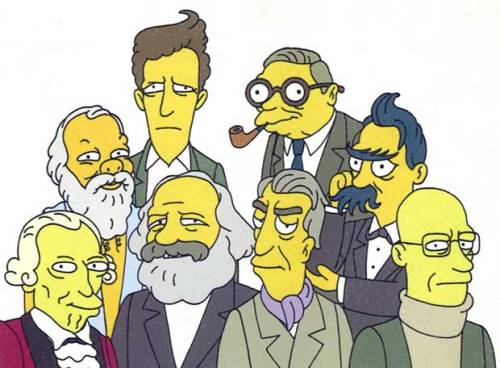
When a cheerful commentary on The Simpsons and Philosophy contains asides about the rise of nihilism, and post-modernisms are being reinvented through a Marxist lens, the function of art appears to be up for grabs. Having been brought up in an era when post-modernism was still at the edge of academic discourse - that is, it didn't get mentioned in my lectures on Virgil but turned up in style magazines - I am still hopeful that it might be rehabilitated: but in a world where it has been used to explain the rise of celebrity culture, I imagine I'll remain a lone voice. Again.


Trisha Brown is clearly associated with "post-modern dance." She was hanging about the Judson Memorial Church alongside Yvonne Rainer and Steve Paxton: this loose affiliation of choreographers would ask a series of critical questions about movement that became known as post-modern dance. Rainer became a film-maker - although she made a triumphant return to choreography - and Paxton pioneered contact improvisation. Brown is arguably, however, the most consistent in her career as a choreographer, as she has her own company and her work now sits in the repertoire of ballet companies across the world.

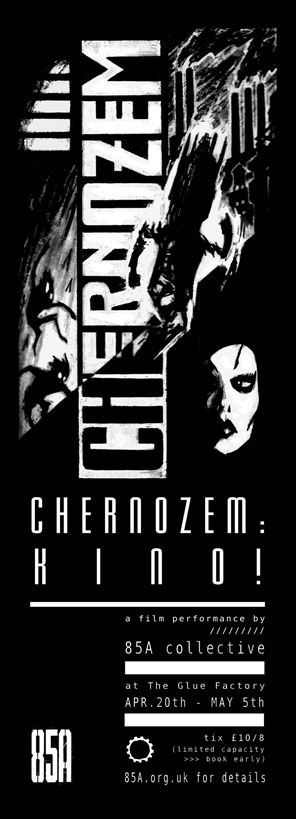
85A - through the use of overworked metaphor - could be identified as the natural descendants of the Judson Memorial gang. They don't use dance - Chernozem, their entry into the GI Fringe, was an expanded film experience - but they are associated with a specific venue (The Glue Factory) and enjoy busting boundaries. And where Rainer, Brown et al were affiliated, the 85A Collective has a similar feel, with individual members holding their own yet becoming part of something more impressive.

Brown's company arrived at Tramway with an eclectic mix: three "classics" and a new piece. Leah Morrison opened the account with If You Could See Me from 1994. Notable as a solo where the dancer faces away from the audience, it has the particular style that identifies Brown: rejecting flashy displays of technique, the movement is precise, closer to martial art than ballet. While it is a strong statement of Brown's interest in challenging the predictable relationship between audience and performer - Morrison never peeks at the crowd - Tramway's unique space adds a tension - the solo almost becomes a trio, with the two pillars at the side of the stage lit up like immobile partners in dance.

The contrast with the opening of Chernozem could not be more powerful: 85A are all about "hot" media, dragging the audience into character and forcing them to watch the opening scenes of the film on tiny screens. Throughout Brown's performance, the audience is invited to observe - Chernozem insists. Pushed around on carts, chased by dominatrix prison guards, pushed between the hulking scenery, they immerse and cajole. Brown's choreography is "cool", so self-contained, it barely acknowledges the audience. For MG: The Movie happens as if behind a screen, and the pas de deux of Les Yeux et L'Ame are all about the connection between performers.

Nipping back - realising that I started off going on about post-modernism, and probably need to justify my pretentious introduction - it strikes me that the post-modern instinct is vital to both choreographer and collective. They reject easy definitions of their genre - Brown might use technically skilled dancers, 85A might make a film - but they go far beyond the expected. Yet in their different attitudes to the audience, they make a strikingly similar point about how art is created by the observer. For 85A, the observer is togged out in prison gear: for Brown, the audience has to work hard to enter into the dance's  world. My easy and lazy definition of post-modernism - that it takes away the possibility of a central, defining characteristic to just about anything - is satisfied by both works.


Mrs Rosie Thorn: The Patsy Cornish Saga


Last year, Mrs Rosie Thorn was introduced to the wonder of the Fringe. Her one woman show Butter Would Not Melt, was writer and performer Eleanor Appleton's first foray into the character's genteel world of domestic precision and dark humour. The Patsy Cornish Saga brings Rosie back to Edinburgh with a hint of death among the canapes. 

Since Rosie started life as a cabaret turn - and the evolution of cabaret into theatre always fascinates me - I bothered Appleton about how a rural housewife can rise above the din of the Fringe... 


What will make your show stand out at the Fringe in 2012? 

This show is an evolution of the traditional theatrical monologue it sits somewhere between theatre and cabaret. It's not comfortable sitting completely in either camp, it has the audience participation common in cabaret but also a linear narrative that you find in theatre. 

Rosie is accompanied by Mr. Gardener, the accordion playing man servant, who plays popular songs on the accordion and Rosie singing re-written lyrics to these songs incredibly badly. These songs intertwine themselves through a darkly humorous tale of manipulation, sociopathic trickery, grievous bodily harm and cats in a microwave.

How would you describe the piece - what sort of theatre is it, and what inspired the content? 
Rosie Thorn: The Patsy Cornish Saga is a dark comedy theatre show, the second in the Rosie Thorn series. Rosie is the pivotal character in all her stories as she fights for her idea of perfection in the village of Featherington-On-The-Wold, however sometimes her plight for a pleasant world of Victoria Sponge Cakes, white picket fences and 50’sesque domestic perfection can lead her down a path of precision planning and immaculately executed revenge on those who threaten her finely polished veneer of perfection. 

Rosie was a character that I founded in the development of a devised piece of theatre called the Powder Room that the group that I was working with at the time took to Edinburgh Fringe in 2006, since then the character has evolved massively and I know use her as an alter ego for compering, cabaret, stand up and full length theatre shows, Mr Gardener is a new addition, he came on board last September.

How long have you been working in theatre, and are there any highlights of your career so far? 

I have been working in theatre on and off since I left University in 2002, I would say creating and developing Rosie is my highlight as through her I also discovered an ability to write.

Why did you decide to come to the Fringe

This is the second year in a row that I have come with a ‘Rosie’ show and although I found last year incredibly challenging in many ways I also found it incredibly beneficial. There are so many networking opportunities and you get a great deal of feedback on your show which helps with future development. Also through the contacts that I have built up over the last year and the response that I received from last year I have managed to secure my venue at Surgeon’s Hall for free and have also been offered a slot on the Funny Women stage.


Mrs. Rosie Thorn: The Patsy Cornish Saga will be playing on The Funny Women bill at  the Bosco Tent on Thursday 16th and Friday 17th August and at The Space @ Surgeons Hall, Nicholson Street in Theatre 3 from Monday 20th– Saturday 25th August at 17:00.

Tuesday, 15 May 2012

Gary McNair - an old interview


Gary McNair  emerged from the loose movement that I decided to call the Glasgow Live Art Young Team and has achieved considerable success over the past few years. Not that his work has suddenly gone all Coldplay: he is currently touring a one man show that involves scads of real money getting torn up, live on stage.


However, I found this old interview with him - done when he had just won the Platform 18 Award from The Arches. We did it over Facebook, I seem to remember. So that makes him a theatre maker who uses radical approaches, and me a critic ready to adapt the latest social media to my discipline.


The Apocalypse! Interesting theme for a piece... what made you pick on this as an idea?

I guess it's something that I've always been interested in. I think the idea is something that we all have a relationship to, but the strange thing about it is that obviously, no-one has ever experienced an apocalypse.

It's more that we have an idea of it, whether that's informed by science, religion, Hollywood or whatever. It's unknown. I always take a particular interest in things that I don't understand, and the biggest thing that I don't understand is our time on earth and how that might come to an end. So many books and films fictionalise the subject. What I wanted to do more than to spread fear, like some blockbusters do, is to give a personal response.

Any particular theories about the end times that attract- or repel- you?

It would be pretty ridiculous if we blew ourselves up. Worryingly, that seems quite high in the list of possibilities.


How does this piece fit with Crunch?

I guess, in a way, Crunch was dealing with similar issues, in that it was imagining a world after one of our biggest structures had collapsed - a sort of financial armageddon. After the world has ended, what use will money be? In that sort of society, if I want your shoes, I'll fight you for them.


It is a big big topic- have you expanded your stage show to fit it, or are you remaining solo and intimate?

I did consider reconstructing the battle scene from Apocalypto, but intimacy won out for many reasons. It's very much a personal response to the idea of apocalypse, rather than creating an apocalyptic scene for you to inhabit. I often find that when I go to a performance and people try to convince me that the world has ended, I can't buy into it. I know that I'll walk back outside afterwards and everything will be the same as it was.


What do you think makes people obsess about the end of things?

People work well to a deadline. Sometimes, I think that we need to imagine that the world is hurtling towards some sort of final conclusion just so that we get things done. Plus, I think that we want to imagine that we are the most sophisticated version of ourselves, and as a result, we will be the last beings to inhabit the earth. It's a lot to do with ego.