Showing posts with label happy pills. Show all posts

Friday, 8 April 2016

Diderot Did Decline Democratic Dramatic Discussion

As it happens, I am off the Happy Pills again. I am experiencing considerable friction within my nervous system. I'd like to apologise to the lovely and patient people who share my workspace at the CCA, and the duty managers who have had to put up with a higher level of distraction than usual from this hairy little bloke in the suit who seems to have lost his keys again.

I am in a real temper today. I was looking on Twitter to find somebody to flame, but the always intriguing @thejennawatt diverted me. Instead, I am going to have a go at Diderot.


It's ironic: Watt makes theatre, but she can't afford to see as much as she'd like. My research into the history of theatre allows me to pretend I have a long-dead culprit. When Diderot challenged the status quo of pre-revolutionary France, he advocated a bourgeois theatre. In the following centuries, architects, playwrights, companies and philosophers followed his lead, culminating in that day when Wagner turned off the lights in the auditorium, and forced audiences to make a pilgrimage to see his latest epic cycle. Basically, it got expensive to keep the riff-raff out, the kind of people that used to go to the Globe to have sex with a prostitute, shout at actors and occasionally listen to Shakespeare's poetry.

Of course, it is really Aristotle's fault (he did say that tragedy was for a noble class who had time and money), and a by-product of capitalism - oh, and the replacement of live theatre by the cinema, then television, then the internet, leaving what used to be the top entertainment as an esoteric taste.

Speaking as someone who decided that romantic opera is the pinnacle of live theatre, and is preparing to take his place with the Werthers Original set, I am worried that Jenna Watt has spotted the massive problem with any research into theatre. It has become expensive, exclusive and the means of production have shifted it beyond the financial reach of many people. This removes it from the public sphere what Habermas talks about - no good being part of public debate if only the rich can afford to see it - and the political content of works like Iphigenia in Splott is belied by the price of the ticket. For  rough guide, if the class of characters that a play is about can't get a ticket, it's not serious about them. 

It doesn't solve the problem entirely, but when Scottish Opera are offering bargain tickets to students (do they still do that?), or Buzzcut is pay-what-you-like, maybe the directors of the theatres could, like, offer cheap seats at the last minute, or go out into the street and give away any tickets that are left half an hour before the show? I know that last suggestion would cause problems. 

Anyway, access to culture might not be a human right, but I think it is part of a democratic society. I'll get around to that some day. I've got withdrawal symptoms to enjoy. In the meantime: I try not to forget that there is an economic dimension to Watt's question, and probably a class one, too. That neoliberal mantra about choice is a right load of hot air when that choice depends on how much spare change you've got.

Tuesday, 31 May 2011

On Balance, I am Glad I went Out

I hate being out of my depth. It is pretty clear that I am this evening, even if I am in The Arches. It's the Hebrides Ensemble, one of Scotland's top contemporary classical companies. I am about to start wishing that I had stuck to Lady Gaga.

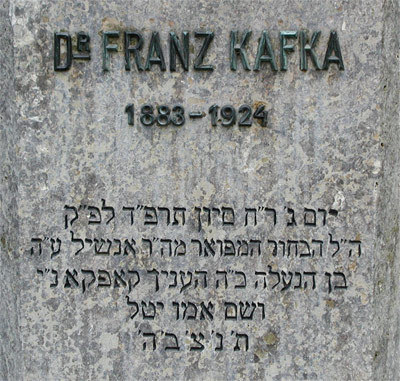
Play it safe, Vile. The musicianship is obviously superb. Alexander Janiczek, the violinist, is in international demand. And the soprano who is duelling it out with him, Elizabeth Watts won the Rosenblatt Recital Song Prize in 2009. They are tussling with Kafka Fragmente, composed by Kurtag. You see, sometimes facts are useful.

I can't start claiming objectivity when it suits me. I don't really know what the Rosenblatt is. I wandered in here, full of confidence. I've managed some Reich, some Glass. I even wrote about the Kronos Quartet. This little Performance Critic has gone one art form too far.

The Fragmente read like a teenage emo diary, but Kurtag's duet for violin and voice brings them to disturbing life. I am getting that cold existential vibe, familiar from Live Art, that peels away the façade of safety and reveals that life is, actually, Hell. Is it really a duet? Sometimes the violin and the soprano are fighting. Then the instrument provides gentle support, almost like a loop.

It's a labyrinth here. I try to retrace my steps.

The first half was charming: artistic director William Conway strolled on and chatted genially about the pieces. He did warn us that the Kurtag was hardcore, but he illustrated the upcoming Sonata with a quick blast on the cello, and seduced us with a version of Schumann's Auf einer Burg. As he said, you could practically see the Knight asleep in his tower. It was elegant.Even Janacek's Kreutzer Sonata was enticing, leaving out the savage murder in the final bars. I was safe. This was entertaining, a bit classier than the previous night - when I watched the Adult Channel Freeviews and tried to ignore my citalapram cravings.

Now I feel like Kurtag has sound-tracked my anguish. There are forty-odd fragments, each one veering in mood, but returning to a desolate howling. Watts ranges from shrieking to elegant phrasing: sometimes the darkness hurts, sometimes it soothes.

When I came back after the interval, they had set up a large wall. Behind this, the singer and violinist paced. One would emerge, then the other. Dramatic lighting, shadows cast, the music - the violin seemed to become two, three instruments, setting up drones, cracking open melodies, rattling, singing, poking, slicing. The voice sparred, jabbed, feinted. Kafka's words, more opaque than usual, were all the more doomy for being in German.

I'd heard a few snatches on the Radio Hour: I was not prepared for this. Dark and deadly, vicious and seeking, the subtle performance touches prevented a descent into melodrama. I am embraced and provoked, swept away and looking out to see if I can find a recognisable reference before...

Gareth K Vile Is Unwell

He lost his leg thanks to drinking. He had 500 lovers. He invented a style of writing that jumped from journalism to memoir and back again, made horse racing sound exciting, chronicled the dying days of British Bohemia fucked up his marriages and pissed his talent up a backstreet somewhere in Soho. He spent more time in court than Johnny Cash, cuckolded his best mates and received letters of complaint from the press. His writing was passionate, self-deprecating, unrepentant, elegant and intelligent. When I grow up, I want to be Jeffrey Bernard.

In the meantime, that comedown off the Happy Pills is giving me aches. I can't sleep so well, I have taken a week off chasing round for Radio Hour interviews - Nick Spag is on that for the rest of the year - and I have decided my time is better spent on arranging meetings with the doctor and various social service offices.

This might explain why I am in the Upper Circle of the Theatre Royal, surrounded by Glasgow's Other Theatrical Community - the one that likes a Big Night Out, rarely sees nudity on stage and isn't too excited by the National Review of Live Art. It freaks me out to be the youngest person in sight. My bald patch excites no comment. I am glad I didn't bring a date, blowing my cover as a young hipster as my real peers settle down beside me, blue rinsed and sucking on the Werthers.

Jeffrey Bernard is Unwell has become a piece of British Heritage. It stars that guy who played Jesus on TV - you know, he made that detective series with Jasper Carrot. He gets to wonder about, being Bernard, enjoying the anecdotes that Keith Waterhouse adapted for the stage. A cast of five come in and out, ghosts to illustrate particular stories, all RADA posh voices and 1970s London Commoner. They just slow the show. I'm here to hear tales of Soho, as it was before it got clean. 

The play was written in 1989, the butt end of Soho's golden years. Bernard hung out with whores, gangsters, alcoholics, artists, all the romantic stereotypes and mocked the stability of Middle England, the Middle Classes, the mediocre and the acceptable. He turned up pissed to the opening - or is that a legend? - and enjoyed the fame the play brought him. Then he had his leg chopped off and died in the 1990s. The ending, where he remembers his dead buddies, now has the poignancy of a lament for Bernard himself, as well as the way of life - indolent and cultured - that he loved.

The irony now is that the play - if not the person - is enjoyed by those people who would be horrified to have a pissed up Bernard smoking on their couch. And the time he laments was the era of oppression, before corporate lap-dancing clubs replaced the seedy strip-bars and the pub stank of ash. And all the adventures, usually involving sickened women or turf accountants, would be boorish shite without Bernard's own love of language. It is as if he learnt to drink like an alcoholic so he could still turn a fine phrase with a bottle of vodka inside him.

The play doesn't need the plush set - although it is nice - or the other actors. This is a glorious monologue, resolutely defiant: Robert Powell has a direct rapport with the audience that allows him to hide his character's moral turpitude behind a winning charm. It belongs, more obviously, in the grubby, marginal, theatres, the material militating against the ambience of the august Theatre Royal. Maybe, just sometimes, a good script is enough to make that breakthrough into the mainstream.

Still, it's still not safe for work: Bernard is as foul-mouthed as a Crazy Gary and while the pace and finale make this a requiem for a sentimentalised past, that past is littered with unapologetic conflicts and a quiet revolutionary spirit that mocks Marxist and Conservative with equal enervation. It is worse that I remember some of the Soho Bernard represents, as if my life has been a journey I have not noticed happening, only to find myself cast up on a further shore, wondering when my home was eroded by other waves.