Showing posts with label Topics I know nothing about. Show all posts

Tuesday, 31 May 2011

On Balance, I am Glad I went Out

I hate being out of my depth. It is pretty clear that I am this evening, even if I am in The Arches. It's the Hebrides Ensemble, one of Scotland's top contemporary classical companies. I am about to start wishing that I had stuck to Lady Gaga.

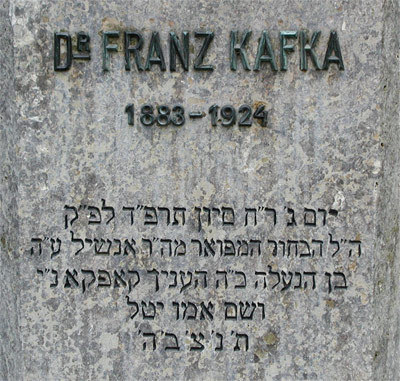
Play it safe, Vile. The musicianship is obviously superb. Alexander Janiczek, the violinist, is in international demand. And the soprano who is duelling it out with him, Elizabeth Watts won the Rosenblatt Recital Song Prize in 2009. They are tussling with Kafka Fragmente, composed by Kurtag. You see, sometimes facts are useful.

I can't start claiming objectivity when it suits me. I don't really know what the Rosenblatt is. I wandered in here, full of confidence. I've managed some Reich, some Glass. I even wrote about the Kronos Quartet. This little Performance Critic has gone one art form too far.

The Fragmente read like a teenage emo diary, but Kurtag's duet for violin and voice brings them to disturbing life. I am getting that cold existential vibe, familiar from Live Art, that peels away the façade of safety and reveals that life is, actually, Hell. Is it really a duet? Sometimes the violin and the soprano are fighting. Then the instrument provides gentle support, almost like a loop.

It's a labyrinth here. I try to retrace my steps.

The first half was charming: artistic director William Conway strolled on and chatted genially about the pieces. He did warn us that the Kurtag was hardcore, but he illustrated the upcoming Sonata with a quick blast on the cello, and seduced us with a version of Schumann's Auf einer Burg. As he said, you could practically see the Knight asleep in his tower. It was elegant.Even Janacek's Kreutzer Sonata was enticing, leaving out the savage murder in the final bars. I was safe. This was entertaining, a bit classier than the previous night - when I watched the Adult Channel Freeviews and tried to ignore my citalapram cravings.

Now I feel like Kurtag has sound-tracked my anguish. There are forty-odd fragments, each one veering in mood, but returning to a desolate howling. Watts ranges from shrieking to elegant phrasing: sometimes the darkness hurts, sometimes it soothes.

When I came back after the interval, they had set up a large wall. Behind this, the singer and violinist paced. One would emerge, then the other. Dramatic lighting, shadows cast, the music - the violin seemed to become two, three instruments, setting up drones, cracking open melodies, rattling, singing, poking, slicing. The voice sparred, jabbed, feinted. Kafka's words, more opaque than usual, were all the more doomy for being in German.
I'd heard a few snatches on the Radio Hour: I was not prepared for this. Dark and deadly, vicious and seeking, the subtle performance touches prevented a descent into melodrama. I am embraced and provoked, swept away and looking out to see if I can find a recognisable reference before...

Monday, 30 May 2011

Somersaults

Languages are dying all over the world. The internet might allow access to more information, sometimes choking the world with a surfeit of knowledge that was once the preserve of experts, or bringing half-baked theories of criticism or conspiracy into the public domain, but it remains part of the same cultural imperialism that once conquered the world with guns, school books and religious texts. English, especially in its American incarnation, is becoming a lingua franca. Minority languages like Gaelic are being pummelled.
Most of Somersaults follows one man’s loss of language: his father dies and he grasps at fleeting memories of the language he once spoke. The mysterious shedding of his wealth, his marriage, his mental health is a blunt metaphor for the loss of his childhood language. His degeneration is appropriately disorientating, as are the scenes in Gaelic for English speakers.

The National Theatre of Scotland is probably not retreating into the same Celtic Twilight. Five years in, the "company without a theatre", has had one international hit, Blackwatch, many experiments into Performance Format - including the memorable Allotment, when they let an early version of my Mr Criticulous hog the space - and a steady output to mixed critical and audience response. They've taken up with Gary McNair, employed Amanda Monfrooe, enticed big names back to Scotland and avoiding turning into a nightmare of dated social realism nonsense that has been the dream of too many commentators.

For some reason, they have taken this anniversary year to reignite the debate about the role of "Scottish Theatre". A selection of favourite oldies, including The Steamie, have been given rehearsed readings, Men Should Weep gets an NTS makeover - possibly on the back of the other NT's revival, and Somersaults is an explicit attempt to have a Scottish New Play that is about Scottish Culture. David Greig even gets a bit of Gaelic into his Dunsinane.

Personally, I couldn't care less about this debate. I am a Wessex Regionalist and have always been content to live in a multi-cultural society: notions of nationhood are absurd to me, a hangover from the ninetenth century's drunken orgy of state building and definition. I admire Somersaults for engaging with a minority language, because I long for the preservation of anything that isn't bland Western Monoculture; I wouldn't mind the Old Gold Season if the plays are good enough. Aestehetically, I am glad to see the NTS go on a chase for something so difficult to define. Art is always a better bet than politicians when it comes to thinking about Big Questions, mainly because artists are so tentative. Somersaults is a fine example of this, making a case for Gaelic on the grounds of beauty not duty. it opens up the discussion...
...Suddenly, the show turns into a debate. The actors drop their characters to discuss the worth, and decay, of Gaelic. While it is encouraging to see work that is so willing to leap off the stage into argument, this is a clumsy transition, and doesn’t engage the audience. Instead, it is a series of staged meditations on a cultural loss. At least there is no rousing conclusion. A more authentic finale would have taken that discussion into the bar, not stage it as a series of pointed considerations.
The lack of confidence in the play’s ability to provoke discussion is saddening: the elegiac journey of the hero into a linguistic twilight makes a strong case for the importance of language in human identity. By ending on a meandering reflection, the passion of the characters is lost. Somersaults is sensitively scripted, executed elegantly and a poetic appeal for preserving any lost tradition.
Yet maybe that mirrors Gaelic’s own insecurity. Having been beaten out of pupils until the 1960s, and lacking any foothold in the development of Scots, Gaelic has been protected by the educational establishment – it is about as popular as Latin on the syllabus, despite investment in Gaelic schools – and given a special place within the heritage industry. It is a ghostly presence within Scottish culture, undeniably a link to the past but lacking a truly national pull. It was never the language of the lowlands.
The subtle frailty of the characters and story is a mature response to Gaelic’s status: it emphasises the beauty of the language, its strong connection to place and nature. Without descending into sentimentality, Iain Finlay Macleod evokes a delicate beauty and wistful poignancy. The contrast with the modern rush and bleep of the exile’s life makes clear why Gaelic deserves to be protected, to have its own television channel. Gaelic represents a counter-cultural impulse towards a meaning beyond consumerism.