 Back when they used to let me near children, and I was a happy Latin teacher, feminism was going through a strange time. Young women, who had high aspirations for their careers, and who would frequently demonstrate how little they needed a man, would frequently launch into anti-feminist rants. Meanwhile, the English Department were teaching “feminist criticism” as part of the advanced English curriculum – trite readings of texts according to some kind of objective, pro-female stance. It became obvious that feminism was being associated with this peculiar simplification and detached from its historical roots. Not only did this ignore the diversity of the feminist traditions, disconnect it from the campaigns towards political, financial and social equality and reduce it to a predictable narrative, it associated feminism with the pointless cod-academia of contemporary education. Effectively, its teeth were being pulled.
Fortunately, LadyFest was still a dynamic movement, and a quick trip to see Brat Mobile or Le Tigre could introduce another, vibrant feminism.
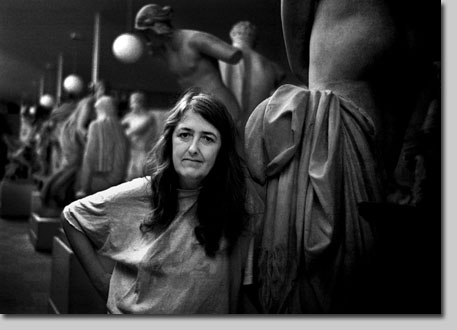
Further back, when I was toiling in the declensions and conjugations of Ancient Greek, feminism was having a splendid internal battle. Easily distracted from the hard work of learning my endings, I delighted in the fierce polemics of Mary Beard and Germaine Greer. I even did my dissertation on Medea as a heroine. In the real world – or at least in the broadsheets and culture shows – Camille Paglia and Andrea Dworkin squared up to claim the legacy of the Second Wave feminists. Paglia was all about sex, excitement and bravado, frequently hanging out with drag queens, strippers and Italian macho men. Dworkin was teaming with Catherine MacKinnon and drafting laws against pornography.
In an article from that period, Kathy Acker suggested that feminism had once been about the women’s right to say yes or no. Those two answers, she worried, had evolved into two separate and competing strands.

It was exciting.
The period between had been complex. Until a few years ago, many former leftists bemoaned the political shifts of the twenty-first century, feeling almost nostalgic for the dualisms of the 1980s, when Thatcher and Apartheid were Bad and the miners and Sandanistas were good. Happily ignoring the arms-dealers and New Labour’s superb corruption of the socialist ideal, they made their compromises with the state. Going into education, arts administration or finally getting that grant for their theatre company removed their teeth. You can spot them today: they are the ones who think that Labour are better than the Conservatives. Well, I admire their faith like I admire fundamentalist Christians. I am sure it is a consolation to them.
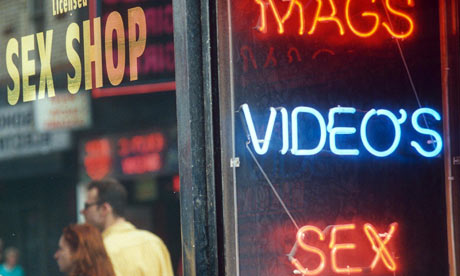
 The transition from feminism as the radical response to an obvious patriarchal society towards a media misrepresentation of lesbian man-haters (something it hasn’t been since 1974) was being completed. I woke up in 2005, roughly the time that I kicked the education habit and starting mainlining performance art, and found that burlesque and striptease were acceptable entertainment. While I remember reading in Goddesses, Whores, Wives and Slaves that the advance of women’s rights in Greece was accompanied by more explicit representations of tits and arse in art, I wasn’t sure whether this was okay. The last time I had looked, striptease was shoved into Soho alley-ways, and was likely to involve getting threatened for your credit card by a burly bouncer. Suddenly, I could go and see women disrobe before an audience of enthusiastic women. I didn’t even have to be ironic.
 Of course I decided to make cabaret part of my performance portfolio of interests.