Having been brought up on classical ballet – the annual trip to see Nutcracker on the South Bank, sporadic trips to see the English National and the grand arrival of the Kirov and Bolshoi companies in the 1980s – I was ready to embrace “contemporary dance” around the time that my musical tastes encountered punk and alternative rock. I caught an extract of DV8’s choreography to the ultra-heavy SWANS - a retrospectively leaden New York No Wave outfit - in the foyer before Giselle. Around the same time, I caught Michael Clark bouncing around to The Fall at Sadler’s Wells. It was a magical fix: I could still dig dance, and remain hip.
When I reacquainted myself with dance, the programming of Tramway, Glasgow, introduced me to Les Ballets C de la B. Apart from my friendship and championing of Iona Kewney, which came later, C de la B opened me up to the potential of dance that abandoned any of the classical pieties. I took a great huff when The Dancing Times referred to them as “circus acrobats”, and VSPRS, complete with gypsy orchestra riffing on Monteverdi, a cast of extreme performers and Platel’s own awkward spirituality, has defined my understanding of contemporary choreography’s emotional and intellectual potential.
Against the play and intensity of VSPRS, I regarded ballet as inferior: a series of polite exercises, reeking of sentimentality and hopelessly connected to a social snobbery. The biggest insult in my vocabulary was to compare companies working in the modern idiom to ballet. It was a short-hand for lazy, dry, competent professionalism.
Plenty of people pointed out my stupidity, which I now confess. Like many people, including some of its most ardent supporters, I regarded ballet as old fashioned, inextricably connected to the romantic ballets, all tutus and pointed elegance. I had to ignore my history to maintain the fiction, forgetting the immensity of the Bolshoi’s Spartacus in the Big Top, or the end of Giselle, Act I, where the heroine dies, first in the soul and then the body. I deliberately ignored those YouTube clips of spectacular ballerinas, advancing their technique beyond the niceties of English National Ballet.
 Although he is coming to the end of his time at Scottish Ballet, artistic director Ashley Page offered an important corrective. Page’s legacy is going to be hotly contested: the recent Alice was a disappointment, succeeding only in certain scenes where movement, set and costume combined to evoke a sinister otherworld. And the addition of great classical works to the repertoire, both admirable for a National Company and settling audiences perhaps challenged by the flood of new work, were often evidence for the company’s weakness in the corps des ballet. But Page’s brilliance, most clearly seen in the two bills he staged at Tramway, was to set contemporary ballet, not traditional classics, at the heart of Scottish Ballet’s vision.
Page’s initial energy updated the company beyond measure: out when twee nonsense like The Snowman, an unnecessary but crowd-pleasing adaptation of the Christmas TV cartoon. Instead, Lying, Cheating, Stealing became their defining work: brought by Page from The Royal Ballet, it transformed ballet into an insectoid commentary on financial greed. MiddleSexGorge toyed with the implicit gender confusion of dance, uncomfortably erotic and In Light and Shadow adapted the Russian style to a geometric illustration of baroque finesse.
For many, Page’s revolution was startling. Retaining the Christmas tradition of light entertainment through three major works – Cinderella, Sleeping Beauty and The Nutcracker – he dragged Scottish Ballet into the twentieth, if not the twenty-first, century. The later addition of key pieces by MacMillan and Ashton, Britain’s grand traditionalists, and Rubies by Balanchine held their position of interpreters of the past, but the real impetus came from the new commissions, including Richard Alston’s first narrative piece and Pastor’s reimagining of Romeo and Juliet.
Page taught me that my imagination was limited, that I was still holding ballet to a nineteenth, perhaps early twentieth century, model. I considered it to be a matter of form, not content. While the romantic ballets remain the most popular – even minor Russian companies can fill the Concert Hall on the back of an “authentic” Petipa Swan Lake – contemporary ballet takes the disciplined foundations and rocks them. Ian Spink used burlesque and hip-hop moves in his Petruska. The stripped down dynamism of Jorma Elo’s Kings 2 End illustrated Reich’s murderous minimalism.
 Looking back over my reviews of dance – fortunately, they are scattered across the web, so my idiocy and ignorance is generally hidden between more thoughtful interpretations – I realise how important Scottish Ballet have been in my education. There are other companies who had educated me, and I am certainly not an unqualified enthusiast for all of SB’s work. But what Page identified – ballet as a viable contemporary dance form – was crucial for my deeper appreciation of dance.
I still have my reservations about ballet: many movements in dance have defined themselves against it, or use its techniques without acknowledging them, and academic definitions of dance often use it as a starting point. This is ridiculous, given that other traditions, say the Indian, have a far older pedigree and even folk dance has been more important as a popular and accessible genre. In recent months, however, I found myself annoyed by the number of dancers who use the phrase “contemporary dance” as if it describes a particular form, before performing something that was, quite clearly, ballet in technique, approach and style. Although I still admire Michael Clark, his dancers’ claim that they are not performing ballet is denied both by their training – they are nearly all Royal Ballet graduates – and the movements on stage. Clark’s own background, and his recent interest in Stravinsky, belies a deep appreciation of ballet.
 Somehow, ballet has maintained its importance in western dance: partially by evolving, as Scottish Ballet’s repertoire proves, but also by having a phenomenal network of teachers and schools. In the meantime, contemporary has become a vague, blanket term – at its best, it is founded in the techniques of Cunningham or Graham, or the idiosyncratic strategies of a Platel – that hides a huge debt to ballet. I reject the term “contemporary dance”, because it links together works that are barely connected: the experiments of Janis Claxton have little in common with the Dance Theatre of Pina Bausch. It also provides a barrier to broader appreciation of choreography, lumping the obscure in with the accessible. It’s easier just to acknowledge “dance” rather than claim some spurious term, as if mentioning contemporary somehow relates Humanimalia to VSPRS.
There are companies, like Rambert, who have a reputation for advancing a contemporary agenda. However, this agenda is far more balletic than realised. They essentially see where ballet can go – their work is close to Scottish Ballet, in intention if not realisation. For many years, I regarded this as a failure, a form of revenge by ballet on the upstart medium. Increasingly, I have dropped the polarisation and accepted that this is contemporary ballet.


.jpg)
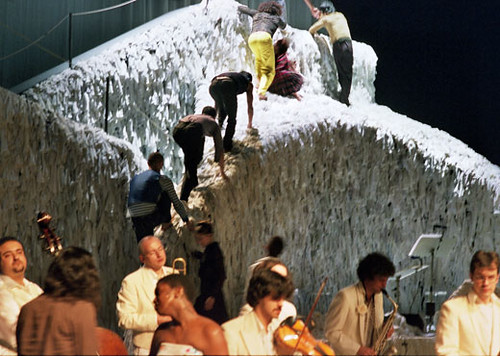
 Although he is coming to the end of his time at Scottish Ballet, artistic director Ashley Page offered an important corrective. Page’s legacy is going to be hotly contested: the recent Alice was a disappointment, succeeding only in certain scenes where movement, set and costume combined to evoke a sinister otherworld. And the addition of great classical works to the repertoire, both admirable for a National Company and settling audiences perhaps challenged by the flood of new work, were often evidence for the company’s weakness in the corps des ballet. But Page’s brilliance, most clearly seen in the two bills he staged at Tramway, was to set contemporary ballet, not traditional classics, at the heart of Scottish Ballet’s vision.
 Looking back over my reviews of dance – fortunately, they are scattered across the web, so my idiocy and ignorance is generally hidden between more thoughtful interpretations – I realise how important Scottish Ballet have been in my education. There are other companies who had educated me, and I am certainly not an unqualified enthusiast for all of SB’s work. But what Page identified – ballet as a viable contemporary dance form – was crucial for my deeper appreciation of dance.
 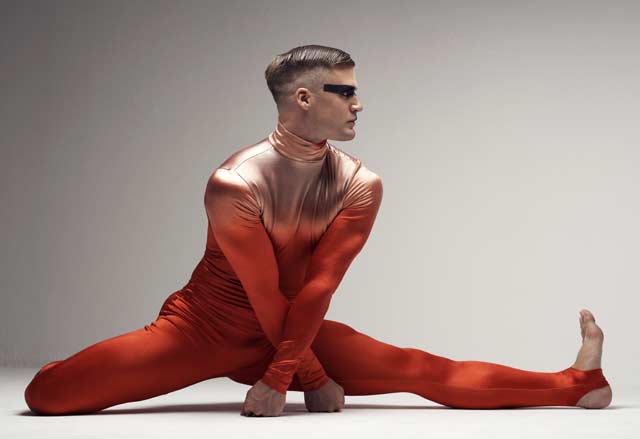 Somehow, ballet has maintained its importance in western dance: partially by evolving, as Scottish Ballet’s repertoire proves, but also by having a phenomenal network of teachers and schools. In the meantime, contemporary has become a vague, blanket term – at its best, it is founded in the techniques of Cunningham or Graham, or the idiosyncratic strategies of a Platel – that hides a huge debt to ballet. I reject the term “contemporary dance”, because it links together works that are barely connected: the experiments of Janis Claxton have little in common with the Dance Theatre of Pina Bausch. It also provides a barrier to broader appreciation of choreography, lumping the obscure in with the accessible. It’s easier just to acknowledge “dance” rather than claim some spurious term, as if mentioning contemporary somehow relates Humanimalia to VSPRS.