Showing posts with label contemporary ballet. Show all posts

Wednesday, 13 February 2013

Boys Doing Ballet

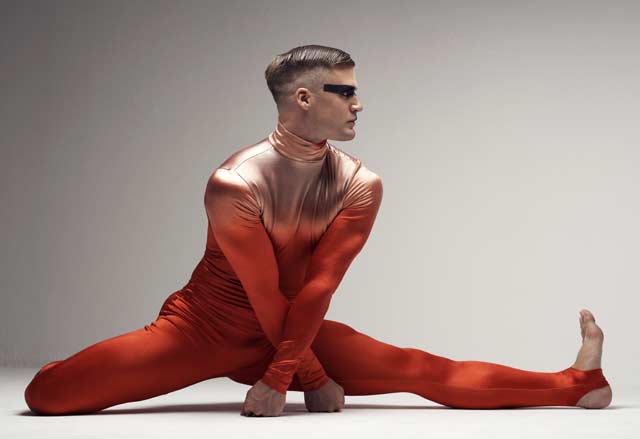
While I am aristocratic enough to regard anything that spells a plural with the letter Z as hopelessly gauche and slightly concerned about the amount of dance that emphasises the masculine (yes, it gets me hits on the blog and the audience just love seeing the boys stand on their heads, but...), Balletboyz: The Talent 2013 is something I cannot ignore. It's the perfect combination: the high art polish of ballet, which my mother and sister still insist is the most perfect performance art and a gang of lads strutting their stuff.

Frankly, if every company had a name this evocative, critics could retire from previewing and stick to abusive reviews. 

Luckily, The Telegraph did provide me with a bit more of the critical detail. 

‘The company challenged every dance stereotype going. Their work was hip and sexy and, above all, it was accessible. Now we have Balletboyz II, the Talent, in which Nunn and Trevitt pass the performance baton to a new generation... it is a clever ploy, a good way of shaking up the company image, and certainly the dancers who comprise 'the Talent’ have a fearless, crunching physicality’

Apart from the ugliness of "every dance stereotype going," The Telegraph has a point. I am checking out the company biographies, and I think they are informative.


Taylor Benjamin has worked with 2Faced Dance. I am assuming he was part of the company when they wowed the Fringe by dancing with their tops off and showed that dynamic moves could be integrated in a contemporary choreographic framework. Think tough swagger, and sudden pounces.

Andrea Carrucciu  has danced for Ballet Jeune de Geneve (Switzerland), and for acclaimed artist Penny Arcade at the Arcola Tent in London. Swiss Ballet and anarchic live artist: I have an image of a very technical dancer who suddenly takes off his clothes and shouts at the audience. He won't, but that is an intriguing pedigree.

Flavien Esmieu trained at the National Conservatoire in Lyon before joining the Jeune Ballet de Lyon. Adam Kirkham trained at Arts Ed,and performed as a soloist for the Peter Schaufuss Ballet in Denmark. Okay, that's straight up ballet action from these two.

Jordan Olpherts completed a foundation course at Northern School of Contemporary Dance in Leeds and graduated from Rambert School this year. He has performed in Resolution! at The Place and has worked with Liam Steel at Opera Holland Park. Edward Pearce trained at Elmhurst and then at Rambert School and also performed alongside Rambert in A Linha Curva by Itzik Galili. 

That's the contemporary angle covered. This line up hits plenty of tick boxes.


Leon Poulton performed for Will Tuckett as part of the summer programme at ROH2 after graduating from Laban. He has also worked with Brazilian choreographer Jean Abreu.  And Abreu is another one who likes the manly man dancer. Contemporary and tough, I guess.

Matthew Rees has no formal training; he was introduced to dance at Brockhill Park School and prior to being accepted into BalletBoyz worked with numerous youth dance groups in Kent. Had he not been selected to join the company, Matt had completed his first stage application to join The Royal Marines. This is his fourth season with BalletBoyz.

That one is my favourite. And I am not making any smart comments about someone who could have been in The Marines.

Matthew Sandiford graduated from Laban this year. He has performed with Charlie Dixon Dance Company and at The Place as part of Resolution! In August 2012 he was a featured dancer in the London 2012 Olympics Closing Ceremony. 

So - a diverse bunch. They are doing works by Liam Scarlett,  and Russell Maliphant, the multi-award-winning choreographer and an Associate Artist of Sadler’s Wells. I am hoping that neither work will explore the nature of masculinity, because that theme is really worked out in dance. Equally, male dancers don't represent men in any meaningful way:  they are fit, beautiful and dynamic, often elegant and frequently capable of doing things I'd dream about achieving. The only thing they really share with most men is a set of organs and the habitual advantages given to them by the patriarchy. 

Having said that, I do think this will be a spectacle - not so much hip (seriously, if The Telegraph thinks something is hip, it's safe to assume it isn't) but polished and precise, with sudden bursts of ferocious energy. It might be sexy, too:  I am not the one to judge this....

Mon 18 February 2013, 7.30pm


Wednesday, 31 October 2012

Remember When: Marc Brew 001

For his solo, Remember When, Marc Brew draws on his ballet experience to craft a piece of touching fragility: against the huge video  projection backdrop, Brew sits in one corner, vulnerable and rotating his arms through a cycle of often jerky and abrupt sequences. Despite the scale of the projection,  which features Brew performing similar movements in a shopping centre, obscured by an escalator and filmed through glass, Brew's delicate presence cultivates an intimacy, while his careful placement of hands and fluid shifts in shape imitate thoughts tumbling before being tamed into order.

Against the broader, sensual scope of Nocturne, Remember When is poignant and lonely: melancholic cello evokes the grand solos of ballet and Brew's stillness of body contrasts with the agitated flow of his arms and neck. Yet it affirms that Brew is capable of adapting his classical training towards a deeply personal choreography and perfectly captures the enchanting sadness that accompanies recollection of times less lonely in solitude.


Wednesday, 12 September 2012

Scottish Ballet announce (Vile pretends to be a newshound)

Thanks to my rather conservative instincts - if I become aware of a particular artistic director or choreographer, and then begin to appreciate their distinctive style, I don't like it if they move to new projects - I approached the introduction of Scottish Ballet's new artistic director with caution. Having appreciated Ashley Page's reign, which rescued the company from my memories of some rather twee work in the 1980s, I was concerned that a new director might decide to consolidate rather than expand the repertoire.

Usually I wait a few months before having an opinion about anything new. I am diving in today because I am quite excited about at least one of the future productions mentioned by Hampson in today's press conference.

So, for once, here's me acting liek a reporter... Scottish Ballet have got an exclusive license to performa Matthew Bourne's Highland Fling. Based on the classical ballet La Sylphide. Since it is set in Glasgow - and Bourne made a work up here last year, under the auspices of The Theatre Royal -  it seems only fair that Scottish Ballet get to be the first company, apart from Bourne's own, to have a shot at presenting it.

It also fits well into SB's identity - it is influenced by classical ballet, but gets into all sorts of sexy, psychedelic antics. At their best, SB have given "contemporary ballet" a presence and meaning, stripping away those secondary characteristics - the tutus, the romantic stories - while using the technique and discipline. Page's choreography often had a sardonic edge to the elegance: Highland Fling suggests that Hampson is respecting that path.

Hampson himself came across as aware of the company's dual role, both as ambassadors of Scottish dance to the world, and encouraging dance in Scotland. His project towards a version of Hansel and Gretel is going to collaborate with schools, colleges, Louise Welsh and the Forestry Commission - no lack of ambition there - and he promises that a wave of new choreographers will be coming soon to make new work but...

That's five o'clock. Time to post

Wednesday, 2 May 2012

Street Car!

After the concern surrounding Ashley Page's departure, and the disappointing reception of his full length Alice, Scottish Ballet's A Streetcar Named Desire was an encouraging step forward. Choreographer Anna Lopez Ochoa's first narrative ballet  is as celebratory and uplifting as a story based on sexual violence and insanity can get.

Apart from a few ill-judged moments - Stanley does not really need to shout "Stella" to express his frustrated emotions at the climx of the first act, and the subsequent pas de deux eroticises male brutality - Streetcar is a theatrically thrilling fusion of ballet and movement more familiar from American and Europe modern dance. 

The contrast between Blanche's fluttering, balletic steps and the earthier stomps of the New Orleans characters makes explicit the gap between her dreams of gentility and her impoverished present: the presence of a dramaturg, Nancy Mekler, seems to have ensured that every aspect of the performance, from set to props to costume to choreography, is unified to emphasise Blanche's journey from hopeful ingenue to delusional victim.


Using a relatively limited dance vocabulary, Ochoa's vision of Streetcar struggles to capture the bleak intensity of Tennessee William's original: Tamar Barry is a striking Stanley, but lacks the brutal edge of Brando's screen portrayal. And despite Ochoa's much repeated mantra that "dance lacks a past tense" - for this reason, her version does not have the final reveal of Blanche's husband's suicide, but tells the story chronologically - the flashback to Blanche's prostitute past suggests that a more allusive and abstract ballet can strike more precisely at the heart of the story's preoccupation with faded glamour and hypocrisy.

Yet Streetcar provides lavish spectacle: the pas de deux between
Stanley and Stella is a stunning technical display - perhaps diluting the savagery of their coupling for a sensuous elegance. Driven by an approachable score from Peter Salem, which is equal parts jazz and minimalist orchestration, the busy streets of New Orleans, and the more sedate atmosphere of Blanche's youthful idyll, are given robust energy. And the second act, which rushes from a montage of Blanche's attempted romance, through a recollection of her past towards the inevitable arrival of the men in white coats, races the narrative along without losing coherence or the thematic integrity.

With Sophie Martin (Stella) and Eve Mutsuo (Blanche) putting their technique at the service of characterisation, and Ochoa using ballet as a foundation for spectacle and emotive choreography, Scottish Ballet escape the trap of relying too heavily on the source script, and insist that narrative dance need not be plot heavy and predictable.


Scottish Ballet presents 
A Streetcar Named Desire

Festival Theatre, Edinburgh

Wed 18 – Sat 21 Mar 2015

Evenings 18-21 Mar - 7.30pm
Matinee 21 Mar – 2pm

Box office 0131 529 6000 (bkg fee)
Free pre-show talks at 6.30pm on Thu 19 Mar with Artistic Staff and Fri 20 Mar with Music staff. Call box office to reserve tickets.
Free post-show discussion immediately following the performance on Fri 20 Mar.


Sadler's Wells, London
Tue 31 Mar – Thu 2 Apr 2015 - 7.30pm

Free pre-show talk at 6.30pm on Thu 26 April. Call box office to reserve tickets.

Tickets from £12-£40. Discounts available - please contact box office.
Box office 0844 412 4300 (bkg fee)


USA


Harris Theater, Chicago
Thu 7 – Sat 9 May 2015 – 7.30pm

Tobin Center, San Antonio
Tue 12 May 2015 – 7.30pm

Brown Theater, Houston
Fri 15 May 2015 – 7.30pm

Byham Theater, Pittsburgh
Tue 19 May 2015 – 7.30pm

Spoleto Festival
College of Charleston Sottile Theatre, Charleston
Fri 22 - Sun 24 May 2015

Kennedy Center, Washington DC
Thu 28 – Sat 30 May 2015
Evenings 28-30 May – 7.30pm
Matinee 30 May – 1.30pm

Monday, 5 March 2012

I Love The Ballet

Having been brought up on classical ballet – the annual trip to see Nutcracker on the South Bank, sporadic trips to see the English National and the grand arrival of the Kirov and Bolshoi companies in the 1980s – I was ready to embrace “contemporary dance” around the time that my musical tastes encountered punk and alternative rock. I caught an extract of DV8’s choreography to the ultra-heavy SWANS -  a retrospectively leaden New York No Wave outfit  -  in the foyer before Giselle. Around the same time, I caught Michael Clark bouncing around to The Fall at Sadler’s Wells. It was a magical fix: I could still dig dance, and remain hip.

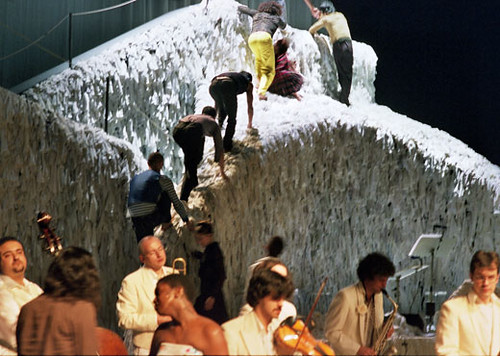
When I reacquainted myself with dance, the programming of Tramway, Glasgow, introduced me to Les Ballets C de la B. Apart from my friendship and championing of Iona Kewney, which came later, C de la B opened me up to the potential of dance that abandoned any of the classical pieties. I took a great huff when The Dancing Times referred to them as “circus acrobats”, and VSPRS, complete with gypsy orchestra riffing on Monteverdi, a cast of extreme performers and Platel’s own awkward spirituality, has defined my understanding of contemporary choreography’s emotional and intellectual potential.

Against the play and intensity of VSPRS, I regarded ballet as inferior: a series of polite exercises, reeking of sentimentality and hopelessly connected to a social snobbery. The biggest insult in my vocabulary was to compare companies working in the modern idiom to ballet. It was a short-hand for lazy, dry, competent professionalism.

Plenty of people pointed out my stupidity, which I now confess. Like many people, including some of its most ardent supporters, I regarded ballet as old fashioned, inextricably connected to the romantic ballets, all tutus and pointed elegance. I had to ignore my history to maintain the fiction, forgetting the immensity of the Bolshoi’s Spartacus in the Big Top, or the end of Giselle, Act I, where the heroine dies, first in the soul and then the body. I deliberately ignored those YouTube clips of spectacular ballerinas, advancing their technique beyond the niceties of English National Ballet.

Although he is coming to the end of his time at Scottish Ballet, artistic director Ashley Page offered an important corrective. Page’s legacy is going to be hotly contested: the recent Alice was a disappointment, succeeding only in certain scenes where movement, set and costume combined to evoke a sinister otherworld. And the addition of great classical works to the repertoire, both admirable for a National Company and settling audiences perhaps challenged by the flood of new work, were often evidence for the company’s weakness in the corps des ballet. But Page’s brilliance, most clearly seen in the two bills he staged at Tramway, was to set contemporary ballet, not traditional classics, at the heart of Scottish Ballet’s vision.

Page’s initial energy updated the company beyond measure: out when twee nonsense like The Snowman, an unnecessary but crowd-pleasing adaptation of the Christmas TV cartoon. Instead, Lying, Cheating, Stealing became their defining work: brought by Page from The Royal Ballet, it transformed ballet into an insectoid commentary on financial greed. MiddleSexGorge toyed with the implicit gender confusion of dance, uncomfortably erotic and In Light and Shadow adapted the Russian style to a geometric illustration of baroque finesse.

For many, Page’s revolution was startling. Retaining the Christmas tradition of light entertainment through three major works – Cinderella, Sleeping Beauty and The Nutcracker – he dragged Scottish Ballet into the twentieth, if not the twenty-first, century. The later addition of key pieces by MacMillan and Ashton, Britain’s grand traditionalists, and Rubies by Balanchine held their position of interpreters of the past, but the real impetus came from the new commissions, including Richard Alston’s first narrative piece and Pastor’s reimagining of Romeo and Juliet.

Page taught me that my imagination was limited, that I was still holding ballet to a nineteenth, perhaps early twentieth century, model. I considered it to be a matter of form, not content. While the romantic ballets remain the most popular – even minor Russian companies can fill the Concert Hall on the back of an “authentic” Petipa Swan Lake – contemporary ballet takes the disciplined foundations and rocks them. Ian Spink used burlesque and hip-hop moves in his Petruska. The stripped down dynamism of Jorma Elo’s Kings 2 End illustrated Reich’s murderous minimalism.

Looking back over my reviews of dance – fortunately, they are scattered across the web, so my idiocy and ignorance is generally hidden between more thoughtful interpretations – I realise how important Scottish Ballet have been in my education. There are other companies who had educated me, and I am certainly not an unqualified enthusiast for all of SB’s work. But what Page identified – ballet as a viable contemporary dance form – was crucial for my deeper appreciation of dance.

I still have my reservations about ballet: many movements in dance have defined themselves against it, or use its techniques without acknowledging them, and academic definitions of dance often use it as a starting point. This is ridiculous, given that other traditions, say the Indian, have a far older pedigree and even folk dance has been more important as a popular and accessible genre. In recent months, however, I found myself annoyed by the number of dancers who use the phrase “contemporary dance” as if it describes a particular form, before performing something that was, quite clearly, ballet in technique, approach and style. Although I still admire Michael Clark, his dancers’ claim that they are not performing ballet is denied both by their training – they are nearly all Royal Ballet graduates – and the movements on stage. Clark’s own background, and his recent interest in Stravinsky, belies a deep appreciation of ballet.

Somehow, ballet has maintained its importance in western dance: partially by evolving, as Scottish Ballet’s repertoire proves, but also by having a phenomenal network of teachers and schools. In the meantime, contemporary has become a vague, blanket term – at its best, it is founded in the techniques of Cunningham or Graham, or the idiosyncratic strategies of a Platel – that hides a huge debt to ballet. I reject the term “contemporary dance”, because it links together works that are barely connected: the experiments of Janis Claxton have little in common with the Dance Theatre of Pina Bausch. It also provides a barrier to broader appreciation of choreography, lumping the obscure in with the accessible. It’s easier just to acknowledge “dance” rather than claim some spurious term, as if mentioning contemporary somehow relates Humanimalia to VSPRS.

There are companies, like Rambert, who have a reputation for advancing a contemporary agenda. However, this agenda is far more balletic than realised. They essentially see where ballet can go – their work is close to Scottish Ballet, in intention if not realisation. For many years, I regarded this as a failure, a form of revenge by ballet on the upstart medium. Increasingly, I have dropped the polarisation and accepted that this is contemporary ballet.