 A year or so ago, I heard Carl Lavery give a lecture than took the absurdists and, by identifying themes of ecology within their work, demonstrate that far from dwelling in a meaningless, abstract universe, the characters in their plays were caught up in a symbolic representation of the nuclear and environmental terror that plagues the world after WWII.
(There was a great deal more to the lecture, but I am being a populist critic today).
Lavery is also interested in ruins - he recently mentioned a great idea which I shall be distorting in the near future to my own ends.
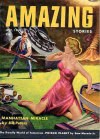
Anyway, I'd like to suggest a fertile short story from 1954: Philip K. Dick's Breakfast at Twilight.
Isn't the title enough? Twilight, evoking Wagner and the end of times? And breakfast - isn't that a morning thing? Time is out of joint, the homely crashes up against the epic, and only three words in...
The plot is very simple. A nuclear family (mon, pop, two lovely children) find themselves flung into the future one morning. They wake up in a desolate war-zone, and are interrogated by soldiers. After hearing about the state of the USA - which is at war with the USSR - they decide to risk their lives to be sent back in time.
Dick's writing is at its best here: the final paragraph makes it very clear that he is warning against the dangers of the Cold War (a future human says that it is impossible to say when the war started, rather 'it grew') through the metaphor of an exploding water heater. Yet it is the detail of the future that makes it so gripping - and even prophetic, to use a word that is over-used for science fiction but here is an expression of Dick's remarkable foresight.
Ruins.
Ruined buildings. Heaps of rubble. Debris everywhere... the concrete walk ended abruptly. Beyond it, slag and heaps of rubble were strewn. Nothing else. Nothing as far as the eye could see.
Nothing stirred. Nothing moved... no life. No motion. Jagged walls, empty and gaping... Melted metal.
Against the introduction - a sweet family preparing for the day ahead, drinking coffee and getting ready for school and work, Dick's emphatic vision of nothingness is haunting. He conjures a wasteland that would do Beckett proud.
Underneath this physical disruption, time itself has been damaged: the bombs of the future have somehow dragged the family, and their house, into the future. The scale of the threat goes beyond life and limb. The fabric of the universe is under attack.
Plenty of science fiction does these tricks - in the 1950s, it is the medium for expression of American angst. Yet Dick is not finished: the future soldiers are frightened of the air, which has been poisoned - the political leader who arrives shows signs of having been sickened by it. But in the brief glimpse that Dick gives of the future society, the American Dream has clearly been destroyed by the war.
.jpg)
'I supervise the troops. Watch for political deviation. In a total war we have to keep people under constant surveillance...'
'I haven't seen fiction in months. Most of it disappeared. Burned back in '77'
'We can't turn our children over to them - to the Relocation Centre. To be taught how to hate and kill and destroy.'
In brief, broad strokes, Dick reveals the world at war - everything is

Handing this over to Lavery, a few ponderings remain. Is Philip K Dick aware of how his work relates to Beckett and Ionesco? Are the themes of ruination and despair more easily understood in the light of absurdist scripts? And is Dick himself closer to a European tradition of writing than the rest of the American science fiction authors?


