It is perhaps ironic that the most direct questions about dramaturgy reveal a confusion about what the word means. When Tim Crouch is asked about the 'relevance' of dramaturgy in his work, he replies
It sounds like dramaturgy is integral to my work, although the word itself rarely appears in my process.
Ciaran Myers adds
I don’t like the word “dramaturgy” because I prefer to think of myself as more of an artist than an organizer.
While Angry Puffin are more elliptical.
Ask yourself why anyone writes a play. Ask yourself why people go to see plays, why Art is important, why the loss of Art is a disaster. Ask yourself why the heart beats.
And before going on to give a very thoughtful and detailed answer, Laura Ingram claims
In all honesty, I haven't ever given the concept of dramaturgy much thought.
Within this sample, then, dramaturgy is not a word that has particular currency. Although Ingram and Crouch go on to recognise how the definition given by Vile ('decisions that define and shape performance') does apply to their processes, the idea of dramaturgy as a category of thought is secondary to their actual making process.
Nevertheless, the artists often grapple with the question and identify strands within their process that appear to come under this broad definition. Somewhat reluctantly, Myers admits that
I can’t deny that dramaturgy is the alpha and omega of everything I do. This play in particular leans on the relationship between actor and performer.
connecting the choices made in the making with the eventual reception of Touch. Joan Cleville, meanwhile, is far more comfortable with dramaturgy and, like Crouch, sees it as a structuring approach to his choreography.
It helps me to define the parameters of each piece: what is possible or impossible inside the reality of each work. There is also a sense of dramatic journey in everything I create, and dramaturgy offers me inside clues about the overall structure of the work.
Cleville appears to be using 'dramaturgy' to mean a 'mode of thinking about the production': the emphasis on structure suggests an overview of Plan B. This is echoed in Mike Chao's answer, which describes his magic show's narrative.
For my show, its not about the technique of my hands , the "green objects" in my act, is just like a kind of magic power, they give me energy to do something incredible just like magic.
So, in the end of the routine, the greens change to white, just like I lost my power, and the show is done.
Tim Crouch elaborates on his appreciation of dramaturgy by noting that when he makes a piece, he considers it in a performance context from the start: the stage is part of his thinking even as he puts words on the page. Like Gary McNair, Crouch frequently performs his own scripts (An Oak Tree, which he bought back to the Fringe in 2015 features him alongside a different actor every evening), and the easy dividing line between playwright and performer is challenged. Within their dramaturgical process, then, the actual physical performance is considered alongside the text.
It is possibly these responses, which betray a suspicion of dramaturgy as a concept but provide a precise awareness of its use, that encouraged Vile's later subdivision of questions with more emphasis on the audience response in relation to the performers' intentions.
Yet within this limited sample, two ideas come across very clearly: dramaturgy is concerned with the structure of a performance, and that it concerns the response of an audience to a show. Only Cleville considers it as an engagement with characterisation and subtexts - both of which are concerned with the internal world of the performance, even though they are key to the communication with the audience.
Showing posts with label Carl Lavery. Show all posts
Showing posts with label Carl Lavery. Show all posts
Thursday, 3 March 2016

Wednesday, 2 March 2016
The Dramaturgy Database: Analysis Part 1, The Choices
Rather than attempt to grapple with wider themes, this essay takes ten entries to the database. They have been selected from various points in the process.
An Interview with Purple Penguin
One of the earliest entries, it is an interview with Kat Woods, writer and director of Belfast Boy. There are a selection of questions that relate directly to the production, which the company were bringing to Edinburgh Fringe 2015, and some that discuss dramaturgy within Wood's approach.
An Interview with Mike Chao
Chao is a magician, and this is an example of Vile's habit of engaging artists who would not usually consider dramaturgy: Chao's reply to the final question ('maybe?) hints at the confusion caused by Vile's line of questioning.
An Interview with Angry Puffin
A more recent piece, it lacks any individual name as an attribution for the answers, suggesting that the two actors mentioned in the introduction are working together on the replies. The company are based in Glasgow.
An Interview with Tim Crouch
Another piece from the Fringe, 2015: parts of this interview were later used in a preview article for The List.
An Interview with Ciaran Myers
Myers was the playwright for Touch, a production at the Edinburgh Fringe 2015. Again, this features questions about the production and more general discussion of the role of dramaturgy.
An Interview with Laura Ingram
Another playwright from the 2015 Fringe. This particular piece is one of the most read articles on The Vile Blog, and the first of the Dramaturgy Database articles to reach 300 views within a month.
An Interview with James Beagon
A recent post with the director of an updating of Shakespeare's Julius Caesar. This company are based in Edinburgh.
An Interview with Joan Cleville
A relatively rare example of a choreographer within the database, the choreographer of Plan B spoke about his piece ahead of the 2015 Fringe.
An Interview with Gary McNair
From the pantomime season, Vile talks to writer and performer McNair about his script for the 'adult pantomime' at Glasgow's Oran Mor.
Although these choices do not represent the database in any sense - none of the interviews could be seen as typical, they do give a vague sense of the range of artists who have given their time to answer questions. All of these interviews were conducted via email.
An Interview with Purple Penguin
One of the earliest entries, it is an interview with Kat Woods, writer and director of Belfast Boy. There are a selection of questions that relate directly to the production, which the company were bringing to Edinburgh Fringe 2015, and some that discuss dramaturgy within Wood's approach.
An Interview with Mike Chao
Chao is a magician, and this is an example of Vile's habit of engaging artists who would not usually consider dramaturgy: Chao's reply to the final question ('maybe?) hints at the confusion caused by Vile's line of questioning.
An Interview with Angry Puffin
A more recent piece, it lacks any individual name as an attribution for the answers, suggesting that the two actors mentioned in the introduction are working together on the replies. The company are based in Glasgow.
An Interview with Tim Crouch
Another piece from the Fringe, 2015: parts of this interview were later used in a preview article for The List.
An Interview with Ciaran Myers
Myers was the playwright for Touch, a production at the Edinburgh Fringe 2015. Again, this features questions about the production and more general discussion of the role of dramaturgy.
An Interview with Laura Ingram
Another playwright from the 2015 Fringe. This particular piece is one of the most read articles on The Vile Blog, and the first of the Dramaturgy Database articles to reach 300 views within a month.
An Interview with James Beagon
A recent post with the director of an updating of Shakespeare's Julius Caesar. This company are based in Edinburgh.
An Interview with Joan Cleville
A relatively rare example of a choreographer within the database, the choreographer of Plan B spoke about his piece ahead of the 2015 Fringe.
An Interview with Gary McNair
From the pantomime season, Vile talks to writer and performer McNair about his script for the 'adult pantomime' at Glasgow's Oran Mor.
Although these choices do not represent the database in any sense - none of the interviews could be seen as typical, they do give a vague sense of the range of artists who have given their time to answer questions. All of these interviews were conducted via email.
The Dramaturgy Database: Introduction to some Analysis
Published from June 2015 to date, the dramaturgy database is a strand within The Vile Blog, an archive of work from The List's Theatre Editor and Glasgow University PhD student, Gareth K Vile. Consisting of over six hundred entries, and ranging across a variety of performance forms, it offers the complete text of email interviews conducted by Vile with performers, directors, choreographers and, more occasionally, other members of the performance communities, such as PR agents.
A quick survey of the database reveals that many of the contributors were presenting work during the Edinburgh Fringe, 2015, although entries after October 2015 tend to feature artists who are presenting work within Scotland or London. The majority of entries come from the directors of theatre.
The database retains a focus on the discussion of 'dramaturgy'. Vile's own defintion of dramaturgy remains loose: at various times, he refers to it as 'the process of making performance', while recognising that this open-ended definition allows plenty of interpretation. Indeed, in a recent post on the blog (but not part of the database), he identifies, without much argument, a sense of dramaturgy in the self-portraits of Claude Cahun.
Each post within the database shares a structure: a press release (or other artist generated text) introduces the work and maker in question. There is a title that always includes the word dramaturgy, and makes a half-hearted attempt to work this into a commentary on the piece's title. The main body of the article is a series of questions - generic and general - which do evolve as the database grows.
Vile's own reasons for starting and continuing the database are not always clear. In the supporting documentation, he explains that it is 'part of his research' and that it hopes to show 'a working definition of dramaturgy'. But in the same post, he acknowledges that, by mixing it with his other, more eclectic posts and articles, he has made it difficult to access.
However, it is quite clearly not, at this stage, an expression of Vile's academic writing, belonging more closely to the populist preview mode of writing and, as he claims, more useful as a piece of media to insert into social media as an advertisement for upcoming performances or, he hopefully adds, as a resource for other researchers. In terms of scale, it is an impressive project, that lacks direction.
This huge number of entries make the database difficult to assess, although future studies, taking a statistical approach to the content, may yield an assessment of themes within the responses.
This essay aims to use ten of the entries - chosen without any particular intentions - to explore some of the themes around the discussion of dramaturgy between Vile and a selection of artists. By close reading of the answers, a tentative evaluation of dramaturgy's place within the artists' performances might be traced.
A quick survey of the database reveals that many of the contributors were presenting work during the Edinburgh Fringe, 2015, although entries after October 2015 tend to feature artists who are presenting work within Scotland or London. The majority of entries come from the directors of theatre.
The database retains a focus on the discussion of 'dramaturgy'. Vile's own defintion of dramaturgy remains loose: at various times, he refers to it as 'the process of making performance', while recognising that this open-ended definition allows plenty of interpretation. Indeed, in a recent post on the blog (but not part of the database), he identifies, without much argument, a sense of dramaturgy in the self-portraits of Claude Cahun.
Each post within the database shares a structure: a press release (or other artist generated text) introduces the work and maker in question. There is a title that always includes the word dramaturgy, and makes a half-hearted attempt to work this into a commentary on the piece's title. The main body of the article is a series of questions - generic and general - which do evolve as the database grows.
Vile's own reasons for starting and continuing the database are not always clear. In the supporting documentation, he explains that it is 'part of his research' and that it hopes to show 'a working definition of dramaturgy'. But in the same post, he acknowledges that, by mixing it with his other, more eclectic posts and articles, he has made it difficult to access.
However, it is quite clearly not, at this stage, an expression of Vile's academic writing, belonging more closely to the populist preview mode of writing and, as he claims, more useful as a piece of media to insert into social media as an advertisement for upcoming performances or, he hopefully adds, as a resource for other researchers. In terms of scale, it is an impressive project, that lacks direction.
This huge number of entries make the database difficult to assess, although future studies, taking a statistical approach to the content, may yield an assessment of themes within the responses.
This essay aims to use ten of the entries - chosen without any particular intentions - to explore some of the themes around the discussion of dramaturgy between Vile and a selection of artists. By close reading of the answers, a tentative evaluation of dramaturgy's place within the artists' performances might be traced.
Wednesday, 2 December 2015
Diderot and the Lapdancer: Interlude 1, a poetic battle
Is not my body beautiful? She said, slipping from her dress.
Many things are beautiful: it’s just what we like the best.
Does not my revelation inspire you to adore me?
I honour the upright, he replied. You’re distracting, a debauchery.
Your denial of attraction suggests God just got it wrong
In creating skin so fair and my limbs so comely long.
I feel only pity for your sorry pretty vice:
You are just mistaking bad things for the nice.
Do I practice without reason, a science imperfect?
Your metaphysic’s already clear: it’s just cause and effect.
You resist this sacred moment, you cling to social codes...
A good man when unhappy still knows the happy road.
You are talking like a Stoic, but you were born an Epicure.
Attachment is no virtue, but virtue is its cure.
Be passive in your enjoyment, sit back and relax.Happiness is the final goal of every human’s acts.
Wednesday, 25 November 2015
Diderot and the Lapdancer: Chapter One.
 In good
weather, it was his habit to arrive at the club around five o'clock in the evening. I’d see him there, sitting with his back facing the bar, always alone,
wrapt in thought. He was discussing with himself – and anyone who caught his
attention – politics, love, art, philosophy.
In good
weather, it was his habit to arrive at the club around five o'clock in the evening. I’d see him there, sitting with his back facing the bar, always alone,
wrapt in thought. He was discussing with himself – and anyone who caught his
attention – politics, love, art, philosophy.
I’m indulging my mind, he says, in whatever it fancies,
letting it follow the first thought, daft or wise that it comes across...
Like
the regulars, who follow the dancer with a carefree look, a welcoming face and
a lively eye, then leaving her for another? His thoughts are his whores,
obviously. Although the term preferred now is sex workers (a reminder that his
revolutionary mind did not quite extend to the liberation of women...)
And do those
thought ever follow to actually having a
dance while you are here?
I was accosted by one of the most extraordinary characters
that this country possesses – and God knows we are not short of them! She’s a
mixture of the noble and the base, intelligence and madness.
It’s
very charming of you to describe me so, Mr...?
Diderot. I am the irresistible Diderot.
I’ve
seen you here often, Diderot. But don’t you ever have a dance?

I don’t care for oddities like you. Once a year is enough
for me.
Ah,
Mister Philosopher! What are you doing among this group of scoundrels, then?
Are you wasting time pushing the wood around?
I enjoy watching the dancers work the room, when I have
nothing better to do.
An
observational philosopher, are we? Not a bold anthropologist who mixes with the
culture he would understand?
As long as things are in our understanding only, they are
just opinions: it’s only by observing external objects, and linking them to our
understanding, that we can know whether they be true or false.
You say
that, yet you know that there is a multitude of phenomena that happen beyond
the limitations of your understanding... for example, what happens behind the
black curtain, Mr Diderot?
It is easier and quicker to consult my own mind than
investigate it in the world.
I think
perhaps you’ll be astonished if you had a dance?

Then my work as a philosopher would be to dissipate that
astonishment.
Then
let me remind you that you are in the club, and here a certain set of rules
abide. ‘Take the dress of the country you are going to...’
And in reply, let me remind you that your dance is merely
the end of a process whereby the most solemn desires, a noble and innocent
pleasure, has been converted into a source of depravity and evil. To be clear,
in a better society, where no laws bound the natural passions, where women are
not trapped in matrimony, where social status can be no barrier to shared
delights, this corrupted merchantile exchange, this commodification of the very
body itself, would be an unnecessary transaction.
The
philosopher speaks again of ideals, some utopia of authentic experience. I can
see the conflict in your eyes, the gestures, the way you writhe upon the seat:
the natural man, with natural curiosity and honest passions, longs to know what
is behind the curtain. Yet the other man, the artificial moral man, strives to
chain this natural inquisitiveness with rules and codes. You want...
We both want... you want my money... you are made ill by the
tyranny of man, who has made you into
property.
In
want, a man has no remorse. In sickness, a woman has no shame... now, do you
want to discover how shameless I can be?
And so
he agrees, knowing that pleasure and pain are the only foundations for action,
and that those educated men who lock themselves away from life for the benefit
of study are not driven by their desire for women but thinking, only thinking
(and that was never his desire).
Le Neveu de Rameau (3, 4) pg 190 (ID)
De L’Interpretation de la Nature (VII, VI, X) pg 62-3 (ID)
Supplement au Voyage de Bougainville pg 317, 315 (ID)
Refutation D’Helvetius pg 295 (ID)
Monday, 23 November 2015
Mad Cyril Tells It like He Sees It (Diderot and the Lap-dancer, interlude 3)
I have a bit of bother with this whole ‘suspension of disbelief’ malarkey. I know Coleridge
came up with it, and he wasn’t adverse to a bit of puff. Suggests his
relationship to reality was probably tangential. But I’ve seen a few plays, like
that Forced Entertainment one when I was right off my chump, and I didn’t
feel the need to scream that there was a real gorilla on the stage. It was that
sexy bird in a monkey suit. I knew that.
Mind you, I still reckon that Bloody Mess was the
closest I’ve ever come to feeling the dramatic illusion old Diderot bangs on
about. The way that they had these characters

Yeah, that’s the
closest I’ve seen to real life on stage. Plus no-one knew whether they were a
tragedy or a comedy: couple of clowns trying to split up, only they couldn’t; a
sexy lady talking dirty in that gorilla clobber; two dirty long-hairs
pretending they were romantic heroes.
That time Forced Entertainment was good – unlike their
follow-up, which tried the same trick only explaining history and failed – that
was text-book dramatic illusion. See, they kept piling it on, scene after
scene. The sort who wanted to pass away, the geezer doing his impersonations of
various bombs, the clown trying to tell a story about the universe… the end of
the Universe, as it happens, which suggests that they might have had a bit of a
destructive theme going on.
The emotions got higher and higher, until the whole
thing was a bloody mess. Just what it says on the tin – and there was no way
reason was able to cope with the amount of information they were chucking at
the audience. The constant interruptions, the bickering, bloke getting his nads
out at one point… it was so much that reason was proper overwhelmed. And so,
yeah, I might never have forgotten that it was a play – they were quick to chat
straight at the audience – but I was right in and about it.
Diderot was never much cop at fiction: his novel gets
distracted by big ideas and

Now I mention this because Diderot is explaining why plays
can never have suspension of disbelief. In his time, they had the knobs sitting
on the stage and all, so you got these gawkers right up in the action. Diderot
did mention that he wanted the impediments to realism out of the way, but this
problem – of explaining the dramatic illusion through reason (it’s supposed to
be a thing of emotional overload, so quite why he thinks he’ll manage that is
another point) – is made a lot more difficult when the play as a play is being
made clear by all the stage business and the way that the actors speak their
words.

Suspension of disbelief? Skin us up another one, Coleridge,
eh?
Sunday, 19 April 2015
Breakfast at Twilight: Ruination
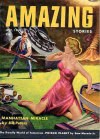 A year or so ago, I heard Carl Lavery give a lecture than took the absurdists and, by identifying themes of ecology within their work, demonstrate that far from dwelling in a meaningless, abstract universe, the characters in their plays were caught up in a symbolic representation of the nuclear and environmental terror that plagues the world after WWII.
(There was a great deal more to the lecture, but I am being a populist critic today).
Lavery is also interested in ruins - he recently mentioned a great idea which I shall be distorting in the near future to my own ends.
Anyway, I'd like to suggest a fertile short story from 1954: Philip K. Dick's Breakfast at Twilight.
Isn't the title enough? Twilight, evoking Wagner and the end of times? And breakfast - isn't that a morning thing? Time is out of joint, the homely crashes up against the epic, and only three words in...
The plot is very simple. A nuclear family (mon, pop, two lovely children) find themselves flung into the future one morning. They wake up in a desolate war-zone, and are interrogated by soldiers. After hearing about the state of the USA - which is at war with the USSR - they decide to risk their lives to be sent back in time.
Dick's writing is at its best here: the final paragraph makes it very clear that he is warning against the dangers of the Cold War (a future human says that it is impossible to say when the war started, rather 'it grew') through the metaphor of an exploding water heater. Yet it is the detail of the future that makes it so gripping - and even prophetic, to use a word that is over-used for science fiction but here is an expression of Dick's remarkable foresight.
Ruins.
Ruined buildings. Heaps of rubble. Debris everywhere... the concrete walk ended abruptly. Beyond it, slag and heaps of rubble were strewn. Nothing else. Nothing as far as the eye could see.
Nothing stirred. Nothing moved... no life. No motion. Jagged walls, empty and gaping... Melted metal.
Against the introduction - a sweet family preparing for the day ahead, drinking coffee and getting ready for school and work, Dick's emphatic vision of nothingness is haunting. He conjures a wasteland that would do Beckett proud.
Underneath this physical disruption, time itself has been damaged: the bombs of the future have somehow dragged the family, and their house, into the future. The scale of the threat goes beyond life and limb. The fabric of the universe is under attack.
Plenty of science fiction does these tricks - in the 1950s, it is the medium for expression of American angst. Yet Dick is not finished: the future soldiers are frightened of the air, which has been poisoned - the political leader who arrives shows signs of having been sickened by it. But in the brief glimpse that Dick gives of the future society, the American Dream has clearly been destroyed by the war.
.jpg)
'I supervise the troops. Watch for political deviation. In a total war we have to keep people under constant surveillance...'
'I haven't seen fiction in months. Most of it disappeared. Burned back in '77'
'We can't turn our children over to them - to the Relocation Centre. To be taught how to hate and kill and destroy.'
In brief, broad strokes, Dick reveals the world at war - everything is

Handing this over to Lavery, a few ponderings remain. Is Philip K Dick aware of how his work relates to Beckett and Ionesco? Are the themes of ruination and despair more easily understood in the light of absurdist scripts? And is Dick himself closer to a European tradition of writing than the rest of the American science fiction authors?
Subscribe to:
Posts
(
Atom
)