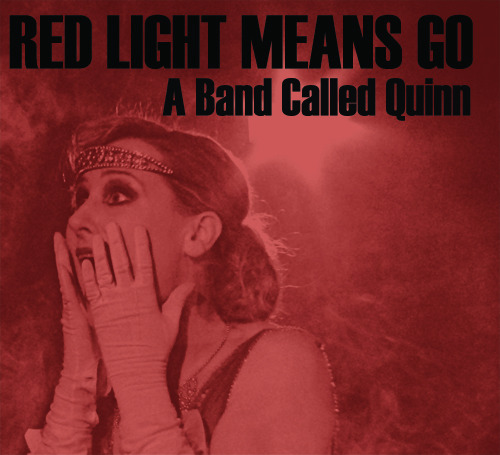
Showing posts with label a band called quinn. Show all posts

Tuesday, 25 April 2017

Dramaturgy is Torture: Louise Quinn @ Mayfesto


SHOWS:  
18th, 19th & 20th May - Tron Theatre, Glasgow
25th, 26th & 27th May -  Traverse, Edinburgh
1st June - Eden Court, Inverness
Running Time: 60 mins | Suitable for 14+
A new piece of darkly comic, gig-theatre, cuts deep into what it is to ‘sell out’ and how we respond to global events. 


MUSIC IS TORTURE is a dark comedy set in Limbo Recording Studios featuring live music and new songs by Glasgow Art-poppers ‘A Band Called Quinn’ who appear in the show as the band Dawnings.
This new piece of gig theatre tells the story of a struggling music producer, Jake, who discovers that his music is being used to torture political prisoners and charts his ensuing moral dilemma. Essentially this is a show about selling out – but it also looks at how people respond to global conflict; how people respond to fear of terrorism. 
Music Is Torture was written by singer/ songwriter Louise Quinn and directed by Grid Iron’s Co-Artistic Director Ben Harrison. The piece is inspired by the research of Berlin-based Scottish musicologist Dr. M. J. Grant into the use of music to promote, facilitate and accompany violent response to conflict.

Ah - starting off - this is a tough subject to be dealing with! I'm talking about for myself, really: it strikes me that you've taken a relevant and contemporary topic, but found a way to relate it to the form of your work. And that might be the place to start... having seen Biding Time, is there much in terms of the way that this show is being presented that will be familiar to me? Is it going to be an example of 'gig-theatre' in the same way?

Music Is Torture, whilst still being 'gig-theatre', is much more of a straight ahead play; because the play is set in a recording studio the music is completely immersed into the narrative of the story.

The action takes place in Limbo Recording studios where we see our protagonist Jake struggling to maintain a sense of self worth having spent the past fifteen years recording the same album by the same band (Dawnings, played by A Band Called Quinn). 

It's a bit of a sequel to Biding Time (remix); what happens to someone after they've been signed and dropped by a major record label, when all they really have left is their soul.

The band are characters in the story but also act as a chorus reflecting and commenting on Jake's moral dilemma as he is offered the chance to benefit financially from the use of his music to torture political prisoners. 

I have also noticed that there is a promise of 'humour' in the production. Was that hard to find, given the subject matter?

I didn't want to write a worthy didactic piece on human rights. The style we have developed with our work is darkly comic and surreal; in a way this highlights the horror of music torture without being too literal. Dr Grant says she sometimes finds it hard to engage people in the subject with academic presentations but the moment she plays a clip from a Billy Wilder film of a character being subjected to a song on repeat, they get it. 

Then there is the musicologist. I am always excited to see influences coming from unexpected sources (although maybe a musicologist is less surprising for you, and I am thinking of the more general theatre community). How did Dr Grant's work inspire you, and is it possible to see traces of the musicological analysis in the show?

Dr Grant is my cousin(!) We grew up in Lanarkshire and as children we would make up stories and put on little performances for our parents. I've always been interested in Morag's work as a musician and admired her involvement in human rights activism. When Morag told me about her work on music torture we were making Biding Time (remix) at the time. I found it hard to comprehend music being used in such a way. I started reading about the songs which had been used and the way their creators had responded when they found out something they had created was being used to psychologically torture political prisoners. 

We have given Robert (Henderson - our trumpet player) a speech which draws upon Morag's musicological analysis (a highlight for me!) and consulted with Morag on the script and performance.

As for the question of selling out: that seems to have been a theme in your work, and I am wonder how far it is possible to draw comparisons with a general complicity with the financial demands of capitalism and the specifics of the case where music is used as a a way of torturing...

For me it was like taking the art vs commerce battle depicted in Biding Time (remix) and dropping it into the much bigger picture of human rights. I think it's a reflection of what's happening in the world today; there are huge sections of society who are disenfranchised and feel justified in choosing to pursue self interest over morality and support the views of the likes of Trump and Farage. It was important for me that the characters were from working class backgrounds as most people who are successful and can afford to pursue a career in the arts are from more privileged backgrounds.

The show depicts how the political can relate to the personal; how global events can impact on a persons life; how interconnected the world is. I saw an anti-trump demonstrator in Edinburgh being interviewed on the news recently who said 'If we don't do something we're complicit'. 

Actually, on that note, I was watching The Men who Stare at Goats, and that suggests that the music-torture technique was kind of the 'dark side' of an attempt to find non-violent ways to fight wars... is there some about the nature of music that puts it in a marginal space in which it can be used for good or evil? and, if so, how do you keep on the side of the light?

As Morag's research demonstrates, the use of music to torture political prisoners effectively breaks the victim down psychologically to the point where they would rather suffer physical torture than be subjected to endlessly repeated music. Sometimes the music torture is accompanied by strobe lighting, stress potions and other physical abuse. 
Torture, and by extension music torture, has been proven to be ineffective at gathering intelligence. Most musicians (for example, David Gray who's song Babylon was used by US interrogators in Iraq) are opposed to their music being used in such a way. Other artists like Metallica and Bob Singleton who wrote the Barney The Dinosaur theme aren't that concerned; other artists like Drowning Pool consider it an honour. 

The character I play in the show is called Evie Phanuel after the archangel who offers hope to those in the depths of despair and I believe music has the power to do this. I think if you put your heart and soul into writing a song, someone somewhere will identify with it and not feel so alone.  

As artists we also use music in a therapeutic manner with community groups and in educational settings; the complete opposite to music torture! 

And on a more theatrical note: what's it like working with Ben Harrison? He is a familiar presence in your productions... does he have an attitude that suits your approach to performance?

Ben is a long term collaborator, mentor and friend. He understands our vision and knows how to achieve it in the form without being restricted by it.


Musicologist Dr. M. J. Grant:

“It can be difficult to get the message out about the reality of torture, especially when it comes to forms such as music torture that to the uninitiated might seem like a joke. This is why artistic treatments of the subject are so important: they can convey much that is important without the whole thing becoming voyeuristic or unduly harrowing. 

I’m excited about this show not just because of the way it explores the psychological mechanisms of torture in a subtle but effective way, but because it draws attention to our own responsibility for the continued use of torture in today’s world.”
Playwright Louise Quinn:
“When Morag told me about her research we were working on Biding Time (remix) which raised issues about art versus commerce. As an artist I found it hard to comprehend music being used in such a way and when I researched artist’s responses to their music being used to torture political prisoners, I got an idea for a script. 

Every day it seems to be more relevant and reflective of what’s happening in the world today; a disenfranchised protagonist who is torn between morality and self interest.”   
Director Ben Harrison added:
“Music is Torture interrogates our complicity in acts of torture but does so in the most shockingly comic way. The Faustian dilemna at the heart of the piece- should I benefit directly from the sufferings of others - is presented with great wit and dark humour making parallels between the metaphorically torturous act of creation and the real torture of political prisoners. 

The live room as a metaphor for the torture chamber is a powerful and resonant image, articulating our globalised and hyper-connected world, made all the more resonant as the show is based on real events.”


Company Information:
Ben Harrison -  Director
Andy Clark -  Actor  TBC
Stephen McCole - Actor TBC
Robert Henderson - Trumpet/ Keys
Steven Westwater - bass
Louise Quinn - singing/ guitar
Bal Cooke - drums
Dani Rae - Producer
Camilla O'Neill - Production manager
Kate Bonney - Lighting Design
Tim Reid - AV
Emily James - Set and Costume Design
Bal Cooke - Sound Design/ Musical Direction
Funded by Creative Scotland.  A Co-production with Tron Theatre. 

A Band Called Quinn are an artpop band from Glasgow, Scotland, formed by Louise Quinn (songwriting & vocals) & Bal Cooke (production & drums). Other members are: Robert Henderson (trumpet & keys - also plays with Bill Wells & Aidan Moffat) and Steve Westwater (bass). They have worked with Kid Loco (produced Luss, their 2nd album), Alex Kapranos (played on their début, Inbetween Worlds), The Pastels (whose releases Bal’s produced / engineered) and Bill Wells. Their music has been used in films, by award-winning directors David McKenzie & Penny Woolcock.

Their album, The Beggar’s Opera, featured songs from award winning theatre company Vanishing Point’s show in which the band toured late 2009 & has sleevenotes by Scottish crimewriter Ian Rankin.

Ben Harrison is the Co-Artistic Director of Grid Iron. He joined the company in 1996, since when the company has won 27 awards for its work. Since 2004 he has been a Director of the Dutch theatre company MUZtheater. Recent work includes Peter Pan in Kensington Gardens for PW Productions and The Tailor of Inverness for Dogstar.

For Grid Iron: Tryst, Yarn, Once Upon A Dragon; Roam (Grid Iron/NTS/BAA Edinburgh International Airport; The Story of the Death of Najib Brax (Grid Iron/ British Council in Beirut); The Devil’s Larder; Naw Nader Men Al Houb (Grid Iron/British Council in Amman); Those Eyes, That Mouth; Variety; Fermentation; Decky Does A Bronco; Monumental; Gargantua; The Bloody Chamber and Clearance.

Tromolo Productions was formed in 2012 by founder members of A Band Called Quinn, Bal Cooke & Louise Quinn. Since then they have produced the award winning multimedia production Biding Time (Remix) which was part of Made In Scotland 2014, toured to Brazil in 2015 & won the Arts & Business Award for Digital Innovation 2015.
They also produced five times nominated short film Oh Jackie based around a duet between Kid Loco & Louise Quinn which screened at Cannes.

Tromolo Productions have also delivered songwriting projects for Platform working with socially isolated individuals with mental health issues resulting in recordings & performances at the Headspace festival.


Music Is Torture from Tromolo Productions on Vimeo.

Dr Morag J Grant studied music and musicology in Glasgow, London and Berlin. She received her doctorate from King’s College London in 1999, for a dissertation on European serial music in the 1950s. In 2005 she was awarded a DFG stipend to pursue research on the cultural history of the Scots song “Auld Lang Syne”. From 2008-2014 she was junior professor of social musicology at the University of Göttingen and leader of the research group “Music, Conflict and the State”, which explored the use of music to promote, facilitate and accompany violent responses to conflict.

Dr. Grant has previously taught at the Humboldt-Universität and at the European College of Liberal Arts in Berlin. From November 2014 to September 2015, she was Fellow at the Käte Hamburger Center for Advanced Study in the Humanities “Law as Culture”.


Monday, 27 October 2014

Galerie Pascal Cuisinier to unveil cult pieces at Design Miami: The music video for A Band Called Quinn's track Forget About It


The video was directed by Scottish filmmaker Uisdean Murray & produced by Scottish production company Tromolo Productions. The song is from the show & album Biding Time (remix) which was part of this year's Made In Scotland showcase at the Edinburgh Fringe Festival

Watch the video here: http://vimeo.com/92874446

Tuesday, 26 August 2014

The Glasgow School: artists reply iii: Louise Quinn

photo credit: tommy ga ken wan
It is clearly not enough for A Band Called Quinn to have completed a successful run at the Edinburgh Fringe - and getting an enthusiastic review from The List's wonderful Lorna Irvine (a member of the Justice League of Critics and, therefore, to be trusted implicitly). Reworking a play about the oppressions of the theatre industry as a rumination on the inherent tyranny of the pop music machine was clearly too easy as well: Louise Quinn had time to respond to my questions about Glasgow performance that is a reminder of how involved the band have been in the inclusion of rock'n'roll on the stage.


Are there any aspects of your own work or practice that you feel are defined by Glasgow? If so, what are they and how would you describe Glasgow's influence?

I think the dark humour present in our work is definitely influenced by living & growing up in Glasgow. Fifteen years working for the late, great Ian Smith of Glasgow based surrealist interventionist company Mischief La bas has had a huge influence on our work. 

As this work goes on, there is going to be much consideration of Mr Smith's contribution. Thank you, Louise for being the first to mention him... given the sort of antics Mischief got up to, I ought to ask which costumes you ended up wearing....

Working for Mischief informed the creation of Club Tromolo; a night of wonky cabaret with a host of surreal characters including Jazz Badger (a badger playing Jazz) & The Govan Seer (a psychic from Govan). Diane Torr was a regular at Club Tromolo & we were introduced to Diane through her involvement with Mischief La bas. 

I used to go to Club Tromolo, and love it: I went because I had heard Diane Torr was involved, but after a night of fun  - including a set from the band and loads of mad antics - I was grumpy because I seemed to have missed Torr's act. Years later, when I became a critic, I got a picture of Torr as a male character, and realised that I had not missed the act but had been completely fooled by her male impersonation. Then I saw her do the banana dance in The Old Hairdresser's venue and my art crush was full blown...
 
Our 'training' with Mischief La bas also informed our music video collaborations with Uisdean Murray & the culmination of all the strands of our work in recent multimedia performance Biding Time (remix). Ian was a 'doer', not just a talker & we definitely inherited his 'just do it' attitude towards performance & creation.

Can you name any other Glasgow-based artists with whom you feel an affinity? What shared characteristics do you have with them?

I feel an affinity with Vanishing Point with whom we worked with on The Beggar's Opera. I think Vanishing Point are also greatly influenced by many cultural spheres outside of theatre & performance & strive to break theatre conventions. I also feel an affinity with the work of Eilidh Macaskill of Fish & Game, as a fellow female theatre maker & someone who is pushing the boundaries of what theatre & performance can be & finding different ways of engaging audiences.

If you had to describe Glaswegian performance in three sentences, or phrases, or even words... what would these be?

DIY, irreverent & self-effacing.


Are there any events or festivals throughout the year that you would say are influential in developing particular sorts of work? This could apply to both theatre and non-theatrical events.


Arches Live, Behaviour, Sonica, Glasgow Film festival...

This mix is what I am talking about: bit of music, bit of film, bit of theatre. 


How would you describe your own practice (as an artist or participant in the arts in whatever form)?

Multimedia meltdown...


Do you have any further thoughts on the relationship of the performance arts and Glasgow?


I think Glasgow has always been cooler, darker & edgier than most places. It knows itself & as a result has a self confidence & belief that can produce work with great swagger & down right cheekiness as well as having a big daft heart.

This is brilliant stuff: not only does it help me in my process, it provides a really good introduction to what A Band Called Quinn are doing. 'Work with great swagger and down right cheekiness' could describe Biding Time - although I hope that the 'big daft heart' wasn't what the rabbit was cooking at the end of the show....

Thursday, 22 November 2012

Top Five out of my Inbox

Frankly, it can all get a bit much. I mean, I love sitting here, watching my in-box fill up with press releases: it reminds me that I am fortunate enough to live in a country where the arts are thriving. However, I have to make hard decisions: Black T-Shirt Collection at Tramway tonight, or Philip Jeck at Pulse: Touch 30? In the meantime, here's my latest collection of happenings across Scotland.

The RSNO have just received the Diapason d'Or de l’Année for their recording of Debussy with former musical director Stéphane Denève. 

Before Denève left in May 2012, he had made the orchestra into a veritable machine for Debussy - the conductor has a real love for the composer, and his work is beautifully pitched between modernist brevity and having a good tune. 

Hopefully, he'll come back and conduct a few shows in celebration: if not, the album is entitled Stéphane Denève Conducts Debussy and is on the Chandos label.


Still on the recording tip, Radio Hour favourites A Band Called Quinn are releasing their new album on Monday. Unfortunately, they've decided to launch it at Glasgow Loves Christmas which means I can't invite their singer onto the show and flirt pathetically with her. 

ABCQ have had a busy year: when they are not reinventing the rock gig as a theatrical performance, featuring the legendary Diane Torr as a nasty business man, singer Louise has been recording with Kid Loco or they are off supporting The Beat around Scotland. Having survived the machinations of the music industry - their Biding Time (remix) chronicled the fun they had being twisted into generic glamour fodder - ABCQ have made the jump into performance art, maintaining their smart new wave sound and sly pop sensibility. 

Over on the east coast, Cobweb Theatre Company present A Night of Fairy Tales in The Black Box at Queen Margaret University on the 7th of December. It's hard enough to make the major events these days, and now student companies are plugging into my fascination with dark fantasy and cabaret style theatre. They are including a "wonky, music based adaptation of Peer Gynt" - recently a smash hit for the NTS - and choreography featuring an intoxicating women in red and a snatch from Snow White's post-adventure marital disfunction. Now that pantomime is taking over the theatres, I'm always looking for a hit of more perplexing pleasures.

If I can get to Inverness - which isn't that likely - I wouldn't mind catching Georg-ina Porteous' Over Egging the Pudding. The result of her residency in Berlin, it is described as a durational blancmange demonstration. Failing that, there is someone blowing up lots of black, star-shaped balloons in the Briggait at the moment - I'll go and find out whether it's an exhibition or just a party for Goth children after I finish this.

Closer to home, but looking towards Christmas, the Art School is hosting an outing to SWG3. It is going to take me far too long to write a sensible preview for this - I have to remember that I am trying to empty my in-box and use my blog to make up a working timetable for my non-stop life of art action. It's one of those multi-art events that young people love so much. I'll have to send Eric, I suppose.


Thursday, 18 October 2012

Biding My Time

Although Biding Time (Remix) follows the story of Louise Quinn's personal story of music industry horror, she has spent most of the past decade reinventing herself as a post-modern singer-songwriter. Leader of A Band Called Quinn, she wrote and performed the music for Vanishing Point's Beggar's Opera, curated a series of cabaret nights that replaced the usual neo-vaudeville with serious and funny acts inspired as much by Live Art, has worked with Mischief La Bas and collaborated with Kid Loco.

For her version of Pippa Bailey's original play - which addressed Bailey's frustrations at the entertainment industry from an actor's perspective, Quinn hooked up with Grid Iron's Ben Harrison and a cast that includes legendary drag king Diane Torr, Gaelic film-maker Uisdean Murray, alongside her band and young actor Martin McCormick, and remixed the script into a fresh study of record label dishonesty.

Quinn cleverly uses the traditional format of the gig to structure Biding Time: the filmed and performed interludes - involving McCormick as a sinister and sometimes sweet white rabbit - push along the narrative which is illustrated by a song cycle. Moving from the band's enthusiasm and good fortune, towards their inevitable rejection by a music industry that is lecherous, dishonest and manipulative, Biding Time touches on juicy political issues - the objectification of women in music, the obsession with style over substance, the vogue for alternative thinkers to be swept away by an environmental evangelism - without ever distracting from the powerful craft of the band.

Playing heavily on Quinn's ambiguous persona - she recalls the alienated glamour of David Byrne's early Talking Heads' stage persona - the set is heard not through the usual PA system but through the fashionable silent disco equipment. Personal headphones replace amps, perfect for relaying the intimacy of Quinn's signature style, gentle New Wave rock. Inevitably, the single mimed moment represents the song encouraged by the label, the mainstream appeal, distorting Quinn's melancholic vocal into a stereotypical disco queen, substituting her idiosyncratic song-writing for a generic female sex object.

Quinn's story - the programme comments that "any resemblance to real persons, living or dead, is purely intentional" - is most engaging when dealing with gender politics. Aside from her transformation into a Madonna clone, the decision to cast Diane Torr as Mr Big emphasises the masculine culture of the record label: the insinuating lechery of various other music industry characters - again performed by McCormick - places Quinn at the mercy of a voracious assembly. The presence of the White Rabbit alludes to an Alice in Wonderland adventure, with Quinn cast as the innocent abroad. But like vanishing Point's Wonderland, this Wonderland is less fantastic than exploitative.

The music, the method of amplification and the episodic story-telling mesh effectively with Harrison's subtle direction and Bailey's original tale: this is experimental theatre that avoids aggression for a compassionate disappointment. The narrative is advanced as much by mimed, symbolic set pieces as the words - which include the voices of disappointed fans, business figures, an idealistic hippy and Quinn's mother ,a constant dour worry. At heart, it's another showcase for A Band Called Quinn's talent, filtered through a structure that offers at least one possible escape route from the predictability of the rock gig, and an opening for other theatre-makers to explore the medium's potential.

November 1 Cumbernauld


Friday, 12 October 2012

Quinn in time

Although Biding Time (Remix) follows the story of Louise Quinn's personal story of music industry horror, she has spent most of the past decade reinventing herself as a post-modern singer-songwriter. Leader of A Band Called Quinn, she wrote and performed the music for Vanishing Point's Beggar's Opera, curated a series of cabaret nights that replaced the neo-vaudeville with serious and funny acts inspired as much by Live Art, has worked with Mischief La Bas and collaborated with Kid Loco.

Taking up Pippa Bailey's original play - which addressed Bailey's frustrations at the entertainment industry from an actor's perspective, Quinn hooked up with Grid Iron's Ben Harrison and a cast that includes legendary drag king Diane Torr, Gaelic film-maker Uisdean Murray, alongside her band and young actor Martin McCormick, and remixed the script into a fresh study of record label dishonesty.

Quinn cleverly uses the traditional format of the gig to structure Biding Time: the filmed and performed interludes - involving McCormick as a sinister and sometimes sweet white rabbit - push along the narrative which is illustrated by a song cycle. Moving from the band's enthusiasm and good fortune, towards their inevitable rejection by a music industry that is lecherous, dishonest and manipulative, Biding Time touches on juicy political issues - the objectification of women in music, the obsession with style over substance, the vogue for alternative thinkers to be swept away by an environmental evangelism - without ever distracting from the powerful craft of the band.

Playing heavily on Quinn's ambiguous persona - she recalls the alienated glamour of David Byrne's early
Talking Heads' stage persona - the set is heard not through the usual PA system but through the fashionable silent disco equipment. Personal headphones replace amps, perfect for relaying the intimacy of Quinn's signature style, a gentle version of New Wave rock. Inevitably, the single mimed moment represents the song encouraged by the label, the mainstream appeal, distorting Quinn's melancholic vocal into a stereotypical disco queen, substituting her idiosyncratic songwriting for a generic female sex object.

Quinn's story - the programme comments that "any resemblance to real persons, living or dead, is purely intentional" - is most engaging when dealing with gender politics. Aside from her transformation into a Madonna clone, the decision to cast Diane Torr as Mr Big emphasises the masculine culture of the record label: the insinuating lechery of various other music industry characters - again performed by McCormick - places Quinn at the mercy of a voracious assembly. The presence of the White Rabbit alludes to an Alice in Wonderland adventure, with Quinn cast as the innocent abroad. But like vanishing Point's Wonderland, this Wonderland is less fantastic than exploitative.

The music, the method of amplification and the episodic story-telling mesh effectively with Harrison's subtle direction and Bailey's original tale: this is experimental theatre that avoids aggression for a compassionate disappointment. The narrative is advanced as much by mimed, symbolic set pieces as the words - which include the voices of disappointed fans, business figures, an idealistic hippy and Quinn's mother,a constant dour worry. At heart, it's another showcase for A Band Called Quinn's talent, filtered through a structure that offers at least one possible escape route from the predictability of the rock gig, and an opening for other theatre-makers to explore the medium's potential.