There. Just there. I have never considered suicide seriously and, as Camus said, that is the mark of a trivial man. Only by acknowledging the limitations of human freedom - that we are born not at our own command and live at the whims of other forces, known and unknown - is a moment of freedom possible. In the corrupted words of William Burroughs, in the time when a man recognises that he is about to die, then he is immortal.
Teatr ZAR deserve applause, a star rating, the standing ovation, the encomiums and receptions - the feast laid out for them, a table groaning with red wine and shattered glass, rich foods awaits as they sneak away, into the rain and leave behind the hollow clapping of an audience. There. Just there.
Caesarian Section. Essays on Suicide, supported by heavy struts of solid song, howls and rages and even laughs on foundations cast in death and the thoughts of death, the vignettes of disappointed love and frantic sensual drumming. There, just there, above the heart, their voices rise and harmonise like heavenly choirs - the cliché seems set to take hold but like the polyphony there are levels of emotion, the higher notes anguished, the lower echo out the stability of the tradition. The stage was made for those whom the church was not enough.
Alone, two hours of more later, the hum of the air conditioning above me and the world outside the building in silence - or at least, I cannot hear the warm conversations of the Summerhall night - I take snatches of hot Korean food, sip coffee and try to retain the mood that was left behind when ZAR escaped the theatre. In my head, Dylan snarls, "sometimes even the President of the United States must stand naked" and I replay that moment when he sings to Donovan... "look at yonder orphan with his gun..."
There. The day begins in sunshine and ends in rain: The Traverse after breakfast and Rob Drummond saunters on stage. The audience know he will perform the most deadly trick in magic, The Bullet Catch, and he wanders around a variety of shticks and stunts, befriends one man before asking him to shot him in the face.
My day has asked me about the nature of suicide, and how it might be the only way to determine freedom. In the early evening, murderous rain clamouring against the roof, ZAR are demanding. Just there. Not the cheap participation of pantomime, instead they want attention, silence, a willingness to embrace the horrific sequences of despair. Rob Drummond makes eye contact with his audience, appears to read their minds.
No tardy celebrations of the post-modern here... the Fringe is filled with worthy souls who recognise the potential of this age, the age of information and juxtaposition. Here's a necessary freedom, to match and mix, to mismatch and fix, to reconfigure Shakespeare to swing or hip-hop, the spoken word lilting over a pounding beat... those ancient questions won't go away, the quest for meaning, Rob Drummond reflects on his father's ministry (his work forever becomes a tale of the Christ who does not rise), The Stranger forever caught on that baking hot beach, shooting a human who is never named but ever just "an arab."
If meaning is up for grabs and everything is possible, can rolling out eighteen scenes in a large black tent to the sound of two cellos, an accordion, a violin, the drum and the voice, the holy voices recant this modern age and instil a soft, silent point around which the world can ever revolve again?
More coffee. Just there. Outside a festival filled with laughter and the memory of a time when a therapist looked at me.
"Have you ever thought that the jokes are just a defence mechanism?"
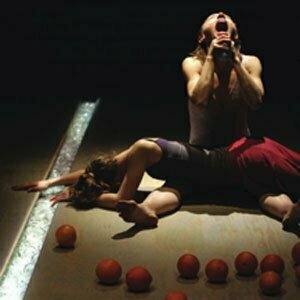
ZAR do not speak (a quotation from the programme notes "we had no language between us. Only words") only run and fall, run their arms through a river of broken glass, the metaphorical falls into the literal. Here's a single light on a single body. Then the woman tries to remove her straps, only to be trapped by the repetitive gestures, fast and more hysterical and the drum hammers, the shrillness of the song and saw is damning...
Only fragments. It begins in darkness and the smash of glass. It ends in a face, leaning backwards, mouth open. Rob Drummond comments that it is a fact: if the beginning of a sequence is predetermined, there can be no freedom within that sequence. Suicide is in both works, a symbol of freedom, perhaps, and polished so brightly that is becomes freedom. Just there.
Caesarian Section, Summerhall, 15- 20 August
Bullet Catch, Traverse, 3-26 August
Theatre and Culture from Scotland, starring The List's Theatre Editor, his performance persona and occasional guest stars. Experimental writings, cod-academic critiques and all his opinions, stolen or original.
Showing posts with label Teatr Zar. Show all posts
Wednesday, 15 August 2012
Painless
Labels:
bullet catch
,
Caesarian Section
,
Edinburgh Fringe 2012
,
rob drummond
,
suicide
,
summerhall
,
Teatr Zar
,
Traverse
Monday, 13 August 2012
Radio Top Five (Guests we have loved)
The Subcity on the Fringe radio show is going great guns: pop over to the website to hear our latest interviews and idiosyncratic musical choices (for some reason, That's Life has been our theme tune this week). Yet certain shows have managed to impress us in ten minutes of live chat.
Guilt and Shame provide the perfect end to a day at the Fringe: Up All Night pits a gay virgin and a heterosexual slut up against one last Big Night Out in a late night comedy show at the Underbelly. Their musical selections speak of their enthusiasm for the populist disco (Daft Punk had us leaping around the studio) and their flyering technique has been honed into a quick soft sale that might be for their show or their own love lives. It might be comedy, but Up All Night uses those techniques of serious theatre that I love so much: written from experience, Guilt and Shame are a bit like their real life personalities, with added frustration.
Underbelly, 2 -26 August
Countryboy's Struggle is part of a hip hop movement that has recently become far more mainstream: theatre. Maxwell Golden, writer and performer, has worked with the London legend Jonzi D, and tells the story of a rural rapper hitting the big smoke. He threw down some rhymes live in the studio - switching styles and flows, revealing how disappointment is easy to find and the drive towards art often hides a sadness and failure to adjust.
Golden has been rocking Countryboy round the nation for a while, giving the production a polish that removes it from being just for hip hop heads: his shout outs to the other hip hop shows prove that he is still of the scene, but not stuck there.
Pleasance, 3 -27 August
If you have children, don't take them to Auntie Myra's Funshow. When she arrived and insisted that her introductory music should be The Boss, we realised that here was an act not in the habit of taking prisoners. Having teased taxi drivers on her way into the studio, she went off to her late night slot to attack decency and try and finish a few jokes.
Myra Dubois has developed her passive aggressive routine over the past few Fringes: once part of Scottee's crew of cabaret reprobates, she's gone solo to find a new audience for her northern, scathing wit. There's frightening puppets, dark snarking and a collision between gruff Northern Club and hip London scene.
Voodoo Room, 3- 27 August
I had a couple of Summerhall based companies in the studio later in the week. Clout are showing How A Man Crumbled in the afternoons, which comes from the writings of a man who hated children, despite surviving by writing stories for them. The absurdism of Krem's life is matched by the physical stylings of Clout, who allow a bunch of buffoons to foul up the play's attempts to reveal some kind of truth.
Summerhall, 3- 26 August
And since I haven't mentioned them for five minutes, let's hear it for Zar. Caesarian Sections is happening in a specially built black tent: their artistic director spoke movingly of his interest in ancient sounds, the connection between music and the human self, the hidden tragedies of recent history, before recalling Camus' thoughts on suicide. This is the foundation for Caesarian Sections, that the thought of suicide offers the limits of human freedom and that to take life seriously is, at least once, to consider suicide. Cheerful as this sounds, it is wrapped in exquisite singing and the silence is as composed as the voices.
Summerhall, 13- 20 August
Guilt and Shame provide the perfect end to a day at the Fringe: Up All Night pits a gay virgin and a heterosexual slut up against one last Big Night Out in a late night comedy show at the Underbelly. Their musical selections speak of their enthusiasm for the populist disco (Daft Punk had us leaping around the studio) and their flyering technique has been honed into a quick soft sale that might be for their show or their own love lives. It might be comedy, but Up All Night uses those techniques of serious theatre that I love so much: written from experience, Guilt and Shame are a bit like their real life personalities, with added frustration.
Underbelly, 2 -26 August
Countryboy's Struggle is part of a hip hop movement that has recently become far more mainstream: theatre. Maxwell Golden, writer and performer, has worked with the London legend Jonzi D, and tells the story of a rural rapper hitting the big smoke. He threw down some rhymes live in the studio - switching styles and flows, revealing how disappointment is easy to find and the drive towards art often hides a sadness and failure to adjust.
Golden has been rocking Countryboy round the nation for a while, giving the production a polish that removes it from being just for hip hop heads: his shout outs to the other hip hop shows prove that he is still of the scene, but not stuck there.
Pleasance, 3 -27 August
Myra Dubois has developed her passive aggressive routine over the past few Fringes: once part of Scottee's crew of cabaret reprobates, she's gone solo to find a new audience for her northern, scathing wit. There's frightening puppets, dark snarking and a collision between gruff Northern Club and hip London scene.
Voodoo Room, 3- 27 August
I had a couple of Summerhall based companies in the studio later in the week. Clout are showing How A Man Crumbled in the afternoons, which comes from the writings of a man who hated children, despite surviving by writing stories for them. The absurdism of Krem's life is matched by the physical stylings of Clout, who allow a bunch of buffoons to foul up the play's attempts to reveal some kind of truth.
Summerhall, 3- 26 August
Summerhall, 13- 20 August
Labels:
auntie myra
,
Clout
,
Edinburgh Fringe 2012
,
how a man crumbled
,
subcity radio
,
Teatr Zar
Friday, 27 July 2012
Top Five Misery Shows
Today, I am in a bad mood. It has come about because I am trying to write as many top five recommendations as I can before the Fringe, each with an idiosyncratic theme. I just did WAR, have eight more in draft form, as I try to mine my inbox for appropriate content. The one on the 1960s is getting desperate.
So, pop-pickers, here's a selection from the Fringe for the bitter and twisted.
In at number five, it's the Fringe favourite funny man, Dusty Limits. I've been shouting about Dusty for years - when he did a solo show at the Spiegeltent a few years ago, it was like an object lesson in New Cabaret's potential to be spiteful, soulful and sharp. Limits himself can sing and barb his punchlines like Lucifer's own MC: that there is a fierce morality behind his assaults on civilisation and puritanism only adds to his precision.
Interestingly, this show is on the free Fringe. While I am reluctant to call Dusty either a legend or a veteran - he's too young to be either - it's telling that he is heading over to the Laughing Horse. He's going to be at the Bongo Club, too, for the first fortnight, and I'd recommend seeing how he hosts: few artists can be so scathing and so generous at the same time.
Post-Mortem is rumoured to be his final Fringe show, so the usual wicked jollity might be tinged with melancholy. It's based around Dusty's (fictional) death, too. On those days when I mourn cabaret's failed potential, I'll get out my picture of Dusty and sing along to his bleak ballads.
Counting House Ballroom, 2 – 19 August (not 6, 13), 8.15pm
The subject of an article in the August Skinny, Amy Lame is having an Unhappy Birthday. Frankly, it's her own fault for being born in January in the first place, and then becoming a fan of The Smiths. Directed by Scottee (another one of the cabaret gang who gets that Live Art savagery can be a good addition to vaudeville) and starring Lame, who runs the cult night Duckie in London, the show pretty much hopes that Morrissey is going to turn up, and fills in the time with party games and tales from Lame's life to date.

Last time she did a solo show, she pretended that she's be abducted by Mama Cass, so I am not sure I am going to believe a word she says: luckily, she is charismatic, funny and smart, so the truth can be ignored.
That suggests that Lame ought to go into politics: a disregard for truth hidden by style. Well, she'd be better than Boris and her parties are a lot more wholesome than the ones attended by some Scottish Socialists.
Assembly 3, George Square,2-26 August. Previews 2 & 3 August @18:40
I know that I am cheating. These shows won't leave me unhappy. Lame tends to be life-affirming and even Limits is awesome, especially when he gets nasty. However, number three ought to do it...
Caesarian Section - Essays on Suicide by Teatr Zar: proper Polish physical theatre, Polyphonic Corsican songs with fragments from Bulgaria, Romania, Chechen tunes and Icelandic laments. I saw Zar a few years back and they performed in the dark - my highlight was when they switched out all the lights and dug a grave in the floor, while reading out bits of Gnostic texts.
I've been told that the company rehearses from dawn each day, and they are intense in a way that is rare, even in my beloved world of Live Art. It's disappointing that Caesarian Section does go into the will to survive - the tome will probably be more melancholic beauty than crushing despair.
I am probably not selling this, but the truth is that Zar are the company I am most excited to see at the Fringe. Enjoying theatre is all well and good, but these guys gave me memories and made me think that there is a God.
Summerhall, 9- 20 August @ 7pm
Here's the thing: much as I want to believe that theatre can express every mood, I don't think it can do misery. Take King Lear, three hours of parental abuse, eye-popping and killing, topped off with Shakespeare's most trenchant meditations on life and corruption. Or Waiting for Godot. They are supposed to be about the pain, but we end up walking out, commending a performance or the cleverness of the direction. For real anguish, it would be better to watch the Skeptic's events on the Free Fringe, where they pretend that all Christians have absurd beliefs about creation, or Robert Ince showing off that he read a book about science in a comedy venue somewhere. These guys know how to ramp up the cosmic terror, picturing a world without the divine.
Better yet, go and see a failing production by students in Week Three of the Fringe. That gives a taste of pain, what with each cast member probably three grand in the hole, crying over the one star reviews from Three Weeks and entering the late stages of scurvy, having eaten nothing but bacon rolls for the month.
And in at number two, it's a contemporary horror story. The Economist examines the personal psychology and public portrayal of far-right Norwegian terrorist and mass murderer Anders Breivik. The trailer on their website is the stuff of nightmares.
Writer Tobias Manderson-Galvin says that the show "cuts open the head of a cold, violent, politically-motivated mass killer – it doesn’t give answers to why this happened, but it asks questions of those who pushed Breivik to the edge." And on the question of the timing of the show - the incident is pretty fresh - he is circumspect. "I agree with the Adorno argument that “to make poetry in the face of atrocity is barbaric” but at the same time, I think it only holds true of people making art that is either supports the atrocity or serves to distract from it."
Rightfully, he points out that the media didn't wait to comment, and that art has no obligation to let the dust settle. "There is no “too soon” to make art that confronts and exposes the atrocity head on. We are making art that endeavours to understand how Breivik’s horrific acts occurred, so we can prevent their repeat."
Then again, there is a quotation on their press release that calls the play "guiltily entertaining," which serves my contention that theatre struggles to represent the unpleasant. Or possibly suggests that theatre critics are pricks. But Manderson-Galvin has a clear vision of theatre's potential and how The Economist fits in.
"The story continues today as Norway continues to live this tragedy through the imprisonment of Breivik and the complexities of his trial," he explains. "The play takes the position that he’s not a crazy person – he’s a terrorist, with terrorist beliefs, and trying to write him off as a lone psycho ignores the ideological circumstances that created him and can create more white, Western terrorists in his place."
"Theatre is a place where all the wonderful and all the terrible parts of existence can exist without any of us having to fear the results of the actual event taking us to death. Theatre is a place where “Breiviks” can talk to the audience; we can play computer games with Norse Gods; we can get plastic surgery to look more Aryan; we can live as Breivik did… and ask ourselves what is different – if anything’s different – and just what might lead someone like us to do something like this."
So, pop-pickers, here's a selection from the Fringe for the bitter and twisted.
In at number five, it's the Fringe favourite funny man, Dusty Limits. I've been shouting about Dusty for years - when he did a solo show at the Spiegeltent a few years ago, it was like an object lesson in New Cabaret's potential to be spiteful, soulful and sharp. Limits himself can sing and barb his punchlines like Lucifer's own MC: that there is a fierce morality behind his assaults on civilisation and puritanism only adds to his precision.
Interestingly, this show is on the free Fringe. While I am reluctant to call Dusty either a legend or a veteran - he's too young to be either - it's telling that he is heading over to the Laughing Horse. He's going to be at the Bongo Club, too, for the first fortnight, and I'd recommend seeing how he hosts: few artists can be so scathing and so generous at the same time.
Post-Mortem is rumoured to be his final Fringe show, so the usual wicked jollity might be tinged with melancholy. It's based around Dusty's (fictional) death, too. On those days when I mourn cabaret's failed potential, I'll get out my picture of Dusty and sing along to his bleak ballads.
Counting House Ballroom, 2 – 19 August (not 6, 13), 8.15pm
The subject of an article in the August Skinny, Amy Lame is having an Unhappy Birthday. Frankly, it's her own fault for being born in January in the first place, and then becoming a fan of The Smiths. Directed by Scottee (another one of the cabaret gang who gets that Live Art savagery can be a good addition to vaudeville) and starring Lame, who runs the cult night Duckie in London, the show pretty much hopes that Morrissey is going to turn up, and fills in the time with party games and tales from Lame's life to date.
Last time she did a solo show, she pretended that she's be abducted by Mama Cass, so I am not sure I am going to believe a word she says: luckily, she is charismatic, funny and smart, so the truth can be ignored.
That suggests that Lame ought to go into politics: a disregard for truth hidden by style. Well, she'd be better than Boris and her parties are a lot more wholesome than the ones attended by some Scottish Socialists.
Assembly 3, George Square,2-26 August. Previews 2 & 3 August @18:40
I know that I am cheating. These shows won't leave me unhappy. Lame tends to be life-affirming and even Limits is awesome, especially when he gets nasty. However, number three ought to do it...
Caesarian Section - Essays on Suicide by Teatr Zar: proper Polish physical theatre, Polyphonic Corsican songs with fragments from Bulgaria, Romania, Chechen tunes and Icelandic laments. I saw Zar a few years back and they performed in the dark - my highlight was when they switched out all the lights and dug a grave in the floor, while reading out bits of Gnostic texts.
I've been told that the company rehearses from dawn each day, and they are intense in a way that is rare, even in my beloved world of Live Art. It's disappointing that Caesarian Section does go into the will to survive - the tome will probably be more melancholic beauty than crushing despair.
I am probably not selling this, but the truth is that Zar are the company I am most excited to see at the Fringe. Enjoying theatre is all well and good, but these guys gave me memories and made me think that there is a God.
Summerhall, 9- 20 August @ 7pm
Here's the thing: much as I want to believe that theatre can express every mood, I don't think it can do misery. Take King Lear, three hours of parental abuse, eye-popping and killing, topped off with Shakespeare's most trenchant meditations on life and corruption. Or Waiting for Godot. They are supposed to be about the pain, but we end up walking out, commending a performance or the cleverness of the direction. For real anguish, it would be better to watch the Skeptic's events on the Free Fringe, where they pretend that all Christians have absurd beliefs about creation, or Robert Ince showing off that he read a book about science in a comedy venue somewhere. These guys know how to ramp up the cosmic terror, picturing a world without the divine.
Better yet, go and see a failing production by students in Week Three of the Fringe. That gives a taste of pain, what with each cast member probably three grand in the hole, crying over the one star reviews from Three Weeks and entering the late stages of scurvy, having eaten nothing but bacon rolls for the month.
And in at number two, it's a contemporary horror story. The Economist examines the personal psychology and public portrayal of far-right Norwegian terrorist and mass murderer Anders Breivik. The trailer on their website is the stuff of nightmares.
Writer Tobias Manderson-Galvin says that the show "cuts open the head of a cold, violent, politically-motivated mass killer – it doesn’t give answers to why this happened, but it asks questions of those who pushed Breivik to the edge." And on the question of the timing of the show - the incident is pretty fresh - he is circumspect. "I agree with the Adorno argument that “to make poetry in the face of atrocity is barbaric” but at the same time, I think it only holds true of people making art that is either supports the atrocity or serves to distract from it."
Rightfully, he points out that the media didn't wait to comment, and that art has no obligation to let the dust settle. "There is no “too soon” to make art that confronts and exposes the atrocity head on. We are making art that endeavours to understand how Breivik’s horrific acts occurred, so we can prevent their repeat."
Then again, there is a quotation on their press release that calls the play "guiltily entertaining," which serves my contention that theatre struggles to represent the unpleasant. Or possibly suggests that theatre critics are pricks. But Manderson-Galvin has a clear vision of theatre's potential and how The Economist fits in.
"The story continues today as Norway continues to live this tragedy through the imprisonment of Breivik and the complexities of his trial," he explains. "The play takes the position that he’s not a crazy person – he’s a terrorist, with terrorist beliefs, and trying to write him off as a lone psycho ignores the ideological circumstances that created him and can create more white, Western terrorists in his place."
"Theatre is a place where all the wonderful and all the terrible parts of existence can exist without any of us having to fear the results of the actual event taking us to death. Theatre is a place where “Breiviks” can talk to the audience; we can play computer games with Norse Gods; we can get plastic surgery to look more Aryan; we can live as Breivik did… and ask ourselves what is different – if anything’s different – and just what might lead someone like us to do something like this."
C Venue, 2 -27 August @ 1.30pm
At number one, I almost feel obliged to select a mainstream show - maybe a musical, maybe a popular comedian - but that's a cheap trick and would involve thinking. Instead, I am going to suggest listening in to my podcasts from the Fringe. If my voice doesn't bring home all the anguish in the world, I don't think you are listening closely enough: the tone of this piece might suggest a theatre critic losing faith in the possibility of his favourite art form to express certain emotions.
Then again, if theatre really could communicate misery, it would just be a bit shit. I am strangely consoled.
Labels:
Amy Lame
,
Dusty Limits
,
Edinburgh Fringe 2012
,
misery
,
Teatr Zar
,
the economist
Subscribe to:
Posts
(
Atom
)