Showing posts with label Dusty Limits. Show all posts

Friday, 15 February 2013

London Cabaret Awards 2013

The London Cabaret Awards 2013 have announced the winners at a ceremony at the Royal Vauxhall Tavern. I use this as a chance to see how much of the cabaret scene I still get to see, despite being in Glasgow.
Best Speciality Act: Craig Reid (Craig the Incredible Hula Boy)
Sadly, I have not seen this act. I heard good things, and the return of the speciality act - juggling and the like - is a sign that the cabaret scene is both picking up on the breadth of the old vaudeville show and infusing it with a thoroughly contemporary edge.
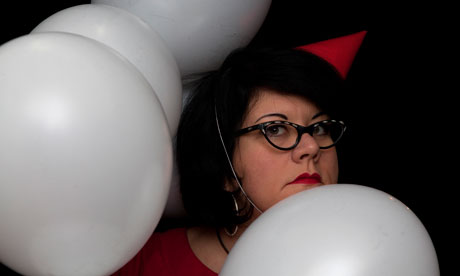
My cabaret art crush
Best One-Off Production: Bitch! Dyke! Faghag! Whore!
Penny Arcade. As championed on this blog, frequently. A brilliant choice that proves how the live art lineage is feeding neo-cabaret (and keeping it clear from that light entertainment stigma).
Best Burlesque Act: Laurie Hagen
Another one I have missed. I've been covering burlesque less these days.
Best Vocal Act: Fascinating Aïda
A venerable trio that have been reinventing themselves since before cabaret was hip. Still sharp and witty - last seen by me at the Edinburgh Fringe.
Best Musical Variety Act: Sarah-Louise Young
Well deserved: Young can do character comedy (her one woman show usually has four very different personae fighting for attention) and hold a tune. I like the one where she is the European experimental artist the best, although "her woman of a certain age" has a show business sparkle of impending doom.
Best Newcomer Award: The Spiegeltent Season At Wonderground
The Spiegeltent is always a treat: doing what it says - a tent full of mirrors.
Best Drag Act: Myra Dubois
Radio show guest and slightly terrifying. Myra's success is a glimmer of hope for anyone who loves the idea of a children's show show using that name, or enjoys acerbic, cutting asides.
Best Ongoing Production: The Double R Club
Best Host / Compere: Dusty Limits
Of course. Dusty is the most intelligent man in the art, apart from me. Even when he is bored, he is insightful and witty. Ennui has never looked so fatally beautiful
Best Cabaret Venue: Bethnal Green Working Men’s Club
Best Alternative Performer: David Hoyle
Audience Award: Alp Haydar
Unsung Hero Award: Sharon Calcutt (Finger in the Pie, Stage Manager)
Outstanding Achievement Award: Torture Garden
I went there and danced. Wearing my big priest cloak... for about five minutes I looked vaguely cool. TG deserves the award just for that. 

Tuesday, 28 August 2012

Cabaret Time!

When George Bernard Shaw pronounced that "to kindle art to the whitest heat, there must always be some fanaticism behind it," he had been watching musical hall sketches. This makes me feel better about the post that I shall eventually write that claims Dusty Limits is more important than Shakespeare, and connects me to a tradition of theatre critics - GBS would later become an issue-obsessed playwright but started as a critic - who are fascinated by cabaret's potential.

Despite getting its own section in the Fringe programme only two years ago, cabaret is a well established rival to theatre and comedy in the battle for star ratings during the August bun fight. I am not convinced that the variety bills that are often the foundation of any consideration of cabaret have advanced much since 2010, when Vive Le Cabaret set up in the palatial Ghillie Dhu and celebrated its new found popularity and roots in the vintage fashion scene: it's too easy to see the same acts turning up at different nights, or comedians dominating the bill with extracts from their solo shows.

What the cabaret section has done is demonstrate that acts can stretch their material over an hour, giving room to their persona's development and forging an identity as coherent as any stand ups or, in the best cases, focussing their sketches and songs into a potent theatrical experience. Dusty Limits remains far ahead here, but Jonny Woo, best known for getting more facial expression out of a gorilla mask than most actors get out of their face, and Bourgeois and Maurice prove that the five minute slot is not necessarily the optimum for a cabaret routine.

Bourgeois and Maurice don't make it easy for the critic attempting to analyse them within a socio-political frame-work: calling the show Sugartits and explicitly stating in a recent interview that their songs weren't very political, they try to pretend that their intentions are more towards the party than the party line. Fortunately, Sugartits belies their modesty. While they might lack the concentration of Dusty Limits, they have a sardonic take on both Europe's financial woes and the British desire not to get involved and their smack down of Facebook ("makes me feel shit, sometimes") is nicely posed on the precipice between virtual confidence and the grim meat-hook realities of existence.

Bourgeois' effete, prancing personality revels in ignorance - he tries to understand cabaret by watching some film whose name he forgets, and concludes it is about funny haircuts, an American and Nazis - skewering the lazy acceptance of pre-consumed opinion and London's provincialism with glee. A supposedly improvised number satirises the ubiquity of high street chainstores, and mocks a Britain that is slowly losing regional identity: his banter with Maurice takes swipes at observational comedy and elegantly undercuts cabaret's own obsession with glamour.

The elephant in the room with cabaret is always Weimar. Thanks to its association with anti-Nazi politics in the 1930s, Weimar Cabaret is pretty much the gold standard of the form. Never mind that GBS was elated by catching Yvette Guibert, who sung songs that would not be out of place in the repertoire of cheeky Des O'Connor (the one who wrote Cheap Shite White Wine, not the perma-tanned TV host); mentioning Weimar brings out the serious.

And so Sugartits can take its place in that heritage. It shares the ambiguous sexuality, the disrespect for authority, the barbed comments from a character who goes on to undermine their own authority. The slippery nature of cabaret, in which everything is offered to burlesque parody and the fool speaks truth and idiocy in equal measure, lends it a carnivalesque splendour which might explain why the grander variety shows, like La Clique Royale incorporate circus inspired acrobatics.

There is also an indigenous British tradition of cabaret. This ended up in the variety show, which paraded its rotting corpse on British television until the 1990s. Its bad name comes from the preponderance of shit British comics who milked it and its inevitable association with light entertainment. Stripped of politics and counter-cultural energy, it descended into a vapid endorsement of establishment values and the threatening sexuality was soft-soaped into cheap showgirl vacuity.

It's odd to see East End Cabaret draw on this more mainstream tradition. Despite having a hermaphrodite on the piano, their charming and witty set is relatively mainstream, so long as songs about sex with corpses or sexual jealousy are taken as humour rather than barbed comments on human relationships. After last year, when their Free Fringe show was being touted by the Total Theatre Awards as a display of bravura, their talent appears to be directed towards easier targets.

The chemistry between Bernadette Byrne and Victor Victoria is evident and their appropriation of popular music, culture and song is sharp: Victor Victoria has a knack for comic parodies of almost familiar tunes and Byrne is a voracious sexual predator. But for a duo who once tried to seduce audiences into bed with the red, the political punch is missing. Victor Victoria is cast more as the cute side-kick, even when stalking Byrne or dismissing a rival's attractiveness.

Notoriously Kinky is a strong show, but panders too much to the audience: it is rarely bracing and even the climax, a medley of the songs they did not have time to include, is more about the wit and skill than the cutting comment. Of course, this assessment is based on insisting that cabaret must have a deeper purpose, the critic's vanity.


Monday, 20 August 2012

After Death, All is Dust

Caught up in the bustle of the Fringe, it becomes easy to forget that performers are human and not merely objects on a conveyor belt of entertainment. Hidden behind scripts or choreography, the individual, full of aspirations and  vulnerable, is lost: art devolves to commodity and its worth is defined by the number of stars that it manages to plaster over its poster.

Fortunately, Dusty Limits is too abrasive, too compassionate, to disappear. Post-Mortem was on the Free Fringe: inspired by Limits' preoccupation with death, and animated by his mordant wit, it is a reminder of how cabaret can still be a home to a talent that is too idiosyncratic and sardonic to ever be tamed into light entertainment.

Limits has always advocated decadence as a response to oppression. He describes Post-Mortem as a sort of theatrical obituary in jokes and songs, revisiting past success - the transgendered version of  Portishead's Glory Box and adding new routines - Mr Greedy becomes a bedtime parable for the financially excluded. Yet beneath the throwaway gags about heroin addiction and sexual frustration, the apparent libertine has a fierce revolutionary sensibilty.

While many cabaret artists have a single skill and rightfully push it - Camille can reinterpret songs by rock songwriters in surprising ways, Frank Sanazi blends shock and awe - Dusty Limits proves himself more versatile. He cracks open Bowie's Ashes to Ashes to expose the wounded junkie at its heart: he reinvigorates obscure Weimar songs. He writes songs that meld jaunty vaudeville with astute satire and his comedy routines rage against the oppressive God so often advertised by conservative Christians, the tyranny of the financial markets and idiocy of politicians. He is astute like a stand up but, surprisingly for a man who seems to celebrate his egotism (his idea of audience participation is to ask and not listen), lacks the monomania of the comedian.

It's easy to forget that performers are human, and easy to forget that entertainment can be political, engaged, even theological. Limits, the joker with the hysterical face, brooding then cheeky, possessed of a voice that charms angels and summons demons, embracing the spirit of Weimar cabaret without descending to pastiche, stand proud in his persona that cannot help but expose his humanity.

Friday, 27 July 2012

Top Five Misery Shows

Today, I am in a bad mood. It has come about because I am trying to write as many top five recommendations as I can before the Fringe, each with an idiosyncratic theme. I just did WAR, have eight more in draft form, as I try to mine my inbox for appropriate content. The one on the 1960s is getting desperate. 


So, pop-pickers, here's a selection from the Fringe for the bitter and twisted.


In at number five, it's the Fringe favourite funny man, Dusty Limits. I've been shouting about Dusty for years - when he did a solo show at the Spiegeltent a few years ago, it was like an object lesson in New Cabaret's potential to be spiteful, soulful and sharp. Limits himself can sing and barb his punchlines like  Lucifer's own MC: that there is a fierce morality behind his assaults on civilisation and puritanism only adds to his precision. 


Interestingly, this show is on the free Fringe. While I am reluctant to call Dusty either a legend or a veteran - he's too young to be either - it's telling that he is heading over to the Laughing Horse. He's going to be at the Bongo Club, too, for the first fortnight, and I'd recommend seeing how he hosts: few artists can be so scathing and so generous at the same time.


Post-Mortem is rumoured to be his final Fringe show, so the usual wicked jollity might be tinged with melancholy. It's based around Dusty's (fictional) death, too. On those days when I mourn cabaret's failed potential, I'll get out my picture of Dusty and sing along to his bleak ballads. 


Counting House Ballroom, 2 – 19 August (not 6, 13), 8.15pm


The subject of an article in the August Skinny, Amy Lame is having an Unhappy Birthday. Frankly, it's her own fault for being born in January in the first place, and then becoming a fan of The Smiths. Directed by Scottee (another one of the cabaret gang who gets that Live Art savagery can be a good addition to vaudeville) and starring Lame, who runs the cult night Duckie in London, the show pretty much hopes that Morrissey is going to turn up, and fills in the time with party games and tales from Lame's life to date.


Last time she did a solo show, she pretended that she's be abducted by Mama Cass, so I am not sure I am going to believe a word she says: luckily, she is charismatic, funny and smart, so the truth can be ignored.


That suggests that Lame ought to go into politics: a disregard for truth hidden by style. Well, she'd be better than Boris and her parties are a lot more wholesome than the ones attended by some Scottish Socialists. 


Assembly 3, George Square,2-26 August. Previews 2 & 3 August @18:40 


I know that I am cheating. These shows won't leave me unhappy. Lame tends to be life-affirming and even Limits is awesome, especially when he gets nasty. However, number three ought to do it...


Caesarian Section
Caesarian Section - Essays on Suicide by Teatr Zar: proper Polish physical theatre, Polyphonic Corsican songs with fragments from Bulgaria, Romania, Chechen tunes and Icelandic laments. I saw Zar a few years back and they performed in the dark - my highlight was when they switched out all the lights and dug a grave in the floor, while reading out bits of Gnostic texts. 


I've been told that the company rehearses from dawn each day, and they are intense in a way that is rare, even in my beloved world of Live Art. It's disappointing that Caesarian Section does go into the will to survive - the tome will probably be more melancholic beauty than crushing despair. 


I am probably not selling this, but the truth is that Zar are the company I am most excited to see at the Fringe. Enjoying theatre is all well and good, but these guys gave me memories and made me think that there is a God. 


Summerhall, 9- 20 August @ 7pm


Here's the thing: much as I want to believe that theatre can express every mood, I don't think it can do misery. Take King Lear, three hours of parental abuse, eye-popping and killing, topped off with Shakespeare's most trenchant meditations on life and corruption. Or Waiting for Godot. They are supposed to be about the pain, but we end up walking out, commending a performance or the cleverness of the direction. For real anguish, it would be better to watch the Skeptic's events on the Free Fringe, where they pretend that all Christians have absurd beliefs about creation, or Robert Ince showing off that he read a book about science in a comedy venue somewhere. These guys know how to ramp up the cosmic terror, picturing a world without the divine.


Better yet, go and see a failing production by students in Week Three of the Fringe. That gives a taste of pain, what with each cast member probably three grand in the hole, crying over the one star reviews from Three Weeks and entering the late stages of scurvy, having eaten nothing but bacon rolls for the month.


And in at number two, it's a contemporary horror story. The Economist examines the personal psychology and public portrayal of far-right Norwegian terrorist and mass murderer Anders Breivik. The trailer on their website is the stuff of nightmares.

Writer Tobias Manderson-Galvin says that the show "cuts open the head of a cold, violent, politically-motivated mass killer – it doesn’t give answers to why this happened, but it asks questions of those who pushed Breivik to the edge." And on the question of the timing of the show - the incident is pretty fresh - he is circumspect. "I agree with the Adorno argument that “to make poetry in the face of atrocity is barbaric” but at the same time, I think it only holds true of people making art that is either supports the atrocity or serves to distract from it."


Rightfully, he points out that the media didn't wait to comment, and that art has no obligation to let the dust settle. "There is no “too soon” to make art that confronts and exposes the atrocity head on. We are making art that endeavours to understand how Breivik’s horrific acts occurred, so we can prevent their repeat."


Then again, there is a quotation on their press release that calls the play "guiltily entertaining," which serves my contention that theatre struggles to represent the unpleasant. Or possibly suggests that theatre critics are pricks. But Manderson-Galvin has a clear vision of theatre's potential and how The Economist fits in.


"The story continues today as Norway continues to live this tragedy through the imprisonment of Breivik and the complexities of his trial," he explains. "The play takes the position that he’s not a crazy person – he’s a terrorist, with terrorist beliefs, and trying to write him off as a lone psycho ignores the ideological circumstances that created him and can create more white, Western terrorists in his place."


"Theatre is a place where all the wonderful and all the terrible parts of existence can exist without any of us having to fear the results of the actual event taking us to death. Theatre is a place where “Breiviks” can talk to the audience; we can play computer games with Norse Gods; we can get plastic surgery to look more Aryan; we can live as Breivik did… and ask ourselves what is different – if anything’s different – and just what might lead someone like us to do something like this."

C Venue, 2 -27 August @ 1.30pm


At number one, I almost feel obliged to select a mainstream show - maybe a musical, maybe a popular comedian - but that's a cheap trick and would involve thinking. Instead, I am going to suggest listening in to my podcasts from the Fringe. If my voice doesn't bring home all the anguish in the world, I don't think you are listening closely enough: the tone of this piece might suggest a theatre critic losing faith in the possibility of his favourite art form to express certain emotions.

Then again, if theatre really could communicate misery, it would just be a bit shit. I am strangely consoled.