Showing posts with label Scripted Drama. Show all posts

Thursday, 2 July 2015

Dramaturgy is for the Birds: Camilla Whitehill @ Edfringe 2015

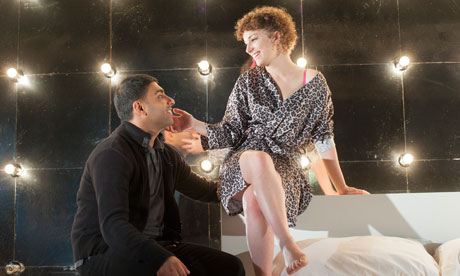
Where Do Little Birds Go - this uplifting and beautiful one-woman play (based on the real-life story of Lisa Prescott) tells the story of Lucy Fuller, an 18-year-old girl abducted by the Kray Twins in 1960s London. A razor-sharp and humorous exploration of sexual exploitation and class, it follows Lucy's journey from small-town teenager to London sex worker. This is the story of Lucy's terrifying time with Ronnie, Reggie and Frank ‘The Mad Axeman’ Mitchell. Underbelly Cowgate (Big Belly) from 6th August at 8.55pm.
The Fringe
What inspired this production: did you begin with an idea or a script or an object?

Camilla Whitehill: I wrote the first draft of the script after reading about the story that the play is about. I've always been interested in crime and criminal psychology, but in this case I was much more interested in the victim and what could have happened to her before and after.

Why bring your work to Edinburgh?It's the best arts festival in the world, the play is the perfect length for it, and I think the play deserves the wide and diverse audience that the Fringe attracts.

What can the audience expect to see and feel - or even think - of your production?
Hopefully the play captures East London in the 1960s pretty well, but at its core the play is a coming of age story - albeit a coming of age under extreme circumstances. Expect music, movement, and perhaps the sort of intensity of feeling a solo piece can conjure.


The Dramaturgy Questions

How would you explain the relevance - or otherwise - of dramaturgy within your work?Sarah Meadows, the director, has been developing the play with me since day one, and without ever setting that role specifically was most certainly the dramaturg. Every draft was read, explored, and discussed by and with her. She is a genius.

What particular traditions and influences would you acknowledge on your work - have any particular artists, or genres inspired you and do you see yourself within their tradition?
There have been some extraordinary solo pieces in the last few years that have lifted the medium into new and exciting territory. I was moved to explore the format after seeing pieces like Charlotte Josephine's Bitch Boxer and Luke Barnes' Bottleneck, and since beginning development of Where Do Little Birds Go, have been further inspired by plays like Philip Ridley's Dark Vanilla Jungle and Simon Stephens' Seawall, and also by less traditional solo pieces like Stuart Bowden's Before Us and Christopher Brett Bailey's astonishing This Is How We Die. The freedom of expression when you have one performer on stage is enormous and exciting.

Do you have a particular process of making that you could describe - where it begins, how you develop it, and whether there is any collaboration in the process?
I'm not sure I have a set process, being at such an early point in my career - I'm up for exploring loads of different ways of working - but collaboration, writing for and with specific directors and actors, is both very rewarding and extremely helpful.

What do you feel the role of the audience is, in terms of making the meaning of your work?
Theatre isn't theatre without an audience. It's the first thing you need. I try to constantly think about how I would feel as an impartial viewer - which is almost impossible, but if you're not making work for an audience, then I think you're probably just going to be making self-obsessed rubbish...

Are there any questions that you feel I have missed out that would help me to understand how dramaturgy works for you?
Don't ask me, I'm a moron.

Wednesday, 10 October 2012

Artist and Mother...


Always wait, and never speak too soon.


Since Orla O’Loughlin became artistic director at The Traverse, I've been waiting for the moment to comment on her appointment. Not having the pressure of a ravenous public awaiting my proclamations, for once, plays to my strengths. I've watched her first season of programming, her first Fringe, and drew no conclusions. There was a nice emphasis on the young artists emerging out of Glasgow's energetic theatre underground - Hurley, McNair, Drummond - which suggested that O'Loughlin was keeping her eye on the next generation. But The Traverse has such a clear identity already, it is still premature to try to detect her voice within the programme.


However, come November, and her first full-scale production, The Artist Man and the Mother Woman, gives me the excuse to make crass generalisations about how her tenure as artistic director will go.

The Artist Man and the Mother Woman
is a new work by Morna Pearson, written in Doric, the northern rural dialect and sounds as if it would fit well with the work Andy Arnold has been supporting at The Tron - surreal, bleak humour and an interest in idiosyncratic emotional relationships. Worryingly for me, and my galloping Oedipal Complex, it centres around a mother and her son. Less worryingly, it sees the return of Garry Collins and Anne Lacey to Pearson's words. They were in her original success at The Traverse, 2006's Distracted.


In terms of the big generalisations - and I'll try to avoid saying that we can expect a series of Scottish women writers - O'Loughlin is connecting her full-scale directorial debut to The Traverse's successful past: not only did Pearson break-out as a writer through Distracted's Traverse production, she emerged from the Traverse's Young Writer's group. And the first reading of Artist Man happened as part of Write Here, the festival that O'Loughlin introduced.


O'Laughlin obviously has considerable respect for Pearson's writing. "Morna is a brilliant scottish writer, with a very distinctive voice," she says. "Her writing is instantly recognisable as her own."


It's unsurprising that the Doric dialect dictates a dour deconstruction of one of the most primal relationships: the stereotype of the North East character indicates a dry, laconic wit and a deep moral seriousness. O'Loughlin adds that Pearson's "work is deeply bound up with where she is from and there is no doubt she is interested in the relationship of people to place." And appropriately for a theatre that has always been committed to new writing, Artist Man originally attracted O'Loughlin as a script.

"I tend to respond to the words i read on the page instinctively and emotionally," she explains. "For me, Morna has a style that tonally dances on a knife edge: at times out and out hilarious, at others profoundly tragic, and sometimes a compelling fusion of both."

Thursday 1 – Saturday 17 November


Previews 30 & 31 October


Thursday, 4 October 2012

Medea: A Game of Two Halves, Brian.

For all the infanticide, marital strife and general gender warfare, the real tension in this Medea is whether updating the story from ancient Corinth to a contemporary housing estate can make the myth modern. Euripides' original is pretty unambiguous about Medea's power: she has real, nasty magical powers. Suburban housewives in the twenty-first century tend not to be able to conjure chariots led by dragons, and Medea's ultimate triumph does rather depend on her ability to pull off the murders and escape.

Mike Bartlett's version is faithful to the structure of the original: the central agon with Jason is preserved, as is the process of Medea from despairing, jilted wife to cunning avenger. The script is most comfortable when Medea is in full-flow: Rachael Stirling brings the right mixture of malicious rage and self-deprecating charm to Bartlett's words, building sympathy for her plight, respect for her intelligence and belief in the justice of her cause. Adam Levy, as Jason, sadly gets the worst of it: like Euripides' Jason, he is a bland, respectable and self-serving fool, easily seduced by Medea (and his future wife, Kate) and constantly wrong-footed by Medea's sharp intellect.

Despite an uninspiring opening scene - two women bitching about the closeness of their friendship to Medea, which diverts attention from the central battle between male and female into a side-bar on female rivalry - Medea successfully develops the tension: scenes between Medea and her silent son are fraught, Jason and his landlord Carter (the replacement for the original's King of Corinth) are appropriately boorish, and if Medea's seduction of Andrew (formerly King Aegeus, who offers her sanctuary, now a holiday home in Spain) is clumsy, the slow build to the climatic murders is both engaging and sinister.

Sadly, the finale destroys the good work. Opting not to find a modern alternative to the magic, Bartlett offers Medea's attack on Jason's new wife as mysterious - suddenly, after working so hard to translate Medea into a modern woman, he reverts to her as a mysterious witch. The messenger's speech - Bartlett uses the conventions well, and Amelia Lowdell rises to the monologue - is far too close to the original in both detail and spirit. At this point, all the modern trappings are cast aside.

The last speech is even worse: Medea is up on the roof, covered in blood, shouting about how her father liked hacking animals to death and her son's success in an egg and spoon race. She sets her house on fire - this is closer to the wonderful film version by Pasolini - and the police turn up. She's neither vindicated - hard readings of Euripides suggest that she is justified - nor condemned - killing children isn't a good thing. She just announces her fantasy of escape in a speech that will define theatrical bathos for the next year.


There's a real pleasure in watching the plot unfold, despite this absurd ending: Stirling nails the modern Medea, and the supporting cast are solid. There are many moments in the script of sly, dark humour and the various shifts in Medea's mood are carried off skilfully. It might simply be that there is nothing new to say about this skirmish in the war between husband and wife - certainly, children are used as weapons, but the moral is pretty unambiguous.

Until 17 October, Citizens

Wednesday, 15 August 2012

New Writing Top Five

After all the hilarity of my idiosyncratic top fives, I have decided to try and play it straight. I have finally seen Caesarian Sections and currently feel chastened. This will express itself in a later post: for the moment, I want to calm myself by following a simple path. A new writing at the Fringe top five is sufficiently predictable, although the pieces I intend to choose are full of idiosyncratic vitality.

My first choice is easy: Kieran Hurley's Beats is on at the Traverse, following from its short run as one of The Arches' Platform 18 award winners. Hurley is one of a rising wave of young Scottish artists who are establishing themselves, with a cosmopolitan and intelligent approach to theatre making. Writer and performer, he is backed by DJ Johnny Whoop and visuals from Jamie Wardrop: he goes back to the late rave scene of the 1990s, and uses his charismatic on-stage presence and lively idea for a metaphor to relate a story of hope, disappointment and rebellion.

Hurley's skills are evident in his original use of music - the DJ is not mere add on but an integral part of the show, putting down the tunes to accompany Hurley's moving stories - and the easy manner in which he charms the audience and shows compassion to all of his characters, even the cynical copper. His own idealism, previously revealed in Hitch is tempered by a sharp intelligence and a winning manner: Beats is at once cerebral and emotional.

The Traverse, 14- 26 August

Up from Manchester for a short run comes A Sky Burial. Having been described as "ambitious... visceral and violent" by Amanda Dalton of The Royal Exchange (a theatre that has a generous policy on access for young authors), it has a more conventional script-based approach than Beats, and has been described as an episode of Casualty at the end of the world. Preoccupied with the uncertainty of the post-modern condition, and juxtaposing the screams of the sick on a ward and the roars of the streets beyond, it centres around a blind date that might offer redemption in the hour of chaos.

Author Joe McKie honed his skills as a curator of a comedy night, and his director Sophie Taylor has recently come from a successful Titus Andronicus - a Shakespeare number so brutal that a hardcore punk took their name from it. The combination of the author and director's interests sets the tone for this dark comedy that retains a belief in the power of human relationships.

theSpace on North Bridge, various dates until the 24 August

New writing isn't always my enthusiasm - I tend towards the physical theatre but there is a wave of Scottish writers - who often perform their own words - like Hurley and Gary McNair who have reminded that the script is far from moribund. Every time I head into the Underbelly, the huge poster for The Old Vic's New Voices chimes in by insisting that it isn't just about Scotland.

My pick - although all five of the shows are getting positive critiques - is for Sabrina Mahfouz's One Hour Only. Her entry to 2011's Fringe was a searing portrait (in couplets) of the life of a lap dancer had her nominated for The Stage's Best Solo performance: this year, she has a two-hander that pitches the naivety of both john and prostitute against the seriousness of the situation that they are both caught inside. AJ and Marley might have been brought together by his mates and her profession, but Mahfouz draws an intimate portrait of a meeting of minds in an unlikely location.

Underbelly, 3- 26 August 

It's a little tentative as a connection, but both Kieran Hurley and my next pick, Dancing Brick, have appeared at The Arches: Perle is not just a new work, it is creating a new genre. It's a live action comic book, based on the oldest poem in English, a one person show that grapples with grief and a young father's journey to reclaim his dead daughter.

Serge Seidlitz was called in on illustration duties, and this new writing is not about the words: the performance is all mime, contemporary clown style, with the text scrolling across the illustrated screen. Like Beats, it has the same writer and performer: Thomas Eccleshare approached the script as if it were a comic book.

Assembly Roxy, 2- 26 August

It is my last choice, and I have not even managed to scrape the surface of the diversity within new writing: of course, that's the top five format all over. The British approach to theatre has always privileged the script - when I am in dance mood, I can't stop complaining about it. But the five here ought to remind even Criticulous that the script is not played out and the way that authors approach writing for the stage is much more sophisticated than slapping the words down and leaving the director to fix it.


The Damsels Most Daring are on the Free Fringe, and I feel that I haven't given enough love to it this year. I admire the spirit of the companies that have stepped outside the relative safety of the paid programme, and who are clear in their intention to value art over money. The Bravery of Miss Anne and Other Tales of Splendorous Adventure has all sorts of different antics going on: they call it comedic, musical storytelling theatre. Their interests are obviously broad, and the live piano that accompanies their tales is typical of the way that the modern play integrates words and other theatrical aspects.

Miss Anne has hysteria, gun fights and grave-robbing, all in nineteenth century style: the author is on the stage again and the anarchic spirit of the press release made me consider that here is a work  that might reflect the anarchic state of current playwriting, where everything is up for grabs and talented new voices can mix and match and not be bothered by the demarcations of critics or academics.

French Quarter, The Voodoo Rooms 21-25 August


Wednesday, 1 August 2012

Punch

Mr Punch has not aged well. It's not the body that's feeling it - played by Matthew Jones, he still has the wiry energy that served in his battles against the policeman and the devil - but the mind. Besieged by a crocodile and the guardians of public taste, he is regretting that cheeky tweet about the missing girl and his wife has either left him, or if his habits have run true, is underneath his floorboards somewhere.

Steven Bloomer's new play Punch gives the perverse puppet a new lease of life. Although he ought to be unfashionable now - his end of the pier shtick and stick has the bitter taste of a 1970s' comedian, all misogynistic violence and shrill antagonism - he finds himself cobbling together a living as a shock stand up. Intent on renouncing "the joke," he builds a routine on his recent misadventures. Inevitably, the coppers haul him in, bruised baby in tow.

Flickering between extracts of his turn and the subsequent interview with a social worker, Punch is the unlikely defender of the contemporary comic. His style reflects both the self-aware ramblings of Stuart Lee and the more brutal likes of Frankie Boyle, and he slowly sucks the social worker into his world, where crocodiles attack and a prank ends in body trauma.

Matthew Jones is astonishing as Punch, holding a charisma that almost obscures his innate villainy: Bloomer's scripts makes allusions to Punch's true nature in a series of subtle references. The defence of nasty humour (and Punch laughs at everything from childhood abuse to cancer) is convincing, while the thin line between comedic savagery and genuine horror is crossed and recrossed.

Punch comprehensively lays out the arguments around the current trend for offensive comedy, rehashing the arguments put forward by every generation of taboo-busting stand ups from Lenny Bruce to Denis Leary and evoking that scene in Name of the Rose, when the monk worries that laughter can destroy even the most sacred devotion. Whether Punch himself is funny, or even meant to be, is a moot point: Bloomer has found a way to ask difficult questions about the role of comedy and put the moral scares in a deeper historical context.

Tuesday, 24 July 2012

Last Chance Saloon presents DRACULA: SEX, SUCKING & STARDOM

I recently saw Philip Glass performing his soundtrack to the classic Dracula film - the one that is all the more scary because it looks like an documentary - and didn't like it. I love Philip Glass, and was really excited at watching him perform. The thing was, it just felt like Glass had decided that his style of minimalism was bigger than the film, and slapped some generic riffs over the poignant, the kitsch and the frightening scenes. I didn't shit my pants, which is what I would have expected. Next time, they ought to let Kode9 have a pop at it. I bet he knows how to pitch a Brown Night. 


However, Last Chance Saloon are probably not looking for bowel leakage in their version of Dracula. Apparently, their Count loves some Lloyd Weber. So I won't be weeping when he gets the Big Stake in the end. Since I have no idea about musicals, and there's some Lady Gaga jokes too, I sat back and let the company tell me about it.


What will make your show stand out at the Fringe in 2012?

Three hunky men, a very liberal take on Lady Gaga's Bad Romance, and lots of blood. 

How would you describe the piece - what sort of theatre is it, and what inspired the content?

We make what we like to call Guilty Pleasure Theatre, that is, theatre that's sole purpose is to put a smile on your face. Last Chance Saloon aren't here to educate you- we want the audience to forget about their woes and their bad day at work, and indulge in a ruddy good laugh.

Dracula is the perfect story for the kind of theatre we make, with an instantly recognisable hero we could easily parody. He's a classic villain but we see him as a bit lonely, misunderstood and rather camp! Poor Old Count, in our version he's a secret Michael Buble groupie and a wannabe West End star!  Vampires are having a real moment, thanks toTwilight et al, and we hope our show will appeal both to Robert Pattison fans- and to those seeking an antidote to vampires that sparkle.  

How long have you been working in theatre, and are there any highlights of your career so far?

We spent 3 years at Drama School together and graduated 7 years ago. The highlight of my career was definitely putting on Dracula: Sex, Sucking & Stardom at The Hen & Chickens. It was quite unlike anything we'd done previously and we had no idea how it would turn out, but the pride you get from producing your own work, playing to packed houses and receiving fantastic feedback from people who you trust cannot be matched. 


Why did you decide to come to the Fringe?

As an actor in the industry you quickly realise how much of a small cog in the machine you are and how little control you have over your lives. Forming Last Chance Saloon and writing shows  for ourselves was a way of wrestling back the creative control and allowing us to do what we set out to do at the start of our acting careers, namely, perform work we believe in with people we respect.

Paradise in the Vault 
4 & 5 Aug, 9.20pm; 6 – 27 Aug, 8.40pm (No shows 13, 20)          


Thursday, 14 June 2012

Short, Dark Fairytale from the Land of the Long White Cloud


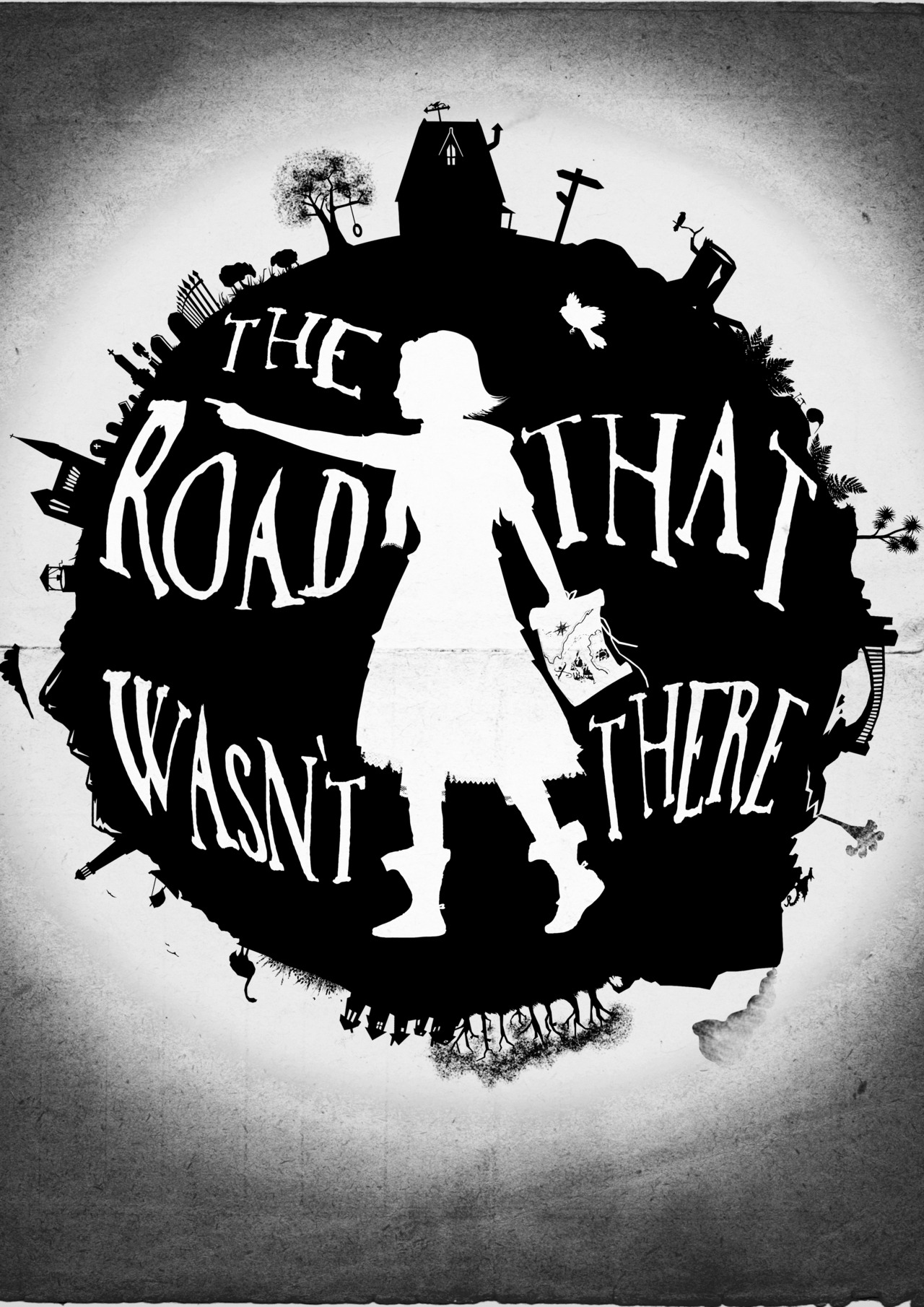
Apparently, New Zealand has 56,000 kilometres of streets and towns that exist only on surveyors’ maps. In  The Road That Wasn’t There, a woman slips off of the "real" roads and ends up in one of these  "paper towns". In a show aimed at children, but far from childish, Trick of the Light Theatre examine how decisions in the fictional world can have consequences in reality.


Theatre for children is a major strand in The Fringe, yet it rarely receives the critical respect, beyond being "suitable for all ages." Trick of the Light, in common with many children's companies, are ready to blast that lazy conceit, using radical drama techniques to tell an offbeat, thoughtful story.


What has made you bring the show to the fringe?
Hannah Smith (director) - The Fringe is an unbeatable, unrepeatable experience by all accounts, and as we have been in the UK for the last year we thought we’d be fools to pass up the opportunity. It’s a jolly long way to get here from NZ.
Ralph McCubbin Howell (playwright) - This is my second time at the fringe, but my first doing more than performing (I was here in 2005 as an improviser with the Oxford Imps). I’m an advocate of populism in theatre, and the fringe is about as populist as it gets – a big, eclectic behemoth of a festival – if you don’t have the goods you get lost pretty quickly. It’s exciting to bring our work into this kind of environment.

How do you approach a complex idea like this and adapt it for children's theatre?

Hannah - I think a lot of work for children deals with complicated ideas. Fantasy is one of the major genres of children’s fiction, and the leap from the page to the stage isn’t so very far.It's a genre often used as a way of dealing with death and comprehending the darker aspects of life. Abandonment, despair, the loss of innocence, and mortality are bread and meat to the fantasy genre. When Ralph and I started talking about the play we discussed how we wanted the story to work on two levels, so while the focus of the production is very much the fairy-tale about a girl who finds a magical world that other people don’t have access to, on another level you can read it as a story about dementia and Alzheimer’s, and a family finding a way to work through the process of losing and grieving together. A story to tell each other to help them through the hard times.
While there's a lot of fiction for older children, we feel they're under-represented in theatre. Many more shows go for the bright-songs-hands-on-hips-smiles-on-lips approach. There's nothing wrong with that, but it's not really our scene.

The show includes many different styles of theatre. Is it easy to integrate them into a single work?
Hannah - No! It's hard! But I don’t think you go into theatre, and free fringe festival theatre at that, if easy is your bag. In our production the most important thing is the story, and the various theatrical elements are all serving the meaning and the overall picture.  
Ralph - The Road That Wasn’t There jumps between two generations, three time periods, and three different worlds. The need to distinguish these settings really lent itself to various styles of music, performance and puppetry. Hannah and I were throwing around design ideas as I was writing the play, so the two informed the other. The story demanded a rich landscape, and incorporating different styles allowed for this depth within the confines of a three-person fringe show.

Is children's theatre - as it seems to me - the place where complex theatrical techniques are put at the service of accessibility?
Ralph - This is the first full show that I’ve written for children, but my instincts are informed by what I’ve experienced as an actor. I think accessibility is key with any audience, and that theatrical techniques should always serve this end, be they simple or complex. Kids are savvy - they will call a spade a spade. If something’s complex to the point of obtuseness then they’re going to call you up on it (and often quite vocally). That said, they don’t need to be pandered to. I don’t think accessibility in children’s theatre negates complexity (or intelligence or confrontation). But it does push you in different directions. I’m quite a verbal playwright, and that kind of complexity doesn’t hold as well with younger audiences. But they are more receptive than adult audiences to overt theatricality. They’ve fewer qualms about seeing the strings so you have a wider scope for techniques. You can do things that are complex in ways that go against grown-up sensibilities of suspension of disbelief, but communicate to kids. 

What reactions do you hope for with this work - and do you get them?
Hannah - What I want is for people to be enchanted by the story, caught up in it and carried away.  That is how I feel when I read or watch an enjoyable fantasy story, and that is what I hope we can provoke.  And laughs, I hope we get some laughs.  


The Road That Wasn’t There
2nd – 26th  August. 12 noon  (1 hour).
Maggie’s Chamber, The Free Sisters, 139 Cowgate
Tickets FREE

Thursday, 29 March 2012

Chto Delat vs Fluxus


There is a battle for the soul of creativity, which rages across genres, across time, across art forms. In certain periods, one side will dominate: yet even in the most polarised skirmish, neither side can deny the opposition’s importance. Ranged on the high ground, with battalions of conceptualists and scholiasts, are The Forces That Believe in Form. The plains are held by Those Who Believe in Content.

The 1960s looked tasty for the Formalists. Their enthusiasm is for the way that art is presented. Recognisable tricks include the classic “Ah, but what is art?” bombshell, dropped by Marcel Duchamp when he exhibited a pissoir in a gallery; the adventures of Fluxus, as booked by Minimal Extreme; the abstract choreographer of ballet.

Yet the Content Young Team has always been more populist. Emphasising what the art is actually about, their ranks feature the great romantic ballets (sod finding new moves, let’s get down to Romeo and Juliet’s tragedy) and Chto Delat, Russian troublemakers and stars of Arika Episode 3. Critics, always an alienated bunch, might be able to play both sides. This critic is sufficiently lazy to have grasped hold of a tagline  - I don’t believe in systematising taste – and so gets to run with both packs.

Glass/Flux was a sweet introduction to the Fluxus gang – kicking off with LaMonte Young’s hummed Composition 1960 #7. It wasn’t clear whether Ars Nova had actually started: as a teacher, it brought back nasty memories of those times a class acted in unison to create a low level buzz that might just be my hearing aid playing up, again. But the interludes taken from Philip Glass’ opera Einstein on the Beach were cunning interjections. They marked the shift between pieces – Jackson Mac Low’s The Blueburd Assymetries and Dick Higgins’ hank and mary, a love story, a choral could have run into each other too easily, since they both juggled words in disordered orders – and gave a quick blast of how Glass enjoyed playing with form without getting hung up on content. The choir sung them beautifully, Jonathan Morton gave it laldy on the violin, but the actual words were just numbers, counting.

Fluxus were naughty youngsters meddling with the zeitgeist: on the rump of hippy culture (LaMonte Young inspired The Velvet Underground via John Cale) and a more rigorous classical heritage, their selection at ME was psychedelic and witty. Emmett Williams had Paul Hillier, the big chief of contemporary choral, grunt and grumble his way through Genesis until the strange candle lighting ritual resolved into the Grand Phrase That Started the Universe. It’s high concept all the way – every piece questioned what a choir could do and still call it music – but equally funny. A score for the Formalists.

Chto Delat weighed in with The Russian Woods. The references to post-modern dance, the lecture demonstration and choral sing-along were in place, but secondary to the clear enunciation of the idea. The Russian Woods are a transparent metaphor for contemporary Russian capitalism. Broad enough to apply to any country, but made specific by some fancy video footage, The Russian Woods made a stark comment on how the apparently diffuse layers of society – from celebrities to internet geeks – are part of a social ecosystem.

Despite the laboured interludes, The Russian Woods is healthy food for thought. Rather than wail against the system, it sought to understand how it operates, linking the activities of the church to those of the media. The direct address to the audience, the self-deprecating chatter of the performers as they reflect on the process of the product while they make it: Chto Delat are more interested in saying their piece, and making it stick in the memory.

This cosmic square-go is, perhaps, ultimately about the purpose of art. The Formalist tend to see it as an end in itself, although they might add that the cognitive dissonance produced by artists messing with the way art is presented might have a social and political dimension: the Contentualists (sorry) often grade art according to its social or political function, even when they consciously exploit the format to support the content. Both the Fluxus crew and the Chto Delat gang are provocative. They hot-wire the easy judgement – I am not sure whether The Russian Woods is amateur propaganda or a subtle parody of  the way that media is screwing my mind – and expect the audience to engage. I’ll call it a draw, or plaintively ask whether I can have both.  


Sunday, 4 March 2012

Six Degrees Of Separation – Edinburgh Graduates Theatre Group

"I read somewhere that everybody on this planet is separated by only six other people.  Six degrees of separation.  Between us and everybody else on this planet." 
Ouisa Kittredge – Six Degrees Of Separation.

Back when I used to teach Religious Studies (it was in another country and, besides, the career is dead), there was a popular website based around this very concept. I think it ended up like everything else that played with Social Networking before Facebook - so irrelevant that I can't even be bothered to Google search it. However, there was a film about the idea, and it had the Fresh Prince of Bel Air in it. That was more successful.

Then there was a game, called Six Degrees of Kevin Bacon. The idea was to link up everyone in the world to Kevin Bacon. Then Kevin Bacon started up a charity called sixdegrees.org. As long as this keeps him away from making a sequel to Footloose, I approve.

Before the film, there was the play. It was written by John Guare. Now there is a production in Edinburgh. Edinburgh Graduates Theatre Group are doing it at Adam House in April. Their press release plays with the concept.


Step One. 
Ross Hope, director of  Six Degrees of Separation for EGTG, attended a workshop last year with Niamh Cusack (now a Friend Of The Grads).
Step Two. 
Niamh Cusack’s brother –in – law is Jeremy Irons.
Step Three. 
Jeremy Irons starred in the mini-series Elizabeth I with Hugh Dancy.
Step Four. 
Hugh Dancy is married to Claire Danes.
Step Five. 
Claire Danes starred in Romeo + Juliet with Leonardo DiCaprio.
Step Six. 
Leonardo DiCaprio was directed in the film Marvin’s Room by Jerry Saks, who directed the original Broadway production of .... Six Degrees Of Separation.


It has been a long time since I saw the film, but I do remember being surprised that Will Smith could act. Before then, I had him down as a light-weight rapper who would not swear. These days, he turns in solid performances in the worst sort of film (I, Robot, which has the world's most blatant sneaker product placement and that one about Happyness (sic), which is something else I can't be bothered to Google search). I was also convinced by the script: there was an authenticity in the dialogue that made the absurd premise of cool art dealers being suckered by a man pretending to be Sidney Poitier's son a viable foundation for a meditation on inter-connectivity.

It is one of those plays that I like: it is intelligent, compassionate and encourages discussion about Big Ideas. In Six Degrees, it is Trust, Relationships and Authenticity (with a side order of Race). It was smart enough to make me take Mr Big Willy Style seriously, even after he did Wild Wild West.


About EGTG
Never shy of a challenge, EGTG have in recent years staged adaptations of Shakespeare’sThe Tempest, set on a barge in Leith, as well as his Comedy Of Errors, Antony & Cleopatra and Hamlet. Additionally, they have tackled more contemporary material - Christopher Hampton’s Les Liaisons Dangereuses, the Scottish premieres of Michael Frayn’s adaptation of Chekhov’s Wild Honey and Owen McCafferty’s adaptation of Sophocles’ Antigone, Patrick Marber’s Closer and Stoppard’s modern classic Arcadia. Their adaptation of Margaret Edson’s Wit was the SCDA full-length competition winner for 2009-10. In 2011, EGTG were selected as the public’s choice to take part in Sky Arts’ televised competition Stagestruck, reaching the final stages and building a relationship with acclaimed actress Niamh Cusack (see Steps 1 and 2 above).


EGTG’s production of Six Degrees Of Separation runs from Wed 4 April to Sat 7 April at Adam House, Chambers Street, Edinburgh. Doors are at 7.30pm. Tickets are available from The Hub.