Monday, 18 June 2012

Full of Grace


Eva O'Connor and Sophie Fuller make up Sunday's Child. After a success last year at the Fringe with My Best Friend Drowned in a Swimming Pool, they are returning to Edinburgh with O'Connor's new play, Kiss Me and You Will See How Important I am. Inspired by a quotation from Sylvia Plath, and following four young people as they party harder, it marks the third collaboration between the duo. 


Can you explain why you are called Sunday’s Child?
Sunday’s Child started with Eva hitching a lift on the back of Sophie’s bike on the way to a University dance class. We both auditioned for the Uni dance team and (we still aren’t over the disappointment!) neither of us made the cut. I suppose we bonded over the disappointment and decided that we would never let anyone tell us we weren’t good enough. Eva had started doing her own thing theatrically, under the name Sunday’s Child and she asked Soph to be involved in a director role and things just spirally into this. And now three years later, three shows later, we are a company, our own little creative entity. And we really believe in doing our own thing,  Because if you are using your own initiative and are convicted and passionate then you’ll never wait around for others to validate your dreams. You’ll just get out there and do it.  


What will make Kiss Me stand out this year?
This year’s show is definitely our most daring and complex show to date. (It deals with mental health issues in a very frank way) but also very genuine. The show is about being young, and coming of age, and I think that’s a tough enough topic to tackle without being clichéd. So our aim is to have really raw, genuine performances.

It’s going to be exploratory and experimental with a strong emphasis on dance and physicality. We really want to use this fringe to push boundaries of our creative ideas. This is our third time at the fringe and we have learnt so much from our previous runs. Last year our show was My Best Friend Drowned in a Swimming Pool, which we went on to tour. Its amazing what you learn from having your best friend drown on stage 26 nights in a row!
I think every year you get a little braver and bolder until you think hang on, we can do whatever we want here. And there is something both brilliant and a bit frightening about that realisation.  


How did this piece evolve into a performance? where do you start?
We began with a blank slate as always. Eva writes the script, and then Sophie brings it to life. This piece deals with mental health issues, and how people all fight for the lime light in their own individual, strange ways. We aim to pose awkward questions and tackle controversial issues without reservation, or preconceived ideas about what we should be doing. It’s exhausting at times but at the end it feels like the piece just made itself. This year’s play is named after a quote by Sylvia Plath ‘kiss me and you’ll see how important I am’. We were thinking about her death, and how Ted Hughes might be to blame. Then we started dancing.


This year Eva was studying in Berlin and Sophie was working in London, so initially we thought a new show wouldn’t be feasible. But regardless of geographical impracticalities we can’t escape from theatre!


Thursday, 14 June 2012

Short, Dark Fairytale from the Land of the Long White Cloud


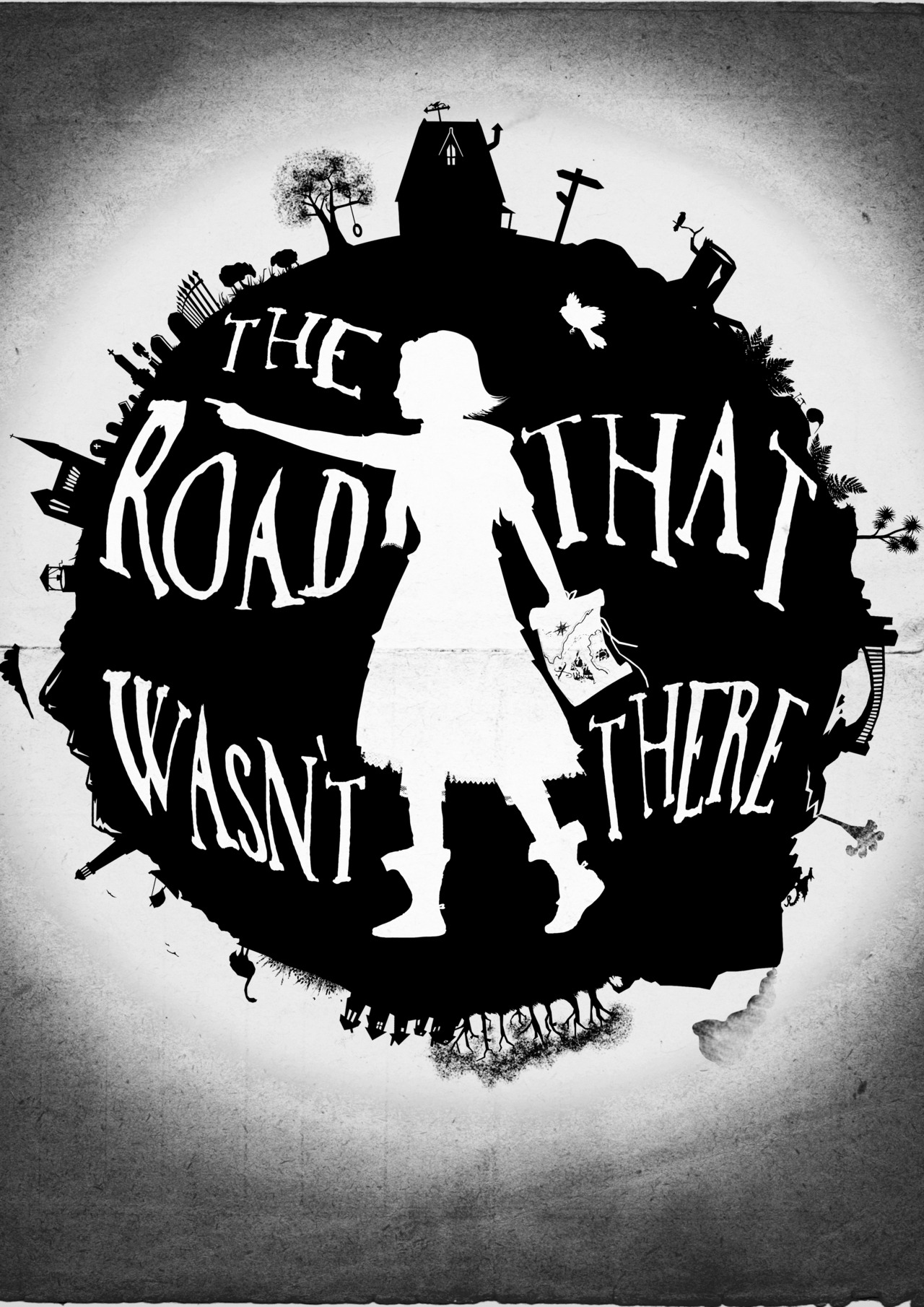
Apparently, New Zealand has 56,000 kilometres of streets and towns that exist only on surveyors’ maps. In  The Road That Wasn’t There, a woman slips off of the "real" roads and ends up in one of these  "paper towns". In a show aimed at children, but far from childish, Trick of the Light Theatre examine how decisions in the fictional world can have consequences in reality.


Theatre for children is a major strand in The Fringe, yet it rarely receives the critical respect, beyond being "suitable for all ages." Trick of the Light, in common with many children's companies, are ready to blast that lazy conceit, using radical drama techniques to tell an offbeat, thoughtful story.


What has made you bring the show to the fringe?
Hannah Smith (director) - The Fringe is an unbeatable, unrepeatable experience by all accounts, and as we have been in the UK for the last year we thought we’d be fools to pass up the opportunity. It’s a jolly long way to get here from NZ.
Ralph McCubbin Howell (playwright) - This is my second time at the fringe, but my first doing more than performing (I was here in 2005 as an improviser with the Oxford Imps). I’m an advocate of populism in theatre, and the fringe is about as populist as it gets – a big, eclectic behemoth of a festival – if you don’t have the goods you get lost pretty quickly. It’s exciting to bring our work into this kind of environment.

How do you approach a complex idea like this and adapt it for children's theatre?

Hannah - I think a lot of work for children deals with complicated ideas. Fantasy is one of the major genres of children’s fiction, and the leap from the page to the stage isn’t so very far.It's a genre often used as a way of dealing with death and comprehending the darker aspects of life. Abandonment, despair, the loss of innocence, and mortality are bread and meat to the fantasy genre. When Ralph and I started talking about the play we discussed how we wanted the story to work on two levels, so while the focus of the production is very much the fairy-tale about a girl who finds a magical world that other people don’t have access to, on another level you can read it as a story about dementia and Alzheimer’s, and a family finding a way to work through the process of losing and grieving together. A story to tell each other to help them through the hard times.
While there's a lot of fiction for older children, we feel they're under-represented in theatre. Many more shows go for the bright-songs-hands-on-hips-smiles-on-lips approach. There's nothing wrong with that, but it's not really our scene.

The show includes many different styles of theatre. Is it easy to integrate them into a single work?
Hannah - No! It's hard! But I don’t think you go into theatre, and free fringe festival theatre at that, if easy is your bag. In our production the most important thing is the story, and the various theatrical elements are all serving the meaning and the overall picture.  
Ralph - The Road That Wasn’t There jumps between two generations, three time periods, and three different worlds. The need to distinguish these settings really lent itself to various styles of music, performance and puppetry. Hannah and I were throwing around design ideas as I was writing the play, so the two informed the other. The story demanded a rich landscape, and incorporating different styles allowed for this depth within the confines of a three-person fringe show.

Is children's theatre - as it seems to me - the place where complex theatrical techniques are put at the service of accessibility?
Ralph - This is the first full show that I’ve written for children, but my instincts are informed by what I’ve experienced as an actor. I think accessibility is key with any audience, and that theatrical techniques should always serve this end, be they simple or complex. Kids are savvy - they will call a spade a spade. If something’s complex to the point of obtuseness then they’re going to call you up on it (and often quite vocally). That said, they don’t need to be pandered to. I don’t think accessibility in children’s theatre negates complexity (or intelligence or confrontation). But it does push you in different directions. I’m quite a verbal playwright, and that kind of complexity doesn’t hold as well with younger audiences. But they are more receptive than adult audiences to overt theatricality. They’ve fewer qualms about seeing the strings so you have a wider scope for techniques. You can do things that are complex in ways that go against grown-up sensibilities of suspension of disbelief, but communicate to kids. 

What reactions do you hope for with this work - and do you get them?
Hannah - What I want is for people to be enchanted by the story, caught up in it and carried away.  That is how I feel when I read or watch an enjoyable fantasy story, and that is what I hope we can provoke.  And laughs, I hope we get some laughs.  


The Road That Wasn’t There
2nd – 26th  August. 12 noon  (1 hour).
Maggie’s Chamber, The Free Sisters, 139 Cowgate
Tickets FREE

Sacred and Profane present Satan’s Playground


The current battle-ground between faith and science (occasionally advertised as "religion versus reason" but any attempt to easily define the two factions is bound to collapse into name-calling) leaves theatre in an awkward position. Rather like the question of arts' funding, there are arguments on both sides, and a great deal of the conflict's heat is generated by straw-man arguments. But theatre, which has a natural affinity for using powerful symbolism, is sometimes more comfortable using an almost religious sensibility as it grapples with large issues.


Take Sacred and Profane. Their latest production stars a classic  version of Satan, all temptation and magic. And while I am sympathetic to the religious impulse, both on and off stage, my first question is whether director David Zoob has a particular spiritual agenda.

"It’s not about being some sort of Holy Joe Theatre Company," Zoob puts my mind at rest. "But we are interested in moments in the theatre that you might call ‘spiritual’.  Where it’s not just about ideas or emotions, but something else that kicks in.  It’s hard to define but we know it when we experience it."

This moment - which I experienced most powerfully during VSPRS by Les Ballets C de la B, and whenever I see Iona Kewney's collaborations with Joe Quimby - is both the triumph of performance, and a problem. Not only is it unfashionable, it is hard to explain and has inspired a strand of criticism that sinks comfortably into mysticism. I've been reading up on theory for the Fringe, and much of what once passed for analysis is revealed as a sort of theology.

Zoob continues. "It happens in lots of great plays and shows – Shakespeare’s Winter’s Tale, Tony Kushner’s Angels in America, at the end of Miller’s Crucible.  We hope that by playing with the interaction of music and theatre and storytelling, we might stumble across it."  While I might try to define this moment as the result of the complete immersion of the audience, it is intensely personal. Having been brought up on the intensity of Tramway's programming, it has become my holy grail for performance, and although I am tempted to use universal terms to discuss it, I am very aware that my own taste and history determine its nature. For example, it tends to happen during dance shows for me, and I watch a great deal of dance. 

Fortunately, Zoob does share some of my history. "I saw Peter Brook’s Mahabharata when I had just graduated," he says - and Mahabharata  was an early Tramway visitor. "And then recently his show THE SUIT.  I loved the way the pieces were so rich and complex and the staging was so simple at the same time.  The heart and soul of the material was too important for his Director’s ego to get in the way.  We are n’t at that level, but it’s something to aspire to."

Sacred and Profane's ambition is no bad thing: and while Brook was once a game-changer, his recent work has revealed a more gentle approach, which, again, can descend into a simplistic representation of faith in terms of acceptance and compassion. This doesn't necessary reflect the reality of lived religious belief, and it is a relief that Zoob isn't just about the fuzzy warmth. "We like the opposite too – rough earthy storytelling, humour, guts energy and all that," he laughs.

With a story based on The Destruction of Kreshev by Isaac Bashevis Singer, a live Klezmar score and a promise to explore the boundaries between faith and hysteria Satan's Playgroud has a tough-headed approach. The plot centres around Satan's attempt to destroy a village through love - even if it seems that lust is really his tool. 

Warming to the theme, Zoob elaborates. "It seems to me that the story reveals the dangers of Faith.  The villagers believe that the crop failure is a punishment for the sexual indiscretion of two prominent members of their community.  They are too busy trying to deal with their guilt and with punishing the sinners, to take practical steps to deal with the threat of famine." Of course, in Greek tragedy, this would make sense: Oedipus Rex is based on exactly this problem. 

But Singer's influence leads the production out of the mythical and into something closer to magic realism. "His early stories are a wonderful combination of earthy human realities –  sex, love, hate, intrigue –  with otherworldly ‘realities’ and extremes – magic, spiritual yearning, superstition, religious obsession," says Zoob. "It makes for rich storytelling and lends itself to the thing we like to do which is to look at the way music, digital sound and drama can interact to create something powerful and memorable."

Satan fits nicely: he might not be the most topical of characters - even the Christian Churches can be reluctant to mention him - but his status is undisputed. From the imp of Job, through his period as the stock villain in Morality plays to his twentieth century role as the suave instigator in The Rolling Stones' classic, Satan has all the bases of evil covered. "In the show, Satan is a seductive, charming and self-congratulatory storyteller.   I am not sure if we should always trust him," Zoob admits. Yet this devil has not been ignoring the social diminution of his power. "He questions his own power at the end.  So in the final moments he comes across as resentful and insecure: the people of Kreshev were so wrapped up in their own guilt and suffering that they didn’t pay attention to him and his conviction that he destroyed them."

In a rather nice twist towards a more secular vision of His Satanic Majesty, the play's use of Old Nick ends up questioning itself.  "This can prompt audiences to question the existence of Satan as an independent force.  The story seems to demonstrate that misfortunes and disasters happen as a result of human choices, rather than arising from the will of ‘Satan the Destroyer’, Zoob explains.

There is a further strand of contemporary evil at work: the show's tagline  “It's well known: women bring misfortune” is, Zoob acknowledges "a provocation.  The story bears this out – if you see the world through the eyes of a traditional and Patriarchal society." And for Zoob, the patriarchy is not dead.  "There are plenty of them about and plenty of communities in Britain who see things in this way.  Consequently they think it’s important for women to dress ‘modestly’ and wear wigs, headscarves, hijabs or burkas in order to protect men from temptation and from the misfortune it can bring."

Apart from the spiritual preoccupations, Sacred and Profane are striving towards a vision of total theatre: the live musicians, the use of technology, the twin influences of physical and story-led performance suggests the company are willing to use whatever they need to impress their point. If the Fringe can sometimes be associated with unambitious chancers and cheap attempts to get attention, Sacred and Profane are chasing the big questions of life and drama with gusto.


Edinburgh Fringe Festival 2012, 2nd-26th August 14.20 (no show 13th)


Wednesday, 13 June 2012

Desperately Seeking The Exit


The Fringe is a tough place for theatre: not only does it challenge every performance to stand out against an overwhelming backdrop of comedy, music and cabaret, there’s a danger that a performer can find themselves deep in a financial hole by the end of August. The cost of venues, board and food (usually bacon rolls eaten on the hoof) are painful: it is only with the advent of the free fringe that at least some of these dangers are being undermined.

Peter Michael Marino's Desperately Seeking the Exit might have a pessimistic title, but his enthusiasm is contagious. “My show is about a big West End flop. And apparently people like flops, or at least hearing the writer of a flop talk about his flop,” he laughs. “So, I think my show will stand out because of the subject matter, and hopefully because of the solo-show-stand-up-storytelling-hybrid elements, and the collaboration with my director John Clancy who has rocked the festival quite a few times in the past. And the sexy red pants I wear in the show.”

In a month where the stand-up reigns supreme – even those who die on stage add to the overall impression that humour trumps tragedy, at least for August – Marino is mindful of the Fringe’s atmosphere.  “I wrote this from a comedy angle from the start. My intention is to make the audience laugh,” he continues. “It's a real fish-out-of-water story: a Yank in London writing a musical based on an American movie with the music of an American band and the shared language that got in the way. But while comedy is paramount, it's the personal story that folks have responded to the most. If I can make you laugh and think, then I've done the job.”

“The words "Blondie" and "Madonna" certainly catch one's eye, and the word "musical" seems to be a popular one,” he admits, noting that the competition can be intense. “The Fringe itself inspired me when I directed a small cabaret in 2010. I saw so many shows that rocked my world, I wanted to do the same.” There’s an enthusiasm in his work for “the hundreds of solo performers whom I've seen and worked with over the years,” and a genuine love of the Fringe’s atmosphere: when asked why he wants to come back, he simply adds “Besides having an international audience and being surrounded by boundless creativity for a month and being inspired by incredible artists? I would say the food and weather!”

Yet despite the humour, there’s a personal challenge to this production. “ I've told the story of my challenging experience with mounting a huge musical to so many people over dinner or drinks, that I thought telling it all in one hour on a small stage would be an easier way to share the tale without the calories, tip and hangover,”  he concludes. “Although, I think that will still be an issue after a month of performing the show. Bring it, Scotland! This Yank is coming.”

Laughing Horse @ Ed City Football Club
2 – 29 August 2012
18.00 (1 hour)
Free

"Not so much revenge as a rising," says Geek spoken word maven


The introduction of a spoken word category in the Fringe brochure – hot on the heels of the new cabaret section – is not controversial: there is already a section for my beloved physical theatre, and any attempt to break down the unwieldy mass of events shoved into the larger sections is a relief for critics and casual audiences. Hayden Cohen is quick to defend the new section, since his Age of the Geek does fall easily anywhere else.

“Geek is a funny show, but it's more cerebral than your average standup,” he explains.  Whilst it has a narrative of sorts, it is not a play with a beginning, middle and end. Whilst my own show has variety as in Cabaret, that doesn't work either as I don't use jazz hands. Spoken Word is for word obsessives. The ebb and flow of the majority of the spoken word shows is a marked difference to anything found in any other category.”

If spoken word is still a slightly marginalized presence, this suits Cohen’s content. “As the perpetual outsider filling the cliché of always being picked last for the football team and being more comfortable with a motherboard than a surfboard, it's clear to me that the smart kids now rule the roost,” he comments.  “Until relatively recently, geeks were envied, but not liked. Now it's cool to be a geek and I wear it as a badge of honour.” Even the musical elements betray a touch of obscure technophilia. “It’s guaranteed to be the only show in the fringe with a MIDI enabled stylophone.” 

theSpace @ Surgeons Hall (V53)
Box Office: 0845 508 8515
FRIDAY 3rdth – SATURDAY 25th AUGUST 2012 – 3PM
(excluding Sundays)