Showing posts with label mime. Show all posts

Sunday, 2 December 2012

Mime into Visual Theatre

Just shut up, okay?
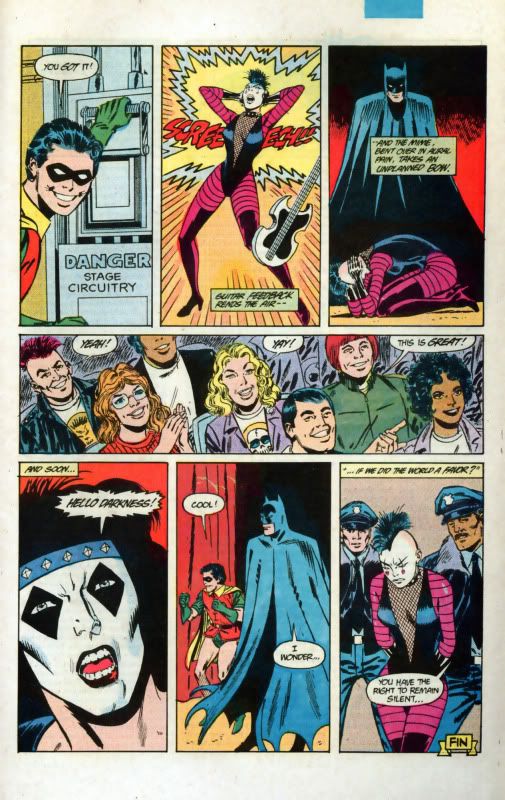
My investigation into mime as the foundation for "visual theatre" is not going so well. Expecting to find a well documented history of silent but deadly performance on the internet, I'm come up against prejudice (even Batman hates mimes), conflicting definitions (in the USA, they call it pantomime even though it doesn't have a dame) and a tradition that isn't exclusively physical. Since the word probably comes from "mimesis" or imitation, it doesn't necessarily connect with physical activity - and the contemporary stereotype of the mime is really just Marcel Marceu's Bip character.

I'm not willing to trace the mime's art back further than Jean Gaspard Deburau who used the Pierrot, star of a thousand sentimental choreographies, to solidify the look of the mime sometime between 1819 and 1825. Deburau toughened up this character from the Commedia dell' arte and is an early example of the bad-boy celebrity: just like OJ Simpson, he was the defendant in a murder trial.

Even back then, mime was regarded as a little out of the respectable mainstream: when Deburau performed at a more up-market theatre, he was hissed. And from descriptions of his personal life, he spent the rest of the time pissed, either up or off. But his reputation as a consummate performer got him fans in the poetic classes, and the long association of the mime and doggerel began with him.

None of these are very good reasons to decide on Deburau as the starting point for contemporary mime - although his celebrity made him an inspiration for later generations and his interpretation of Pierrot allowed the character to stand forth from the cast of the Commedia. But they do place him in a tradition of using stylised gestures as a form of communication and make the development of mime follow the evolution of classical ballet, which was shaping up in Russia into the form recognised today.

Like ballet, mime took a turn for the better at the turn of the century - a former critic, Jacques Copeau, used masked to train his actors and inspired the work of Étienne Decroux, who would write the first major book on mime. 

Through these three artists, all based in Paris, a simple narrative emerges: mime moves away from its populist roots (the Commedia is frequently mentioned as an influence on the British pantomime, and despite Deburau's fame, he never quite managed to break into the more intellectual theatres) towards something more challenging. Copeau was concerned with reinvigorating French theatre, and rejecting the commercialism of the Right Bank: Decroux went further, and saw mime as a revolutionary force to rescue theatre from the script. 

Marcel Marceu studied with Decroux, so this radical programme quickly entered the mainstream. However, it is his Paroles sur le Mime that set out the ideas that could be a foundation towards a more visual theatre.

Decroux declaimed theatre for lacking invention, and proposed that stopping the avalanche of words in the average script could rescue performance. He estimated that thirty years ought to be enough to give the actor a chance to reclaim their skills from the writers: after this, words could come back. He also attacked the idea of scenography, encouraging a bare set. The illusion of "real life" was rejected. Instead, the actor needed to start using their body. Even when words were allowed back in, improvisation from a text would replace the classic script. 

In France, this was even more unlikely than in the UK: Shakespeare might be poetic, but French theatre loves language. Even his contemporaries like Sartre and Anouilh wrote some verbose plays - Anouilh's Antigone gestures towards the classical Greek format and Sartre was more excited by theatre's possibilities for an illustrated lecture than for rediscovering bodily language. 

Yet the ideas that might eventual get their own wikipedia entry are beginning to arise...


Thursday, 22 November 2012

Learning to Love the Mime

Mime must be one of the most unpopular art forms. It's up there with performance poetry - although that has a New York branch that features plenty of swearing, and hip hop has given it some street cred - and Morris dancing. The ubiquitous white-faced busker, made so popular by Marcel Marceau than brilliant radio comic and low-rent TV comedian Kenny Everett parodied him for a cheap laugh, has become a cypher for unimaginative street theatre. Hulk Hogan smacked one in the face, and Robin out of Batman electrocuted one for applause.

It doesn't matter that the Lecoq school has made clowns a little hipper at the past few Edinburgh Festivals, and that the buffoon, a kind of predatory clown, has taken the mime into darker territory. Actually, the name of Lecoq usually gets a few cheap laughs.

Never being one to buck a trend, I am going to begin my investigation into mime not by explaining the etymology of the word (it's from the Greek, meaning to copy) or connect it to the grand philosophical idea of mimesis (Plato's bugbear, the act of copying). Instead, I shall recount a tale I discovered in the Derrida for Beginners book about how a mime died.

It's the story that has everything: a mime being stupid, a connection to the mighty school of deconstruction, sexual jealousy, French literature and an example of how serious the mime can be.

So, there's this mime, right. His name is Pierrot. Being a mime, he can't satisfy his wife - maybe she wanted some dirty talk. Anyway, she goes off and has an affair. Pierrot finds out and, this being a performance, dramatically considers various ways to off her. He settles on tickling her to death.

But he's a mime, see, and this is a pantomime. He acts out his revenge fantasy, playing both himself and the victim. He alternates between tickling and being tickled. He's enjoying himself so much, miming away two parts, that he gets carried away. Then the picture of his wife comes to life and starts laughing at him. He can't stop the tickling - he's enjoying it too much. Unfortunately, it turns out that the cheeky tickle wasn't such a stupid murder weapon. It works.

Pierrot tickles himself to death.

Derrida then explains how the description of this performance by Mallarme - itself based on a booklet describing the original performance - posits a challenge to the Platonic idea of mimesis. I don't have a hope in hell of understanding that.

However, I am interested in this story because it might help me get to the basis of what mime can do, when it isn't standing outside the pound shop pretending to be stuck in a glass cage. What Pierrot is representing is impossible. God knows, I've tried to tickle myself, but I can't. And beyond that, can someone be tickled to death?

I suppose it's possible. It's a bit James Bond baddie complex, but it might happen during a BDSM session that gets out of hand.

Either way, what the mime seems to be up to is... telling a symbolic story through movement. Leaving aside Derrida's meta-readings, Pierrot's idiot drama is a fairly good allegory for the dangers of erotic obsession.

Maybe mime can be understood as a mannered system  of story-telling. Stripping away the superficial details (the white face paint, the striped shirt and funny trousers), leaving behind a movement vocabulary that can carry a narrative.