Wednesday 29th July, 13.00 & 17.30, Candleriggs Square
Thursday 30th July, 13.00 & 17.30, Candleriggs Square
Thursday 30th July, 13.00 & 17.30, Candleriggs Square
About Surge Festival
What inspired this production: did you begin with an idea or a script or an object?
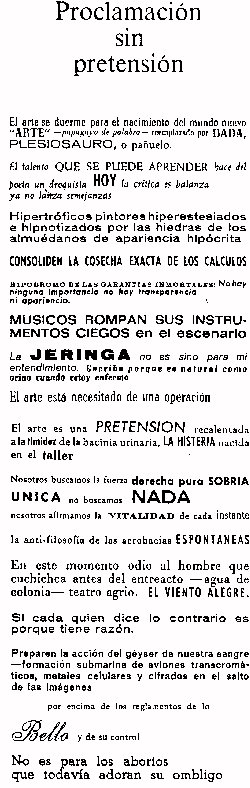
Jonathan Beedell : DADA dadadadadadadadada.. ! *&^%$£ !! ?

We wanted to do something that connected with WW1 commemorations but definitely not a show about soldiers or the trenches or letters home or war poets etc as we thought those subjects would reach saturation point very quickly. So we wanted to find another take on things, perhaps something about the sheer absurdity and waste of those four terrible years.
The Dada movement historically certainly seemed to express some of that. It could certainly be argued that Dada is the most positive thing to emerge from the ashes of the conflict.. so we started with that. We read a lot, looked at odd bits of film and images and thought about the dada legacy – how to reflect its contemporary realities, we researched Duchamp and the others - and also looked at the life of Fred Karno – inventor of the custard pie ( allegedly ) – who was a practical joker and entrepreneur who took Chaplin and Stan Laurel to the USA.. The WW1 troops were often referred to as Karno’s Army.. for obvious reasons…
So we began with many ideas and lots of conversations… Then we dived into the studio and went a bit crazy. Months of pent up energy and boredom with the hum drum realities of running a company exploded in improvised lunacy. Lots of concrete poetry, bla di bla, repetitive nonsense, anger, words, stupid movements, dada delving in dirty dancing - and then a few props came to hand, including a big canvas that was knocking around. That became our main prop and backdrop and a symbol of ‘art’…
Art must tear life apart ! Action is the enemy of thought !
So we began with all three at once. A script of sorts emerged and is always changing. A lot of the text is chosen moment by moment. Objects arrive and move on. Ideas never stop.
Why bring your work to Surge?
We want lots of people to see the show. We want more bookings.

And ‘cos you asked us.
What can the audience expect to see and feel - or even think - of your production?
I hope they are shocked, provoked and amused. And entertained. I hope they laugh. A lot.
They will see two quite old blokes giving out a lot of focused energy and sublime madness, comic timing, idiocy sprinkled copiously with spittingly ranting polemical sloganeering and propaganda of the vilest kind.
And a nice abstract painting, great costumes, and fine facial hair. They might feel angry and confused by some of it, or even upset. But they’ll be happy. Eventually.
About Dramaturgy
How would you explain the relevance - or otherwise - of dramaturgy within your work?
I think we have an instinctive feel for what works, and that’s about it. We very rarely work with dramaturgs as such, but always have outside eyes feeding in to the process of creating the work - friends, neighbours, stray performers and dogs – the odd professional or two… and they can be very odd some of these people…
Perhaps conventional dramaturgy is not that relevant to the kind of work we do – we deal with emotional, visceral narrative and with audiences who are not trapped by seating or four walls, so the motivations for dramaturgical input are so very different and there don’t seem to be many ‘dramaturgs’ that connect with or understand the street arts context that I know of…. Maybe there’s a gap in the market there…
What particular traditions and influences would you acknowledge on your work - have any particular artists, or genres inspired you and do you see yourself within their tradition?
Dada certainly. The English absurdist tradition. Various eccentric artists – Vivian Stanshall, Max Wall, Ivor Cutler, Ian Smith among others. I think we were pioneers of a new tradition of street theatre, so I feel we are closely allied with all those of us who work primarily outdoors, circus included, though personally I hate red noses…but the street theatre tradition influence on me came from early work by many people, Interaction, Action Space, Welfare State, IOU, Albert Hunt, Roland Miller, Jeff Nuttall, Adrian Henri et al and right back to Joan Littlewood and community theatre – and then from later experiences in Europe with all sorts of others – with processions, street bands, improvisations, dance, fools and clowns and songs - but all about outdoors and taking work to non-theatre audiences.
I’m inspired by people as diverse as John Berger, Keith Jarrett, Groucho, Marx and Charlie Drake… Audiences and ordinary people outdoors in the street ( public realm to you ) have been the best critics, inspirers and influencers throughout. If it doesn’t work for them and they start to drift away, then you’re not doing it right. Simple really.
Do you have a particular process of making that you could describe - where it begins, how you develop it, and whether there is any collaboration in the process?
It begins when we start.
We develop it through play.
We never collaborate. We just bang heads together.
( Collaboration should not be confused with consensus. Collaboration is a recognition of each other’s strengths and foibles and finding a way to accommodate all points of view or offers without too much dilution of integrity or passion.. )
We do a lot of mulling and a lot of reflecting to begin with. I read voraciously and regurgitate words in random ditties, didacatics and desperations. Then we distil, argue, give in, give up, or occasionally hold dear to the things we love.
What do you feel the role of the audience is, in terms of making the meaning of your work?
They can believe whatever they want to believe, but that doesn’t make it true. They take away some emotional truths I hope - and reflect on what they’ve seen. The meaning has to lurk in their shopping bags and emerge when they get home. We often involve them in the work, but not much in this show. Their reactions to ‘stage actions’ will often determine our timing or length or focus of sections of the performance, and that will affect the meaning. Or not.
Are there any questions that you feel I have missed out that would help me to understand how dramaturgy works for you ?
A definition of dramaturgy ?
Do you have a particular process of making that you could describe - where it begins, how you develop it, and whether there is any collaboration in the process?
It begins when we start.
We develop it through play.
We never collaborate. We just bang heads together.
( Collaboration should not be confused with consensus. Collaboration is a recognition of each other’s strengths and foibles and finding a way to accommodate all points of view or offers without too much dilution of integrity or passion.. )
We do a lot of mulling and a lot of reflecting to begin with. I read voraciously and regurgitate words in random ditties, didacatics and desperations. Then we distil, argue, give in, give up, or occasionally hold dear to the things we love.
What do you feel the role of the audience is, in terms of making the meaning of your work?
They can believe whatever they want to believe, but that doesn’t make it true. They take away some emotional truths I hope - and reflect on what they’ve seen. The meaning has to lurk in their shopping bags and emerge when they get home. We often involve them in the work, but not much in this show. Their reactions to ‘stage actions’ will often determine our timing or length or focus of sections of the performance, and that will affect the meaning. Or not.
Are there any questions that you feel I have missed out that would help me to understand how dramaturgy works for you ?
A definition of dramaturgy ?