Showing posts with label I am Son. Show all posts

Wednesday, 29 August 2012

Let's Get Political...


 I can usually come up with a poor excuse for not getting involved in political action: truth is, I generally haven't thought enough about the issues to know what I believe, meaning any statement I make would be ill-informed. I get irritated by the behaviour of the Con-Dem coalition, especially since it appeared to express a public rejection of New Labour, coupled with a distrust of the Tories: despite Liberal Democrat's insistence, the UK government has acted as if it wants to just hand over all power and profit to their pals in business. Nevertheless, I can't bring myself to join any protests, citing suspicion of the organisers or a more general apathy about the effectiveness of campaigning.

Instead, I bang on about the importance of political theatre. I know that I missed most of the explicitly political pieces in the Fringe - The Economist, which dealt with the Scandinavian massacre, or that verbatim one about the oil slicks - and made do with work that had more of a "the personal is the political" vibe. The Shit, I am Son and, for a longer historical perspective, Bigmouth were my moments of activism.

Both The Shit and I am Son came out of Italy: the antics of Berlusconi in the past decade has led me to assume that Italian politics is hopelessly corrupt and the very public moral lapses of the country's leader reflect a more sinister political dishonesty. The Shit is more explicit in presentation than content: a naked woman describes her ambitions in a faltering voice, before singing of the Italian revolution in the style of Diamanda Galas. Her failure to control her body through diet, and to get that job might symbolise the struggle of a people towards self-determination, or the oppression of the nation, and the specifics of her life - the self-starving, the death of her father, the miserable first encounter with sex - have a brutal resonance.

Rather, The Shit reveals the process of internalised oppression: this particular life embodies the pressures of a society that is fascinated only with success, and abandons the honest ambitions of earlier generations for a chase after fame that mistakes sacrifice for self-degradation. Having garner attention for its unflinching monologue, and the naked performer, it literally wraps itself in an Italian flag and questions the impact of a country obsessed with surface on the individual.

I am Son shares a similar anger, caricaturing obsessions with nationalism, fashion, style and romantic myths through a bracing choreography. The three dancers hurl themselves through episodic sketches, reducing to clowns or elevated to icons, hiding behind masks only to reveal furious disappointment.

Based on a poem that rejects the revolutionaries of 1968 - and sound-tracked by children's voices that articulate a social despair, I am Son captures the confusion of a world made mad by information and broken promises. The lack of a coherent programme for change in both works echoes my own political pessimism.

Against this, Bigmouth offers a broader vision: a series of extracts from great speeches, each one made ironic by subsequent history. MLK is mashed up with Hendrix's version of The Star Spangled Banner; Socrates' farewell to the Athenians after his trial becomes a riposte to The Grand Inquisitor's condemnation of Christ. Again, there is little attempt to create a reasonable agenda for change, and history itself is exposed as a series of failed ambitions.  


Saturday, 18 August 2012

Top Five for 85a

For eleven months of the year, I broadcast and write from Glasgow. This has caused me to be a terrible West Coast chauvinist, loudly proclaiming that the heart of Scotland's creative culture is on the left hand side of the map.

One group that have enabled my opinion are 85a - they might have roots in the visual arts, but water them with enthusiasms for live music, esoteric cinema and immersive performance. Their event at the Glasgow Film Festival converted The Glue Factory into an inverted multiplex, scattering the films of Svankmejer between installations, performances and shoved inside industrial sized boilers. They followed this up with Chernozem, their expressionist movie that included live action episodes, monstrous machines and a handy reminder of the link between industrialisation and totalitarianism.

Apparently, members of the Collective are coming to the Fringe tomorrow. I don't want them to be swept away by the horror of Edinburgh's mass appeal, so I am picking out anything that looks like it will chime with their aesthetic.

Chernozem made it clear that the Collective are tough enough to handle David Harrower's Blackbird, which looks unflinchingly at the issue of child abuse. By shifting sympathy between the characters, and refusing to follow an easy, judgemental line - although this is no apologist's piece - Harrower builds the intimate two hander to a moment of incredible intensity in the last few moments.

Originally, it was staged at the International Festival: now it is coming to the Fringe in a site specific production. Admittedly, it's in some offices, which is where the play is set, and I doubt they'll be going as far as 85a do. It's Harrower's characterisation of the couple that chills, and whether it is acceptable to describe this as a sort of love story opens up an entire can of critical worms about how theatre represents and persuades.

Edinburgh Training and Conference Centre, 17- 24 August


I'll get round to going on and on about I am Son  in a full post later, but I'd be remiss not to shout it out for 85a. They are three angry Italians, who take their cues from disillusion and distraction. Extracts from a poem that castigates the failures of the 1968 revolution soundtrack a vicious series of vignettes that lampoon fashion, nationalism, romance and alienation: high energy action from start to finish, it allies dance discipline, live art irreverence and a tiny taste of clowning (red noses are present, sardonic and tragic). Proving that dance can not only be political, it can be more precise than a script, I am Son is a refreshing burst of rage, controlled yet potent, when entertainment is being touted as the arts' answer to the idiocy of Our Friends in Westminster.

Dance Base, 16 - 25 August

Given how 85a feel about Eastern Europe - there is a strong Soviet Realism to much of their iconography - I'm calling up Future Tales (Sierakowski). It's rough and ready punk theatre, laughing at the vanity of a particular Polish leftist to make broad points about the failure of the Marxist cohorts to engage with society in a meaningful way. The music is loud, the performances direct, the bit about WWIII is funny and intense, and komuna//warszawa used to be anarchists. They decided that this wasn't working, so evolved into the closest thing Poland has to 85a.

Where 85a build huge sculptures, komuna are more likely to have suggestive mouse suits, but both gangs have a loud of the DIY, the punk, and the found space as a venue. Their dialectic against dialectic is superb, cabaret in style, their attitude harsh and their humour dark. Wait for the three way between the future Marxist dictator, the Christian and the Muslim churches. Apparently, it's all about the size...

Summerhall, 15- 26 August

I usually try to push my luck in the Top Fives, and roam around the venues, catching as much as I can... I am keen to mention  Zoo venues, because they have physical theatre and held a line against the encroachment of comedy... and Greenside is worth a visit both for its commitment to dance and the rather lovely gardens. But frankly, if I don't suggest the Polish work (any of it at Summerhall) and the Russians, I am not reflecting what I know about 85a.
Mr Carmen by Akhe: don't be fooled by the rash of stars it has been getting. This is not a strong theatrical production. Michael Cox from Across the Arts endearingly compared it to a live action Tom and Jerry cartoon: it stars the two Akhe guys as classic Russian style clowns (that is, like they have come out of a production of Waiting for Godot) arguing about who's the best out of the famous romantic opera. 85a would be interested in the way that these "theatre engineers" foreground the act of building a set and their ingenuity in staging: the runway that they set up around them is charming and funny, and their antics behind it can raise a wry smile.

For sheer action, I would still go for Mefisto Waltz, same venue, same austere Russian atmosphere but with the bonuses of a fairly coherent narrative and emotive choreography, but Akhe is a curiosity. It might even guide your future approaches to installation based theatre.

Assembly Roxy, 3 -27 August

 Finally, it would be wrong of me not to mention Planet Lem. Of course, if you don't like the idea of a roller-skating robot, an astronaut arguing with the author, who has ended up a bit like God, only on a video screen, a rebellion against luxury and a warning against the dangers of relying on technology, I am sure there is some comedy around the corner.

This is in the Quad, so it is a massive spectacle. It is based on the writings of a great science fiction author from behind the Iron Curtain - apparently, he heard rumours about American sci-fi and wrote his own, without having actually read any. That he came up with Solaris might be astonishing given the circumstances, or the result of not having wasted time reading the pap that makes up much of the genre (like any genre, kit  has its share of clichĂ© and dilettantes).

Planet Lem feels like a brief episode in a larger story, imaging a future universe, inhabited by millions of species across thousands of world, policed by travellers who bring their ideas to civilisations not yet ready to accept them.There is a cool spaceship bit, too.

Quad, 18- 26 August


Tuesday, 14 August 2012

The Dream Cabaret Line Up

It's a challenge, but I am willing to take it. A once in a lifetime cabaret line up, curated by me, happening only in my head, based only on acts who are still knocking about the Fringe in the last week. The trick is to not only pick them, but work them into an order that would make sense, give structure and entrance. That, and not cheating by picking the entire casts of Vive Le Cabaret or La Clique Royale.

I shall be predictable for my opening act: The Creative Martyrs. They are a Glasgow duo and were called Fringe legends by Fest magazine. They owe as much to Eastern European mime as they do to the Weimar Republic, and few double acts mine the rich seam between totalitarian terror and decadent despondency with such wit and aplomb.

Rather than the crowd-pleasers like Spare Part Baby or War Whore, I'd like to have them singing some of the episodes from last year's narrative based hour... there's nothing as refreshing at the start of an evening as a comic warning on the dangers of the loyalty card society.

The  Voodoo Rooms, 4 -25 August

At this point in the evening, I'd like some dance. The easy choice would be burlesque, but a sequence from Sanpapie's I am Son would be more innovative. I'd like the bit where they brandish a white flag, parade around like fashion models and invoke the exploitation of women and the tyranny of fashion: a quick reminder to the audience that satire doesn't have to be blunt, but can be complex and allusive.

Dance Base, 16 - 15 August 


Heading towards the centre of the evening, and time for a classic object manipulator. Mat Ricardo, Vaudeville Schmuck, probably needs little eulogising. He not only does that trick where he pulls off the tablecloth from beneath cups and saucers, but he flips it back on again.

Of course, his juggling skills aren't the only thing that get him on this special, imaginary bill. Ricardo's persona has a bit of the bite that I admire in other neo-cabaret acts up from the smoke. I'd like him to do his pieces while reciting the speech he made last year about the way that TV talent shows are destroying the variety tradition and transforming artistic skill into the equivalent of a dog doing a card trick.

Voodoo Room, 1 - 26 August

Although they are far less explicitly political than my other choices, I fancy Bourgeois and Maurice as my singing finale. The dysfunctional brother and sister mess up sexual and gendered stereotypes, recalling a 1970s Bowie, if he had used less smack and his egotism avoided the self-pity pitched against a practical pianist who would be happier in a back room bar. Shackled together by bonds that are never clear, they are recognisably in the same tradition as Frisky and Mannish, although there are less pop references to confuse my audience of older men who thought that this was a free burlesque night.

Underbelly, 2 - 26 August

Only now, with my line up nearly complete, do I realise that I need a compère. I'll call up Dee from the Itsy Collective: they are running a cabaret every night as part of PBH's Free Fringe, and her DIY ethic, and rejection of the conventional MC styling (she doesn't have an act that she needs to present, so her skills are all about dealing with the audience and rocking the house) appeal to my overall anarchic curation.

Voodoo Room, 3 -26 August


Sunday, 12 August 2012

Alienated Top Five


Ah, alienation. Once upon a time it was the Marxist explanation for why capitalism could exploit the proletariat. Now, it's a handy catch-all to describe the human condition. While I can't claim to have a complete understanding of the concept, I probably live it, so picking out five works that express the anxiety of contemporary existence ought to be a breeze.


Making the list even easier is The Stranger, an old school monologue straight from the pages of Camus' existentialist classic. Guilherme Leme is alone under the spotlight, telling the story directly and with the polished aplomb of an actor who has been a fixture on Brazilian TV throughout his career. There's no surprise twists - the hero wanders through his life, kills an Arab, gets tried, becomes a symbol of monstrosity for the local community, especially for his atheism - but Leme holds the attention and builds the sense of utter meaninglessness through his measured, nuanced delivery.


If The Stranger offers any respite from Camus' bleak vision of a reality uninhabited by the divine or even compassion, it is through Leme's style. A mixture of a bed-time story for Gaulois smoking adults and a Film Noir detective voice-over, his presence, and talent argue that meaning can exist in the sheer joy of experiencing another human revealing truths. So - perhaps the last word there goes not to alienation but art's ability to reconcile.

Summerhall, 3-25 September


A more explicitly political version of alienation is arriving at Dance Base later this week. Last time they came to the Fringe, Sanpapie got in a van, loaded it with food, and drove from Italy to Edinburgh. This time, they come fully prepared, starring an ex-footballer and ready to respond to the frustrations of living in contemporary Europe.

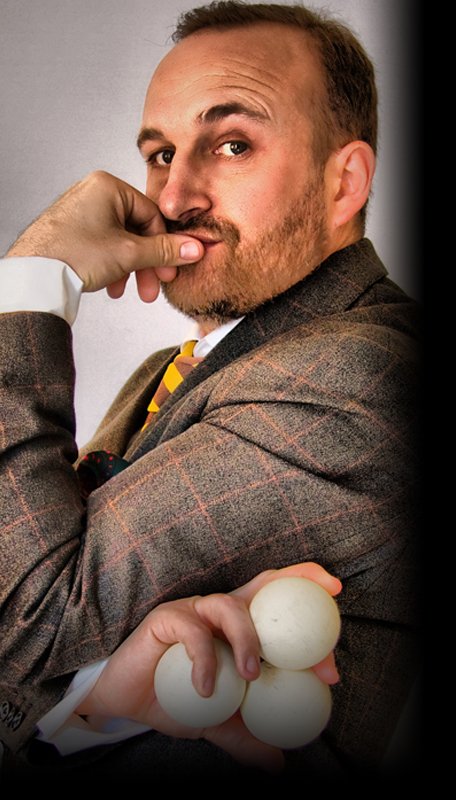
I am Son
takes its cues from a poem that references the revolutionary generation of 1968, trying to understand what it means to be, and how our history defines our legacy. "Let's say it is a a show on the West by young Italian schizophrenics," say Marco di Stafano and Lara Guidetti (co-director and choreographer).

Seeing themselves as Western European rather than merely Italian, Sanpapie fit beautifully into the grand tradition of experimental live art and dance theatre: "the absolute masters are Pina Bausch , Marina Abramovic, Sasha Waltz, Wim Vandekeybus, Constance Macras," says Guidetti. The two art forms themselves that evolved from the twentieth century's struggle to cope with its own idiocy, shattering the traditional alienation between word and movement, idea and image to encourage an immersive, immediate engagement.

Dance Base, 16- 25 August


If setting up a bunch of shows called "the alternative Fringe" and declaring war on the big venues is any guide, Bob Slayer's pretty alienated. In person, he comes across as balanced and charismatic and his actual show sounds as if it incorporates self-deprecating wit, improvisation and a philosophical challenge to traditional concepts of stand up. Slayer would probably laugh at any pretentious attempt by me to define his work, and since one show featured his aunt wiping his bum, he'll probably be happier if I shut up.

Slayer used to be a tour manager, and his career started on stage started as the guy who would get pelted by fans of the Bloodhound Gang when they had a mid-gig fag break. His approach - half abrasive, half generous - will probably alienate some members of the audience. He's in.

The Hive, 3 -27 August


Although Marxism has managed to pretend that it is the only socialist path, there has always been a counter tradition that comes from the UK, and eschews the revolutionary for a more democratic critique of existing power structures: that what the Labour Party used to be. The world's first two handed version of The Ragged Trousered Philanthropists comes from a novel squarely in this strand: a team of house painters are joined by social justice enthusiast Owen, and hilarity ensues.


Hilarity in the sense of Owen's attempts to inject a social consciousness into his fellow workers, that is. Written by a bloke who has done loads of Coronation Street episodes, this version of The RTP is plugged into the warmth and wit of northern working class theatre, and comes just at that time when the Coalition Government is doing its best to - hang on, what are they up to? I mean, I see the things they do, but I can't see any logic or sense in it.

Like many of the works in this political quarter, it emphasises not the big ideas but the daily reality of working class life. While there is an argument that political theatre is best aimed at contemporary wrongs, The RTP is more than nostalgia: it is a reminder of where this nation has been, and how we got past the excesses of industrial capitalism.


Assembly George Square, 1 -27 August


Finally, I need to give some love to the Creative Martyrs. Fringe veterans, Glasgow legends, a pair of misfits who flutter between cabaret and esoteric Eastern European mime, a pleasure to watch and the inspiration for many an uncomfortable post-show conversation. This year they are going their greatest hits, which will include songs about babies being bred for the purpose of being a bank of spare parts, warnings about the secret agenda behind supermarket loyalty cards, chuckles at the end of the world and the fun parts of war that people so often forget in their rush to condemn those hard working business men in arms manufacture.

Oh, it's a comedy show. After a fashion.

Voodoo Room, 1 -27 August


But who can feel alienated in the Edinburgh sunshine? Who can feel lonely in a crowd on the Royal Mile? When every show is full, and stars are being found on every street corner? Who, I ask you, who?

It's all part of the smiling capitalists' trap, man. Say yes to alienation.

Friday, 27 July 2012

I am Son @ Dance Base


Marco di Stefano co-director of I am Son and Lara Guidetti, coreographer and performer, discuss the Italian entry in the Dance Base Programme

Sanpapie, your company, is interested in fusing words and movement: what influences led you to make this fusion an essential part of your work?

That which we call Fusion is actually a deliberate choice to which we subject our performers, namely that of choosing the right tool to tell the meaning of our shows. We want our performers to use all of their powers of expression, so that the words accompany our research on the bodyin a single creative process, in the end we choose if body or speech are the most appropriate tool to communicate with the public in a specific moment.

The words are never subjugated to the body or vice versa: both are two substantial pieces of our experimentation. Our major influences are the great masters of the theatre who looked into mixing genres to convey their messages, such as Bob Wilson, Johann Kresnik and Matthias Langhoff, with whom Mark has had the honor of working.

For Lara the absolute masters are Pina Bauscht , Marina Abramovic, Sasha Waltz, Wim Vandekeybus, Constance Macras. We are also very close to the poetics of the fragment as practised by  Heiner MĂĽller. The fragment can synthesize, get into things. It's versatile: the fragment is dance, theater, music.

Is the piece about Italy in particular, or does it have any more universal aspects?

I am Son is a work about identity, so it was impossible for us to disregard our being in our thirties and Italians of today. Italy is therefore the central point, but not the only one. Somehow we also feel European, although a shared and strong European identity does not exist, in our view. 


We feel European when we feel threatened by something we do not know and then we feel closer to French than to a North Korean. We believe, rather, paradoxically, that there is Western identity. A sort of feeling that  flattens everything out in favour of a pro-American feeling born out of convenience. I am the Son tries to tell it all: the huge gap between what they told us to be and what we want to be, when we'll understand who we want to be, of course. Therefore we do not feel I am Son  is a show about Italy: let's say it is a a show on the West by young Italian schizophrenics.

What is the relationship between Son and BOH, your previous Fringe entry? Are they similar in any way?

BOH and I am Son are two different stages of the same path, two pieces of the same body of research, a field survey of our work. They are two very different shows, they talk about different things, but they look in the same way at the transformation of the body as a function of communicating with the public. They remain, however, two shows almost in opposition in their formal and aesthetic traits : BOH is delicate, intimate, with an inner world gradually revealed, I am Son is raw, direct, all-encompassing and collective. In BOH the search comes from within, in I am Son the stimuli come from the surrounding world. Despite this they  both have in common the concept of the body as a mirror, or perhaps a medium, between what is inside and what is outside.

What is the birthright that the work is looking at?

We are looking at more than one right: the right to self-awareness, the right to make mistakes, the right to be free to choose... all part of our birthright.

Do you feel any sympathy with other dance companies, either in what they produce or the way they work?

At this moment we believe in sharing, in discussion and exchange with those exploring the transformations of the body. To this end, in Milan, our home town, we are trying to involve other dancers and artists to share with us their research. This project has been ongoing for 3 years, is called TANDEM - like riding a bicycle for two - and lead us to invite other dancers to do their show in our place of residence, the Space Mil.

Amongst other Companies we look at with respect and admiration, and also looking to share creative ideas such we would like to mention Susanna Beltrami, a Milan-based choreographer , whilst thanks to the Fringe we have discovered and met two great companies, the Scottish Dance Theatre, which we admire very much as a company and a community of artists, and DOT 504, from Prague, especially for their research in physicality.

And what has encouraged you to come back to the fringe?

The fringe is a great experience: in 2009, although it was tough, we went back to Italy profoundly changed, especially artistically, and for the better. Since then we chased the possibility of coming back and thanks to Dance Base and Morag Deyes this year we succeeded.

From the Fringe we seek especially the communication with other artists and the public, that here is always diverse and passionate, and to hear the opinion of critics, who here demonstrate an attention to the shows  and an expertise hard to find in Italy these days. And, above all, the beer and the excellent whiskey.


16- 25 August @ Dance Base, various times