Showing posts with label bisociation. Show all posts

Friday, 15 February 2013

Warriors in the Tube

Behind all of these blog posts is a secret campaign. It isn't just about the relentless need for my ego to parade itself up and down the super-information highway, like a streaker waving at passing trucks from the hard shoulder of the M8. I am waging a war against the mundane reality that excludes art from the traffic of daily life.

The Glasgow Film Festival has always had my heart, because it is not just aimed at the industry (festivals can frequently become hermetically sealed bubbles, in which the artists and the audience are the same people). It did get the Glasgow Marketing Board involved, and they say it is about attracting tourists, but we all know the truth. The GFF is for the people of Glasgow. That's why it has the classic film strand, and the cool art films that fit in with the culture of a city that is full of DIY projects and galleries.

I am championed SPT's use of the subway as a cinema today. Since it is sold out, I can't be accused of being a salesman. I just believe that this is exactly the sort of project that fits my secret agenda.

The experience of watching a film in an unfamiliar location is good enough (how I remember the magic of seeing Back to the Future projected on a wall in Athens - the romance of the warm night breeze and the thrill of hearing Michael J Fox speak in badly dubbed Greek), but the choice of film, which might be The Warriors, connects the film to the space. The magic of bisociation is made all the more complex: it is a film set in a subway, shown in a subway.

And it works both ways. It is a reminder that a station can be more than a station. St Enoch is no longer the place where I get off to buy toys at Hamley's. It retains the traces of the film.

I long to see a city alive with art, where the discussions of music, film and theatre inform the broader understanding of politics, architecture and life. And if everyone is talking about it, more of those passing trucks might stop for this naked hitcher...

Thursday, 14 February 2013

Lost Socks

I have a slight concern. Mr Socks has not been in touch with a press release this week. And he did two last week. I am hoping that he is okay, or that the message he left at the end of the last blog about him did not signal a freeze in our relationship.

In my dealings with Mr Socks, I experience the same bisociation that the best theatre can give me. When I read his press releases, I see two Mr Socks at the same time. When I am watching a version of Othello, I get the same feeling.

Buy this at twww.amazon.co.uk
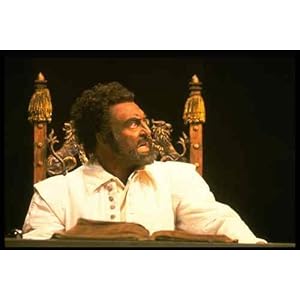
Bisociation is the ability to perceive an object through two competing reference systems at the same time. So, when I watch Othello, I am seeing what is really in front of me (a bunch of guys reciting words they have learnt) and what is supposed to be in front of me (an African warrior about to get hardcore on his wife).

Some people believe that the experience of watching theatre is about the suspension of disbelief - that they really believe, on an emotional level, that Othello is choking his innocent wife to death. Oddly enough, I doubt that anyone ever suspended their disbelief to think Donald Sinden was really Othello.

I am not saying that he isn't a great actor, but I am worried that even the picture of him is racist. It is certainly a reminder of times when theatres did not recognise that black-face was offensive. Suspend disbelief if you like, but the convention of blacking up goes a long way towards preventing it.

Anyway, back to Mr Socks. When I got the message from him, I felt joy and fear at the same time. Aristotle would be proud of me. And this is because I see Mr Socks through two competing frames of reference.

One is that Mr Socks is the person who has this lovely website, designed around the aesthetic of The Chap - self consciously old-fashioned, but overall a good egg who would find my blog amusing, and chuckle about it with his mates at the gentleman's club.

The other is that Mr Socks is a gangster in a lock up with too many boxes of black socks to shift. This Mr Socks is going to come round and give me a doing.

Maybe I ought to calm down. I reckon he's a gentleman, and he'll being doing something special for Valentine's Day. Either way, can somebody get a subscription and tell them you were led to his site by me? 

Sunday, 10 February 2013

Bi-social By Jove

Last night, I found myself embroiled in a vigorous discussion with a puppeteer about "suspension of disbelief." I firmly believe that this is an unhelpful way to describe an audience's response to performance. We'd just been watching Neville Tranter's puppet Hitler, and suspending disbelief would have meant thinking that Hitler and his crazy pals were in front of us. Tranter might have lent his puppets some degree of humanity - certainly, against the ranting anti-christ in Downfall, this Hitler was almost human - but I hope that should I ever believe that the most notorious mass-murderer of the twentieth century is standing in front of me, I'll do a little more than applaud him after ninety minutes.

Suspension of disbelief seems very demanding: how do I switch off my natural inclination to believe or disbelieve? Is it the performer's responsibility to suspend my belief, or do I need to do a spot of yoga before the show to make me gullible? And even more worrying - I don't think suspending disbelief is a good thing. Sure. Mr Cameron, let me suspend my disbelief in your willingness to help the socially excluded. I'll believe every word you say, Mr Obama. I didn't actually see you in bed with my best friend, lover with a track record of infidelity.

After a week of manipulate, I am still scrambling around for something to replace this idea. I came up with the suggestion that the magic of theatre resides in the audience's ability to see two things at the same time: the literal presence (say, of a man with his hand up a Hitler puppet's back) and the suggested presence (the man is Hitler's servant, and this is the speech Adolf made in the bunker). I never lose either perspective.

I have experienced moments in which I have believed a performance to be literally real. There was that time during Audience when the actor abused an audience member. I thought it was not a plant, and I threw my shoe at the stage.

Then there was that time when I was frightened of The Tiger Lilies. They had sung a song about crucifying Jesus for a laugh, and I really did think they were that evil. Seeing the band in the bar after I show, I ran away in a miasma of fear.

Those were pretty intense moments. Having experienced it twice in ten years of theatre, however, suggests that if the success of a show depends on it, there's very little art that is going to work.

However, once this is replaced by the idea of bisociation, success becomes easier. Inevitably, the big concept I thought was going to be my contribution to critical theory had already been described. And, inevitably, it comes from a writer on the fringes of respectable academic philosophy. Arthur Koestler defined bisociation to explain how the human mind can hold two contrasting ideas about the same thing at the same time.

I discovered his definition in a book about conspiracy thinking. Oh, my impeccable sources.

Back to puppet Hitler - or the Live Art influenced work in progress by Sarah Hopfinger during Buzzcut@manipulate - the viewer's ability to read each moment in two ways ought to account for the power of their presence. Does a double perception of an image mean that twice as much information is being taken in?

And does a piece like Paper Cinema's Odyssey, which deliberately shows its workings and it surface, use bisociation to make tears come to my eyes?