Sunday, 3 March 2013

Meditating on Traverses

Is it possible to read the programme for the Traverse season and, like a mystic casting blind eyes over ancient runes, discern the deeper patterns of the Scottish theatre world? Since the Traverse is celebrating fifty years of producing new work - and, in the process, has elevated fifty emerging writers to a year long attachment - and has recently welcomed a new artistic director Orla O'Loughlin, perhaps it is the best place to start.

Perhaps. Alongside the Tron, the Traverse has a programme that is made up of both guest companies and in-house productions. Unlike the Tron, or the Citizens, it has had a specific vision built into its programming from the beginning: it is concerned with "New Writing." Under Dominic Hill, now artistic director at The Citizens, the definition of new writing was expanded - a dance season was added, but the Traverse Fifty programme has reasserted the script as the heart of the theatre's process. Add in the various engagement programmes, which often focus on getting young people writing, and the Traverse is actively engaged in maintaining the importance of the word made drama.

The venue's choice of collaborators is telling: on the one extreme, pitching in with A Play, A Pie and A Pint for a series of midday specials to the other, hosting Platform 18's double bill, from The Arches. PPP  is radical in format - short new plays given week long runs over lunch - but conservative in style - the script is still the thing, mostly. Platform 18, on the other hand, is always experimental. Past winners include Nic Green, who used it to develop part of her Trilogy, while this year has Amanda Monfrooe, a master of matching eclectic influences to her darkly post-modern take on reality and Peter McMaster, who is interpreting Wuthering Heights through a feminist perspective and all-male cast.

From these collaborations, the position of the Traverse as a broad, inclusive venue is clear, and it does sketch out something of Scottish Theatre's breadth. Although the choices in the PPP runs are often energetic and youthful - rising star Sabrina Mahfouz is no polite chronicler of drawing room society, and Douglas Maxwell has plenty of fun taking a respectable widow to vulgarity - their audience is traditionally older (the edition at Oran Mor is often packed with peckish pensioners). The Arches, meanwhile, has a younger audience, coming from the diverse artistic communities of Glasgow and well versed in the outrage and idioms of Live Art.

Spreading out to their various visiting companies reveals an even bigger perspective on Scottish Theatre - which expands to include Firebrand (from the Borders), Lyceum Youth Theatre (from the next door theatre), Clerkinworks (straight out of London), Gare St Lazare and Blue Raincoat (Irish) and Pepperdine University (visiting from Malibu). The work flowing through Scotland is international in character - perhaps inevitably from English speaking nations, although manipulate upped the European quotient back in February.

There's more than a touch of politics in this season - Clerkinwork's The Bear gets stuck into the criminal justice system, White Rose uses the Soviet defense of Stalingrad to examine gender politics, Mahfouz has three female criminals getting up to tricks, and Why Do You Stand In The Rain? returns to the aftermath of WWI for a story of state savagery. Yet there is a far more potent theme that carries beyond this: the personal politics of First Love (an adaptation of a Beckett novella), Jenna Watt's meditation on Flaneurs who fail to intervene, and in the double bill of Chapel Street and Bitch Boxer, a lively look at the impact of Cameron's Broken Britain on individual lives.

Perhaps this collision of public and private is best demonstrated by the Traverse's big production this Spring Quiz Show by Rob Drummond. Drummond is undeniably becoming of the most important authors of his generation - recent success has seen his Bullet Catch head to the USA - and Quiz Show demonstrates his ability to use a popular subject to delve deeply into philosophical ideas.

Apart from a rude health, this spring at the Traverse suggests that Scottish theatre is not only enthused by an interest in international theatre - with England providing only one of the possible areas of influence - but that it integrates the politics of the personal into wider contexts. It's easy to say that theatre has become suddenly political, or that it is obsessed with national identity, but the emphasis on particulars, on the specifics of life rather than the grand narratives of dogma, make this political theatre distinctive from its earlier incarnations, such as in the 1970s, when it was driven by Marxist ideology.


 - Quiz Sho

Friday, 1 March 2013

Not a Proper Christian


Yes, I am trying to start a conversation.

Within my lifetime, science has become the dominant public intellectual paradigm. The claims of fundamentalist Christianity not withstanding, it has become the primary author on matters both ontological and social. Atheism, once a minority interest, has become a badge of pride and although its connection to science isn’t absolute, scientific thought is frequently invoked to defend it.
Unfortunately, there is a widespread misunderstanding of what science is. Contrary to popular belief, science is not a bunch of facts and theories. Science is defined by its use of a method: the investigation of the universe through experimentation. Taking the conclusions from these experiments and repeating them does not make a person a scientist, anymore than a parrot quoting Hamlet’s Great Speech is an actor.

When Christian fundamentalists attack science – ostensibly to defend their literal readings of The Bible – they complain that scientific truth is in a constant state of flux. While their alternative authority is increasingly unpalatable (as well as a very post-modern and deliberate misreading of The Bible’s intention), they are identifying the strength of science: it is constantly evolving and improving. To claim that this is a weakness only suggests that they haven’t imbibed the truth in St Paul’s claim that “the wisdom of God is the folly of Man.”

Using the Straw Man of Christian fundamentalism, I move into the Straw Man of the scientist. The mistake of seeing science as a bunch of facts lead to the suggestion that science, in itself, can become a religion. And while I respect the right of anyone to live their life according to the tenets of natural selection and quantum theory, it’s not science.

If science is the application of the experimental method, religion is more difficult to define. For working purposes, I call it an interrelated collection of beliefs and behaviours that seek to explain the relationship between consciousness and the universe.

(I’ve used consciousness to avoid the gendered language of “humanity” and include the possibility of consciousness on other planets, yet undiscovered.)

It’s almost incidental, but religions tend to rely on scripture.

As soon as “scientists” goes to war with Christianity – or Islam, or Judaism – it seems to slip into being  religious. It might not have had the same violent impact on human society as its competition – aside from the eugenics movement – and the label “religion” is not an insult. It’s just a clarification of what is at stake.

To end: an anecdote from my past. It was Harrow, the 1990s. A skeptic (sic) and a street evangelist were throwing down outside the cinema. The evangelist insisted that God had made the universe in six days. The skeptic countered that there were alternative cosmologies, which more readily explained the features of the physical realm. I listened for a while: one would quote Genesis, the other the Origin of Species. I have to admit that the skeptic was more convincing, but his blanket condemnation of religion was arrogant.

I humbly suggested that their conversation was not necessarily the only one possible. Without wanting to decay their ideas into a bland Golden Mean, I wondered whether a theory describing how the variety of species had evolved really undermined a parable about how consciousness became corrupted.

They both turned on me. They agreed that I wasn’t “a proper Christian.”

Yeah, I can live with that. 


Thursday, 28 February 2013

Interzone Again

Not a single new word to the last time I mentioned this, but looking up all those webpages took me ages. I did the research so you don't have to....
I N T E R Z O N E

FRIDAY 1ST MARCH / 6PM - 1AM / THE WHISKY BOND

EXHIBITION CONTINUES: SATURDAY 2ND, SUNDAY 3RD / 2-6pm

The Whisky Bond hosts “INTERZONE”, a weekend of art, music and happenings exploring the boundaries of perception through synaesthesic installations of sound, light, video and performance, transforming the industrial shell of the 5th floor into a multi-sensory immersive environment of electric surrealism.

“INTERZONE”, will take the form of an expanded audio-visual experience presenting individual artworks as a syncretic entity. The space will become an artwork in itself allowing the viewer to enter and interact, navigating through the altered labyrinth of The Whisky Bond's untouched 5th floor.

ARTISTS:

AILSA M. MACKENZIE

ALEC MACKENZIE
ALICE JACOBS
Works with light as an intervention into architectural spaces. Devoid of image, the work attempts to show nothing, yet achieves something as a result.
BRENDAN BENNETT
EWAN SINCLAIR
GUY VEALE
JACK WRIGLEY 
A multi-media artist whose work has taken the form of Holography, concrete composition, installation and mechanical high voltage electrical sculpture. Seeking to explicate a re-integration of the unconscious into the conscious, through experimentation and craft.
JOHN CROMAR
He was in opaque for a bit with Lea Cummings out of
KOVOROX AKTION GROUP 
an artist and musician, best known for his noise alias Kylie Minoise, garnering a considerable reputation for his loud, confrontational Live Aktions which are often brief and invariably culminate in broken microphones and, occasionally, in personal injury.
RACHEL MACLEAN
Future Turner Prize winner Maclean is a digital and video artist creating hyper-glowing, artificially saturated visions that are both nauseatingly positive and cheerfully grotesque, like the collective unconscious after it has been purchased by pokemon and turned into a theme park for psychedelic explorers.
ROBBIE THOMSON
An artist who works with kinetic sculpture, sound and installation that has gained much acclaim after his recent sell-out show at Soncia festival with his machine powered, theatrical installation at the Tramway.
SUSANNAH STARK 
TOM L. COLLINS
GUY VEALE 
A sound designer and drone merchant responsible for a variety of soundtracks to short films and physical theatre shows, as well as a smattering of performances and installations. 

JAMES STEPHEN WRIGHT 
Creates humorous durational performance that delve into dystopian ideals of a not too distant future vomiting the surreal and obscure side of everyday life and culture. 

SARAH MESSENGER
A video artist that takes inspiration from internet communication and sits in tumblr all day.


LIVE MUSIC:


ELIZABETH VELDON

Elizabeth Veldon is a noise artist working mainly with samples, feedback and sine waves. Her work focuses on landscape, myth and issues of queer and feminist theory. She considers her music to be a form of activism. Elizabeth began publishing her music online a year and a half ago, and since has appeared on several labels.
FLACCID HAUS
New collaboration between Rickie McNeill (Cru Servers/Fox Gut Daata) and Lewis Cook (The Cosmic Dead/Mother Ganga) improvised all-hardware electronic dance music for the mind and soul. 
MARK MAXWELL (DJ)
A regular contributor to This Is Our House?, Mark was a resident at Fortified Sessions in Glasgow and Lo Recordings Lo Quality in London and spent time working on John Peel’s legendary radio show.
SHIP CANAL
Ship Canal is Daniel Baker. "Music For Burning Kebab Houses. Ghost Shops. Flash Mob Rioters with Rabies. Asbocore." (Kid Shirt). Dole noise. Psychic damage-tech. "The grey concrete crunch of bastard techno and mangled dubstep and seventies TV filtered through damp plasterboard walls.” (Cows Are Just Food).
SMEAR CAMPAIGN
Link may not be the right band, but the title is funny enough.
Amid documenting the UK's drone/weirdo/nether region underground with CD-r/tape label, Total Vermin, Stuart Arnot also performs, records and collaborates under a number of guises such as Acrid Lactations, Mid-Leopard Violet Prism and The Game Cock. Stuart will be preforming at Interzone under his solo huise Smear Campaign.
STEFAN BLOMIER
Interested as much in the work of early ambient synthesists as raw acid house tracks, Stefan's material is hypnotic, melodic and especially dynamic in a live setting.

INTERZONE is being organised by Diane Edwards and Kenny Love with support from The Whisky Bond.


THE WHISKY BOND
DAWSON ROAD, G4 9SS
WWW.THEWHISKYBOND.CO.UK

Three from the Inbox

So - new Anatomy Night ahead. It's episode four for the post-punk Live Art Vaudeville Jam, with a selection of artists from feminist film makers (Phoebe Cottam's Beautiful Art Feminist) through boylesque beauties (Tom Harlow, who is doing turn from his new one man show) to piano bashers (Will Pickvance hints that he might just be taking one apart, either literally or metaphorically).

The last time out was a grab bag of experiments, comic interludes and singing arses (literally not metaphorically): Oli Benton's short film Walk was a nasty flashback to those evenings out that never seem to end, while Eddy Dreadnaught did exactly what he promised by a dark pantomime singalong. Glasgow has traditionally had the edge on Edinburgh when it comes to the sort of antics Anatomy arranges, but Summerhall's surprising seasonal success suggests the east is encouraging eager experimentalists.  

ANATOMY #4:
Silence/Noise/Silence
Friday 8th March
7.45 – 11pm
Summerhall, Edinburgh


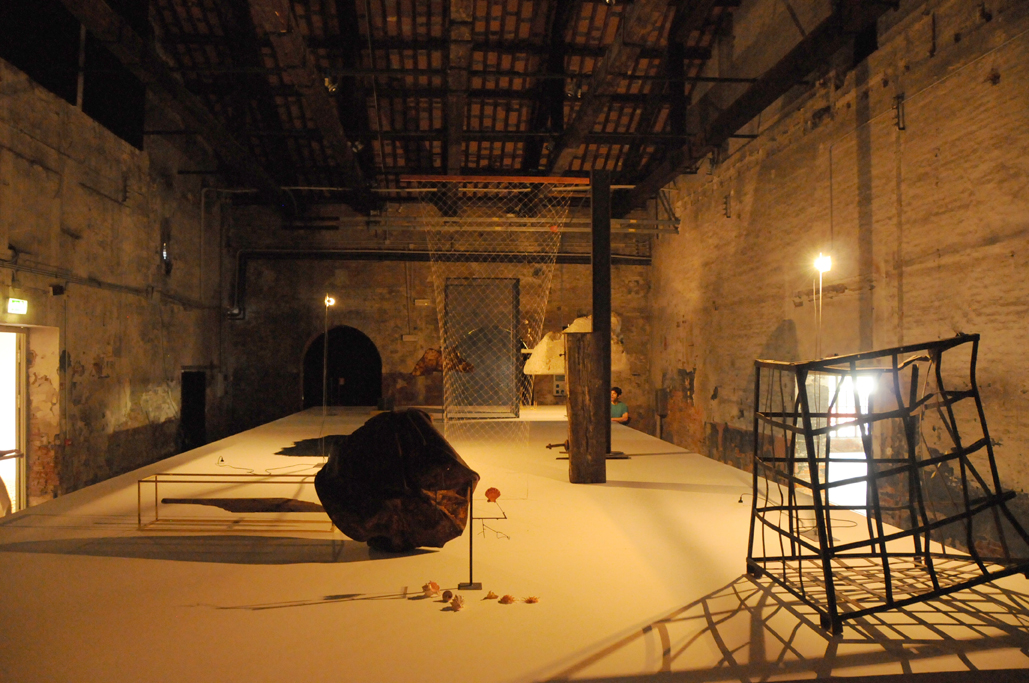
Getting back to No Mean City, The Common Guild takes a break from its excitement around Scotland's cheeky link to Venice to present an exhibition on The Foamy Saliva of a Horse. It's the first solo show in Scotland by New York's Carol Bove and is a remixed version of the installation she had at the 2011 Venice Biennale. 

As always, what looks like an interesting exhibition has a nice bit of International Art English to decode: here we go.


"Featuring a collection of found and hand-made objects, such as a piece of driftwood suspended in a polished bronze frame, the installation brings together seemingly random (and even contradictory) objects that, while natural in origin, call to mind the artifice of cultural value and meaning.
Bove presents each item in a way that heightens the potential symbolism of the disparate objects and the relationships between them. The meticulous composition highlights the cultural, spiritual, mystical and even psychological associations of each object, offering multi-layered meanings that operate on aesthetic and cultural levels.
Bove’s earlier works have included a number of socially significant texts and images that reference popular culture more explicitly. Spiritual guides that were popular in the 70s sit alongside images from the pages of Playboy magazines and art history books from a similar period, drawing parallels between potency of their content and their moment of currency."
To put it another way: juxtaposing objects with other, perhaps unexpected objects, can suggest associations that don't happen when the objects in question are in their usual environment. 
Carol Bove 'The Foamy Saliva of a Horse' 
20 April to 29 June 2013
21 Woodlands Terrace, Glasgow, G3 6DF


Heading north, Bgroup are presenting a new show by Ben Wright at Aberdeen's The Lemon Tree. While this press release isn't so guilty of IAE, it's tough to work out what this will be like: "Just As We Are begins at walking pace and culminates in an invitation for audiences to consider joining the spectacular finale." 


Just As We Are
Thursday 28th March, 7pm
The Lemon Tree

Glasgow Film Theatre unveils a unique event to mark International Women’s Day


Since I am still feeling guilty about being nasty to the UN when it announced it was releasing a special song, I am delighted to hear that the GFT is doing something with music to celebrate International Women's Day that I can really support. 

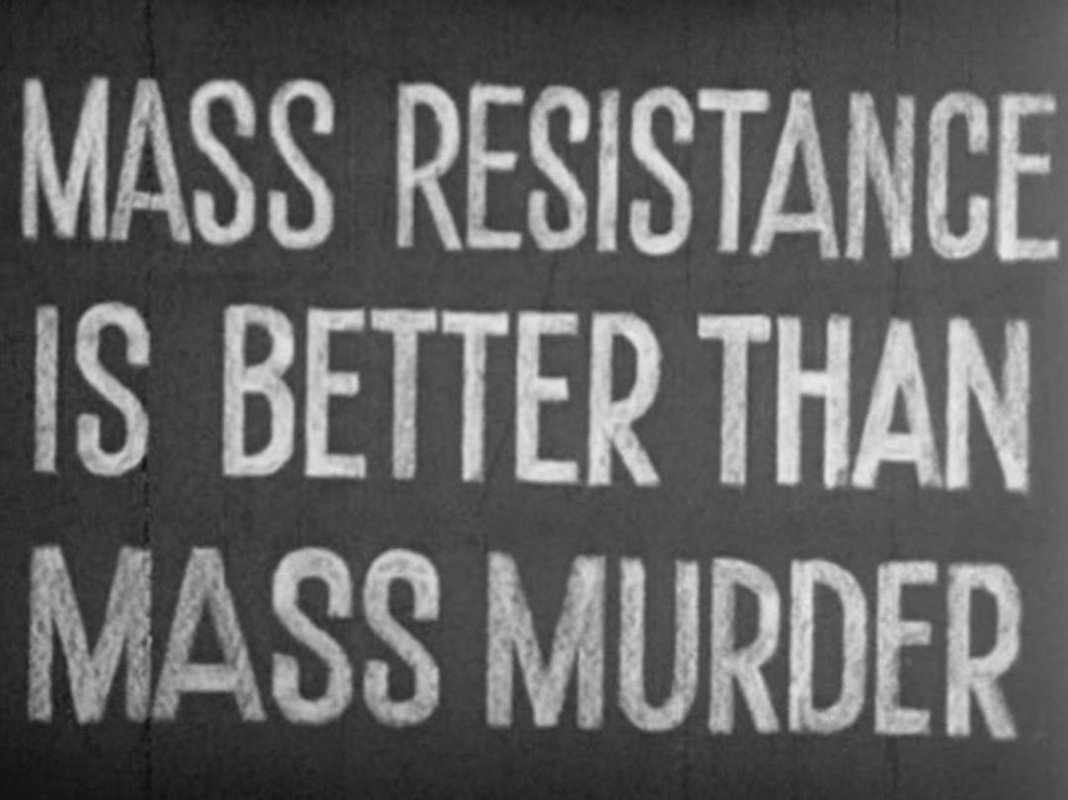
It isn't so much the politics of the films being shown (Traces Left looks at Glasgow art and politics in the 1930s and 1940s, and the main feature Hell Unltd is a classic anti-war number from the period of the Spanish Civil War), but the addition of a live soundtrack by Kim Moore (from Zoey van Goey) and Gareth Griffiths (out of Getting an Award From BAFTA). 

Hell Unltd is a good choice for IWD: co-director Helen Biggar was a graduate of Glasgow School of Art in a period when Glasgow was a hotbed of socialism (not that much earlier, the UK government had considered martial law to break the power of The Reds on the Clyde) and socialism was an honest utopianism. And while it expressed a pacifist spirit, Hell Unltd put war into a context of recession and oppression. 

In the light of the arrests made at the ATOS protest last week, the film's belief in the role of mass organisation - and that the suppression of organisation is effectively a suppression of freedom of speech - is timely.


The screening and performance will take place on International Women's Day (8 March 2013) with the intention of raising the profile of women artists and their ongoing legacy in Glasgow. It will be the key event in an evening celebrating Helen Biggar's work and recognising the contribution of women artists to political activism.