Saturday, 9 June 2012

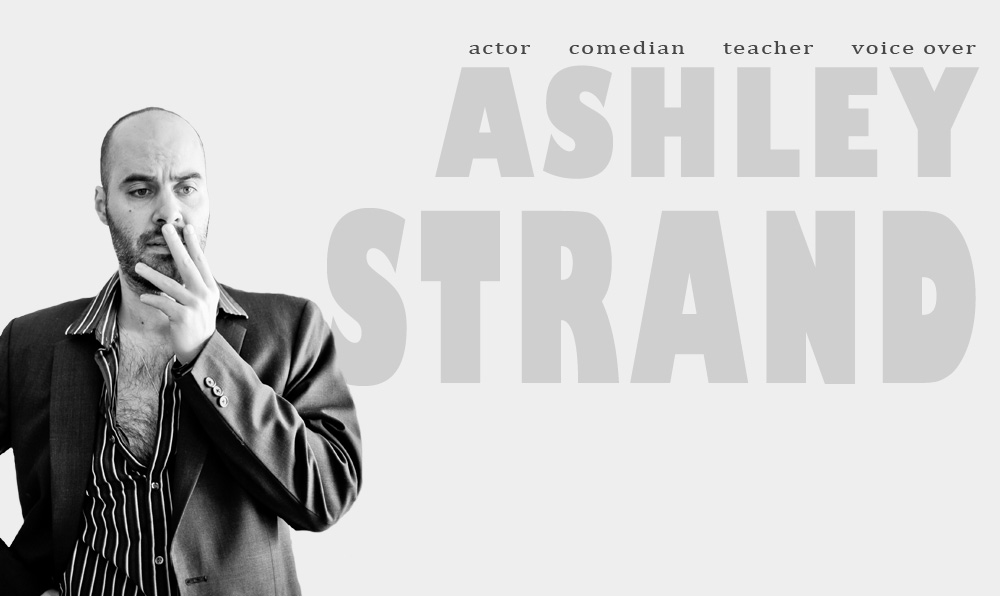
Ashley Strand


Even if Ashley Strand took the advice of a rival critic to go solo this year - and his work falls close to the comic category which I am determined to fight as it dominates the Fringe, Glorified Disasters boasts of a story-telling background. So I decided to shout across the Atlantic, and find out why I ought to put aside my prejudices against the funny.


"Since when is comedy not serious?" he asks me. "Have all the colours of human emotion, expression, and experience been ranked in order of seriousness and I wasn't told?  Have we also decided that "seriousness" is the measure of a thing's value?"


It's at this point that I realise that keeping my Saturday Night Decision Making Sessions informal and secret might have a negative effect. Having been given a huge grant to delineate the worth of all human art to a mathematical formula by the Illuminati, I assumed I had better not allow the results to leak out, lest they cause a panic. But then, the public aren't aware of the true Worth of any art...


"Gee, I've missed so much," muses Strand. Fortunately, he is smart enough to have a fairly good guess.  "So what came in first?  Interpretive dance?  Opera?  Are we sick of Hamlet yet, or did tragedy win again?  Ooh wait, I know, is it something intellectual and self-aggrandising like Tom Stoppard?  Did the people who like to congratulate themselves for getting all his references vote Stoppard into the top spot?  Kabuki?  Is it Kabuki?"


Realising that I don't tend to get Stoppard's references - and prefer to laugh at the Funny Man in the Tights, I move swiftly onto Glorious Disasters. Weaving tales of consumerism, a party in Belgium, toilet paper, children's theatre and sibling rivalry into a performance, Strand does avoids the easy categorisation that makes my life easier when I come to tag my articles.


"What I do occupies a territory that hasn't quite been defined yet: think as a cross between stand-up and storytelling," he explains. "For people who find comedy too frivolous and drama too heavy, I think my show will be very rewarding. I really think that my show can work in a club, concert, or theatre setting.  Someone just has to let those different audiences know they have some likes in common -- me, I guess."


Audiences are easily pleased - or at least willing to experience the performance rather than worry about the particular genre. But that does not account for the specific requirements of the Fringe's brochure. "I actually tried to enter under the theatre category this year, because last year I found myself having to warm the audience up with jokes before launching into my stories," Strand recalls. "Comedy audiences generally need quick gratification up front to have confidence in a performer, whereas theatre audiences are accustomed to delayed gratification."


"My request to enter under the theatre category was declined, however, along with a very helpful definition from PBH: "three (or however many) stories by themselves aren't theatre section; a play with a plot and action would be."  I briefly considered asking him for his definition of "fringe," and whether any part of it contained the notion of "a place to experiment with form and presentation," but then I thought, "why waste a comeback on an email, when I can save it for an interview ...."  In other news, German Expressionism has been banned from the Free Fringe theatre section."


As Strand continues to talk about his performances, I become more interested in the thought behind his work - I may never abandon the avant garde for stand up, but there seems to be a more intelligent process behind Glorious Disasters than in the average hour of jokes and audience baiting. In particular, he steers clear of the fashionable comic trend for attacking anyone who isn't likely to punch back.


"I don't want to give anything away about my show, but the general rule is: "when Ashley suffers, everybody laughs."  More specifically, I like to be transported into someone else's experience of an event when I go to a show."  And because I'm a pathological over-thinker, I process things at a different speed than most people, which is to say, more slowly."


In Strand's performance, the story is less important than the way it is told:  "If I restricted my stories to major plot points, they'd barely fill five minutes, but the style of delivery is elaboration to the point of distraction." And this links back to his interest in his intentions for the show. "If I do it right, puts the audience in my head for a little while, and how I get myself into those situations suddenly makes a crazy kind of sense.  Richard Pryor's work was underpinned by a profound vulnerability and an unflinching emotional honesty: he's my comedy hero and my biggest influence."


60 min; Aug 4-13 and 16-27 at 21:00;
venue #156, The Music Room at The Banshee Labyrinth, 35 Niddry St.  This is a free show.

Thursday, 7 June 2012

In Which I Bend a Press Release to My Own Obsessions

Over the past three years, I have tried to document the cabaret revival at the Fringe. I might have turned up late to the party - the best articles on burlesque were written at the turn of the millenium, when New York performance artists were ripping up the genre, and the new, ironic and sly reinvention of old school variety was pretty much in place by 2005. Fortunately, there were still acts worth writing about - Dusty Limits is always fascinating, and his decision this year to go in with the Free Fringe must tell me something about the balance of Fringe Power, Mat Ricardo inverts the usual smarm of the object manipulator into a snarky brilliance - and plenty of artists, who might once have avoided the category, using cabaret as a medium for work I'd probably describe as Live Art.


In support of these artists, I've insulted Bryony Kimmings in print, taken my mother to see Richard Dedominici, gone out to bat for the Wau Wau Sisters when they were being accused of abusing their male audience, bothered Des O'Connor in the dance studio and discussed with Chris Wilson whether the world is ready for his burlesque (it was).


Damsel Sophie, Yorkshire Diva, ends her press release with a promises that Hot, a one woman comedy cabaret, will appeal to unitard enthusiasts. Since I haven't been the same since Merce Cunningham's company split up - my first taste for the unitard came when I accidentally watched my mother's video of Cunningham at the age of five - and Hot is directed by Alexander Wright - co-artistic director of the Belt-Up company that have owned the alternative drama at C Venues for the past couple of years, it's likely that Damsel Sophie is going to end up as a chapter in my worst-seller study of theatre, Laughing at the Crucifixion.


"I reckon people are after a bit of live entertainment in the midst of all this recession business," says Sophie. "I, for one, am going to put on a bloody good show. Singing, dancing, lots of laughs." Yet my interest in existential misery, and radical theatrical technique, is unlikely to be disappointed, despite Sophie's promise of fun.


Including physical theatre and story-telling alongside the songs and comedy, Hot uses the myth of Narcissus as the foundation for a meditation on the importance of authenticity. And like the best Live Art, the inspiration came from Sophie's personal experiences.


"My first cabaret, The Damsel in Shining Armour was developed in Australia and received the Best Cabaret Award at Adelaide Fringe 2011. After that I demanded my friends called me Trophy instead of Sophie," she remembers. Yet success can be dangerous. "I went from audiences of two or three (Mum, Dad, occasionally Aunt) to having to turn people away. I was a bit like Su-Bo, I was overwhelmed. Flash forward six months later: I ran out of money and retreated back to my teenage bedroom at Mum and Dad's. It reminded me a bit of Narcissus, the boy who fell in love with his own reflection ….and died."


Under these circumstances, her connection with Belt Up's Wright is a natural alliance. "Al and I are both passionate about keeping the audience awake throughout an entire theatre show," she explains. "That's our joint mission, so expect a few surprises." 


One of the surprises, according to the press release, is reserved for the blokes in the audience. Having found myself on stage with The Wau Waus a couple of years back, I was keen to clear up the possibilities here, but Sophie was cautious, if provocative, when I asked her about this.


"I couldn't possibly divulge," she laughs. "But I like to use my men as props. I find everybody wins that way." But if there is a hint of slapstick in the show, it is balanced by her belief in the importance of sincerity in performance.


"It's got to be honest," she insists. "Vulnerable and self-deprecating." And through approach, the theme of Hot becomes easier to understand.
"There's a lot of pretentiousness in this industry, which is a lot of fun to send up," she notes, doubtless referring to critics who can't write a comedy preview without cross-reference a childhood love for avant-garde dance. "It's comedy like The Office, Flight of the Concords, Summer Heights High and Curb Your Enthusiasm that I am inspired by. I love characters who are constantly trying to be something they will never be. My stories always end in a celebration of authenticity, you've got to admit who you are and stop trying to be anything else. Release your dark side people."


LISTINGS INFORMATION
Venue: C nova, venue 145, Edinburgh Festival Fringe Dates: 2–27 Aug  (not 13)
Time: 22:15(1hr00)
Ticket prices: £8.50-£10.50 / concessions £6.50-£8.50 
C venues box office: 0845 260 1234 / 
Fringe box office: 0131 226 0000 / www.edfringe.com

MOD

It's always an option during the Fringe for the hungry young critic to use the plethora of shows to target a genre that they previously had little knowledge about, and bone up on the current state of the art. Of course, I don't do this - I just want dance and more dance, with the odd bit of physical theatre on the side - and encourage Antony Sameroff to do everything else. Since he is a musician, he tends to be better placed to comment on musicals (until such time as his process as an artist interferes with his ability to adopt a critical persona. Then I'll sack him so he can write his own successful musicals). However, in the meantime, I am getting quite excited by the number of American companies reaching Edinburgh this August - I take it the dollar is strong, or they've got over being scared of travelling by air.


The Infinity Theatre rooted their musical in the early 1960s: MOD is about the US invasion by UK beat bands. Seen from the perspective of a young man inflamed by the possibilities of rock'n'roll, its original score and songs are inspired by early Beatles' era rock'n'roll.


Paul Andrew Perez, the Book writer of MOD is enthusiastic about MOD's visit to the Fringe. "MOD is just plain fun," he says. "It features a young, energetic cast and a truly funny story surrounded by a litany of catchy pop tunes. It promises to leave you smiling.  Besides with lovely girls in Catholic High School uniforms how can you go wrong?"


I would like to distance myself from the last comment - as a teacher myself, and an appropriately objective critic, I cannot be swayed by lovely girls or boys - and focus instead on my theme this week: the way that drama can recreate the past, while remaining relevant to the present. Perez notes that "We have taken great care to present a show that is true to the era with fast, energetic pop songs and the excitement that Beatlemania brought to the U.S.  It will appeal to any who are nostalgic about the early 60s and The British Invasion. Yet the themes
are full of teen angst and the music is appealing to teens."


And the story may appear to be a typical boy meets girl romance, the edge of satire avoids the saccharine aftertaste of the 1960s' own rock'n'roll musicals. "The music merely heightens the comedy," laughs Perez. And in sharp contrast to my own cynicism about the Fringe, Perez is delighted to have reached Scotland. 


"The Fringe is always receptive to new work and provides a great arena to develop your piece. MOD is a play that is ready to take the next step in development and has garnished a lot of interest among the regional scene in the U.S. One of the reasons we chose the Fringe is because it is far from the pressures of The NY theatre scene."


Wednesday, 6 June 2012

Poison at C Venues


‘Ross Anderson is a young artist – writer, actor, director – of limitless talent.  It’s clear this is what he’s meant to be doing’ 
Robert Milazzo, film director and founder of the Modern School of Film (New York)

‘I was very involved and touched by the playwright’s ability to reveal the shocking truth about addiction and its consequences, admitting involuntarily the failures and flaws of human behaviour. Poison – a skillful and thought-provoking play. Hats off!’
Vahag Bagratuni, The Actors’ Studio, New York


Although Lohattan are based in London, much of their inspiration comes from the States. Ross Anderson - director and writer - met with the rest of the company while they were studying at together at the Lee Strasberg Theatre and Film Institute in New York. Their entry to the Fringe, Poison, is a dark look at the pressures on youth: the titular Poisons range from drug addiction, denial, jealousy, lust, selfishness, sibling rivalry and parental neglect.

Lee Strasbourg was famous for taking "method acting" from its European roots and lending it an intense, American dynamic: it has become the favoured technique for cinema actors hoping to inject authenticity into their performances. Ross Anderson explains a little more about how the technique has influenced Lohattan's Poison.

The method is all about tapping into past experiences and emotions “sensorially” and producing an organic and thus real and natural response whilst on stage. To do this we were trained to focus our attention specifically on the five senses (touch, taste, sight, smell and sound) to be able to reproduce the exact emotions that we felt at all different times in our lives, (such as when key events took place that made us laugh or cry) on stage. It really is an incredible feeling and makes the process of behaving onstage as our characters all the more enjoyable, vivid and real.


With that in mind, I wanted to write about experiences that I had witnessed as well as those of my closest friends. That’s not to say there isn’t any fiction in the play, but I felt that writing about the things I had experienced and seen my friends go through would make the play all the more moving to our audiences, as I am sure they will be able to relate to the circumstances and respective poisons of the play, whether they would like to admit it or not. Other than that, the method didn’t really play an enormous part in the writing. It was more significant in the directing exercises and rehearsal process. The technique enabled each actor to substitute the other actors they are working along side and their respective characters, with people of a similar stance in their own lives as well as personalizing the situations that take place. This means that they take a certain situation from their own lives, which enables them to feel and experience the same real emotions the characters in the play are feeling at certain points as the play develops.

Fringe 2012 seems to have enticed a great number of US companies across, yet Anderson suggests that there is something in the method that sets it apart.


I wouldn’t say there is a vast difference between the New York style of theatre and that of Britain’s. However Lee Strasberg’s method is completely different than anything I have studied back home. As I outlined in the previous question, the sensorial technique really enables the actors to behave and live as the characters would but more importantly reveal real inner emotions. When actors apply the method technique the audience will see a little part of their soul, which in turn makes the actor more vulnerable, but if applied correctly, this truth and vulnerability will, in my opinion, fascinate any audience member’s mind.


From this, Anderson sees theatre as a vital part of contemporary culture, capable of raising issues and exploring them in a unique manner.

Yes. I feel drama, be it on the stage, on the big screen or our home TV sets is the perfect place to explore major issues such as that of neglect and drugs and the danger that lies within the two. Due to the fact that it is so accessible these days, especially when you take the internet into account, in my opinion drama can play a key part in educating and warning people of the dangers of any major issue we face as a society. Drama, if carried out well, encourages people to open their eyes a little more and think about things. This is what we hope to achieve with our Posion at the same time as entertaining our audiences.


C nova, venue 145, Edinburgh Festival Fringe
12–18 Aug
Time 14:00 (1hr00)
Ticket prices £8.50-£10.50 / concessions £6.50-£8.50


More than Mere Muses

The power of theatre to reinvent the past is often underestimated - what is the Oresteia but a re-imagination of mythology to justify patriarchy, and Shakespeare managed to rewrite the War of the Roses as a legitimisation of Tudor rule - but the Fringe 2012 has a strand of artists willing to examine the past. Denise Paulette is determined to reveal the talent of Zelda Scott Fitzgerald to Edinburgh audiences, while GaĆ«l Le Cornec brings her latest one-woman show Camille Claudel.


For both performers, the shows are inspired by an enthusiasm for their subject. "Zelda is considered one of the first feminists (she lived 1900-1948) because she had such an independent spirit, spoke her mind and made her own way regardless of what was considered acceptable," explains Paulette. "And she was a wonderful talent overshadowed by her husband.  I'm bringing her to the Fringe because a lot of people don't know about her: they know her famous husband, F. Scott and, for me, the Fringe stands for what I am looking for:  the freedom for artists to present their work without the constraints of unions or juries.  Zelda would have loved this!"


Le Comec has a similar approach. "You never really know before the Fringe how audiences will react but I hope people will feel the labour of love that's going into this piece," she says. "It's about the love of Camille for her art and for Rodin - and although the later is a twisted, fucked up sort of love, it is passionate and honest. It's also about my love for Camille's story and for all the people involved in this production. It sounds a bit corny, i know, but I believe love can save the world."


For both Zelda and Claudel, the traditional reading of history has been exclusive, putting them in the category of Muse rather than artist. Claudel - despite the rather melodramatic film of her life - is often seen as a character in the story of the master sculptor Rodin while Zelda, although a writer and dancer, is frequently treated as Mrs Scott Fitzgerald.


Paulette's emphasis on Zelda's abilities - and unfortunate mental illness - brings the wife out of the husband's shadow. "Her dancing helped her escape from the heavy drinking and partying of her husband," she continues. "But her unhealthy devotion to it lead to her first breakdown.  She was also a writer and a painter." Scott Fitzgerald's descent into alcoholism might be a dreary and predictable descent - American authors have a knack for equating heavy drinking with their verbal dexterity - but in the wake of Pavlova's Dogs by the SDT, the representation of violence of dance on the dancer's body and mind is timely.


Equally, Zelda's mental illness is more than just a character trait: "Her schizophrenia is the tool the playwright uses to get Zelda from memory to memory; sometimes she's a young girl or in the present or marrying Scott so the play is a constant roller-coaster of humor and sadness encompassing all of Zelda's life." 

Zelda shares with Camille Claudel an interest in the theatre as a medium for storytelling, and telling the story that might have been occluded by the established versions. "Theatre for me is always about telling some sort of story," adds Le Cornec.  "Regardless of the form the theatre-maker decides to use."


The Fringe offers a platform for works like these - they act as an effective response to the heavy presence of comedy, almost imitating stand-up's scale and simplicity. As Le Cornec concludes, "It rocks! It's been a pleasure to take part in such a big international festival in the past, and now I'm addicted."


Ms. Paulette is performing Aug 20-25th at Greenside Theatre Space.  Performances are at 20.30 each night.


Gaƫl Le Cornec/The Footprint Project present CAMILLE CLAUDEL
Venue  Pleasance Courtyard (Beside) | 60 Pleasance, Edinburgh EH8 9TJ
Dates & times  1-27 Aug (no show Tuesdays) | 1.30pm (1hr)